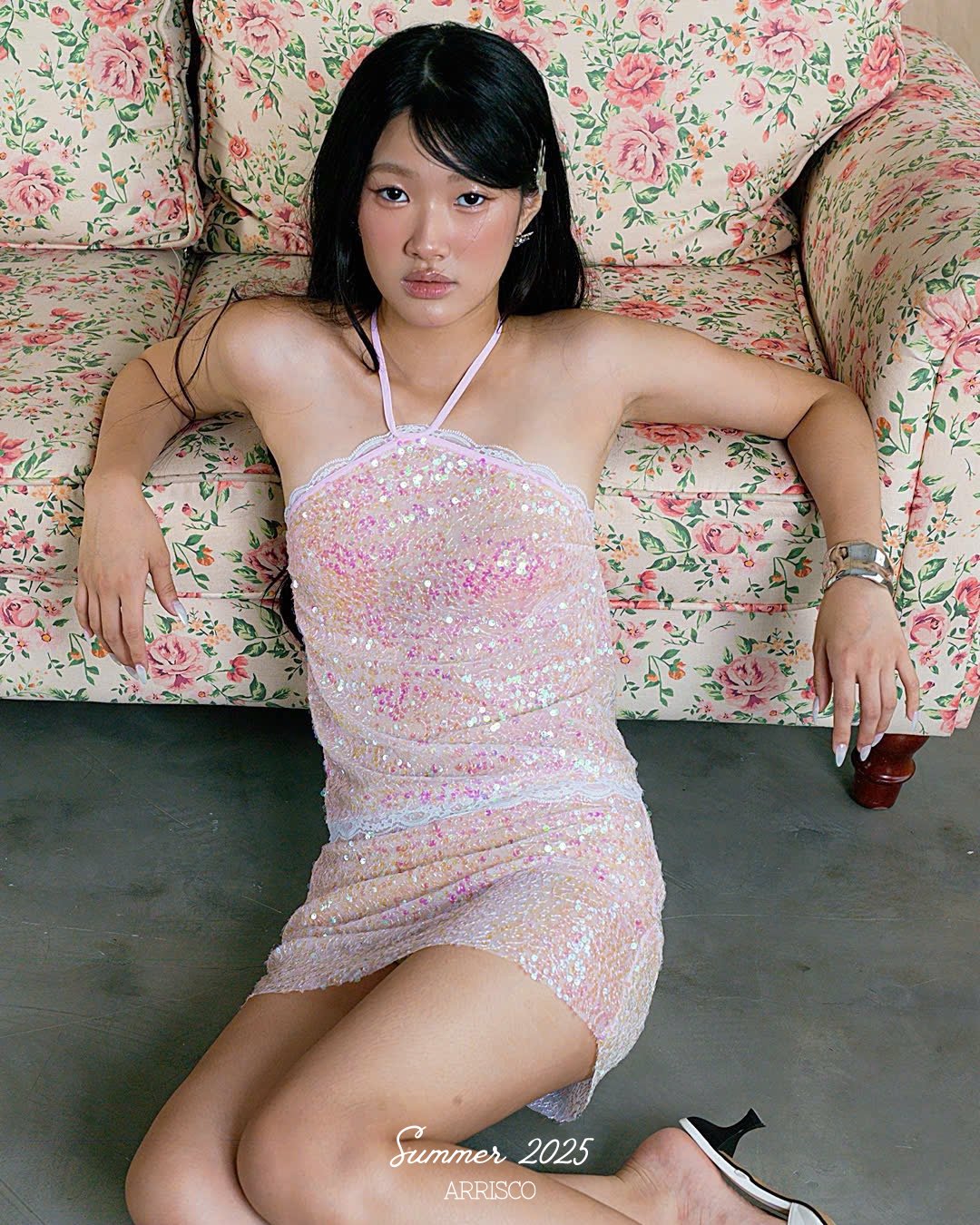


You step out of a hotel into Ho Chi Minh City's warm, humid air, cross a bright street, and arrive at a café with your hair still composed and your outfit still polished. Later, the same dress works for a sunset dinner without demanding a complete change. That's the quiet magic of a V-neck summer dress. Its open neckline creates visual lightness, while the right fabric lets air move around the skin instead of turning the bodice into a warm, clingy layer.
The V shape also gives you useful styling control. You can wear it casually with flat sandals, add a linen layer for a cooler interior, or sharpen it with jewelry and heels for evening. The trick is choosing the right depth, structure, and textile for your body and your climate.
The guiding idea: A successful V-neck summer dress balances three things at once, openness at the neckline, airflow through the fabric, and enough support to stay secure while you move.

Arrisco's sun-focused approach to warm-weather dressing offers a useful local perspective in its SS25 collection story, where clothing is considered for movement, atmosphere, and the moment you're living in. This guide follows the same practical path, from the history of the neckline to silhouettes, fabric behavior, fit checks, occasion styling, travel care, and international shopping decisions.
Why the V Neck Endures Across Fashion History
A V-neck works a little like an architectural arch. The lines guide the eye inward and downward, framing the face while creating a longer visual path through the upper body. That effect doesn't depend on a particular decade, body type, or dress length, which helps explain why the neckline keeps returning.
Specialized dress-history research dates V-neck Burgundian gowns to roughly the 1440s–1480s, showing that the shape existed in women's dress centuries before modern resort wardrobes. Over about 50 years, those gowns evolved from looser, pleated forms into smoother, more fitted garments, demonstrating how the V could adapt as construction techniques and ideals of dress changed. You can explore this historical context through the fashion history timeline.
In the 1840s, women's day bodices commonly opened into V or square necklines, according to the Fashion Institute of Technology's documentation of the period. By the 1870s, front openings into V-necks had become common and were often decorated with lace, ribbons, and braid. The neckline therefore wasn't limited to one mood. It could look modest and daytime-appropriate, ornate and decorative, or clean and modern depending on depth, trim, and fabric. (FIT's 1840s fashion history reference)

Why the shape feels familiar
The V-neck's longevity comes from a practical visual balance. A high neckline gives more coverage but can create a solid block across the chest. A V introduces open space without necessarily becoming revealing, especially when the point sits at a moderate depth and the bodice has stable seams.
That makes the silhouette unusually adaptable. A flowing rayon maxi can use the V to prevent a long shape from feeling heavy. A fitted midi can use it to soften a structured bodice. A wrap dress can use overlapping diagonal lines to echo the neckline and create a natural waist focus.
The evidence shows documented V-neck use across at least four centuries of women's dress history. For today's shopper, that continuity offers reassurance: a v neck summer dress can feel current without relying on a fleeting novelty. The silhouette has repeatedly changed its proportions, decoration, and materials while keeping the same underlying visual language.
Exploring Silhouettes Fabrics and Seasonal Comfort
The neckline is only one part of the summer experience. A deep V in a heavy, heat-trapping textile can feel less comfortable than a higher neckline in a light woven fabric. Start by matching the silhouette to movement, then choose the textile according to airflow, moisture, drape, and the occasion.
A wrap V-neck adjusts around the torso and creates diagonal lines that complement the neckline. It's useful when you want a flexible waist and an easy transition from daytime exploring to dinner. An A-line dress skims away from the body, leaving more room around the hips and legs. A slip dress gives a narrow, fluid line, but it needs careful attention to bra compatibility and fabric cling.
A tiered maxi creates volume and movement, which can feel airy as you walk, although extra layers may add weight if they're lined. A fitted midi looks polished and travels neatly, but the fabric and stretch must allow comfortable sitting, walking, and reaching. These silhouettes don't flatter in exactly the same way. The best choice depends on whether you prefer waist definition, relaxed movement, or a longer uninterrupted line.
| Silhouette / Fabric | Best For | Heat Comfort and Drape |
|---|---|---|
| Wrap / linen | Flexible waist styling, daytime travel | Breathable with a more textured, relaxed fall |
| A-line / cotton | Everyday wear, walking, casual lunches | Comfortable baseline with easy movement |
| Slip / rayon | Evening plans, fluid styling | Strong drape and a softer, smoother fall |
| Tiered maxi / cotton-linen blend | Resort dressing, beach-to-dinner outfits | Light when unlined, but check whether layers add bulk |
| Fitted midi / structured satin | Dressier occasions, sharper proportions | Holds a crisp V, though it needs careful climate and layering choices |
| Any silhouette / heavy polyester | Limited warm-weather use | Can trap heat and moisture in hot climates |
Choosing fabric by skin feel
Linen is the strongest choice when breathability is your first priority. It has a naturally airy hand and suits relaxed shapes, although its texture and tendency to crease are part of the look rather than defects.
Cotton offers a dependable comfort-to-price baseline. Poplin gives more structure, gauze feels softer and more casual, and lighter cottons can work well for daily dresses. Rayon is useful when you want fluid evening drape, especially in a slip or softly gathered maxi.
Cotton-linen blends can balance the crispness of linen with the familiar feel of cotton. By contrast, independent apparel guidance warns that 100% polyester can trap heat and moisture in warm climates, making it a risky choice for a close-fitting V-neck bodice. The same guidance compares summer dress fabrics for breathability and drape.
Stylist's shortcut: In humid weather, choose the lightest fabric that still gives the neckline enough stability. Airflow matters, but a V that collapses or stretches won't feel polished.
For a closer look at breathable textile choices, explore natural-fiber dress styling. Think of the final outfit as a partnership between shape and cloth. A relaxed linen A-line and a fluid rayon slip may both have a V-neck, but they create completely different movement, texture, and visual balance.
Finding Your Most Flattering Fit and Support
A V-neck isn't automatically more flattering than a high neckline for everyone. It changes the visual path across the chest, but the result depends on depth, bust support, shoulder placement, torso length, and how the fabric behaves when you move.
Measure neckline depth vertically from the shoulder seam to the lowest point of the V. A 4–6 inch range is commonly used as a broadly wearable and flattering benchmark, while deeper 3–5 inch V-necks require more structural tension to prevent gaping or distortion, according to apparel fit guidance. The measurements overlap because garment proportions vary, so treat them as design references rather than a universal rule. (Neckline depth and V-neck fit guidance)
A practical fitting sequence
- Check the shoulder line first. The seam should sit where your shoulder naturally ends. If it falls outward, the neckline may pull sideways. If it sits too far in, the bodice can feel restrictive across the upper chest.
- Look at the V point while standing naturally. A moderate point can lengthen the upper body without making you feel exposed. If you have a shorter torso, a very deep V may visually dominate the frame. If you have a longer torso, a slightly longer opening may create balance.
- Inspect the bust area for tension lines. Darting should shape the fabric without creating sharp pulls. A wrap style needs enough overlap to remain secure, while a fixed V needs stable edge finishing or an internal facing.
- Test the dress in motion. Raise both arms, sit down, lean forward, and turn from side to side. A V-neck that looks perfect in a mirror can gape when the bust pulls the fabric forward or when the shoulder seam shifts.
Satin often holds a clean, defined V because its surface and structure preserve a sharper edge. Crepe, chiffon, and lace provide softer drape, but their patterning must be precise so the neckline doesn't collapse or twist. Fabric recovery matters too. A stretchy textile may feel comfortable, yet it can lose the original shape if the neckline has insufficient support.

Bra compatibility deserves its own check. Look for wide enough shoulder straps, a back cut that hides the band, or an internal shelf when the dress design provides it. If you're unsure about your measurements, use this guide to calculate your bra size before comparing garment measurements.
Underwear lines can also change the way a fitted dress sits. For practical guidance on choosing between no-show briefs and thongs, see Nuage Wears no-show underwear advice.
A visual demonstration can make these checks easier to understand:
The right V-neck should make you forget about constant adjustment. If you're pulling the fabric upward, checking the point repeatedly, or worrying about your bra every time you sit, the issue is probably construction rather than your body.
Styling Your V Neck Summer Dress for Every Occasion
A single V-neck summer dress can earn its place in your suitcase when each accessory changes its message. Start with the same base garment, then adjust texture, coverage, footwear, and shine according to the setting.
For a humid city morning, wear a cotton or linen V-neck with flat leather sandals, a soft tote, and small earrings. Keep the jewelry close to the face rather than adding a heavy necklace that competes with the neckline. A low bun or clipped-back hair also keeps the open V feeling intentional and helps the outfit stay comfortable as you walk.
At beach or resort, use a relaxed maxi over a simple base layer or swimwear, then add woven slides and a lightweight scarf. If the dress is tiered, keep the accessories simple so the volume remains the visual focus. A compact crossbody works better than an oversized shoulder bag when you're moving between sand, cafés, and taxis.
Day-to-night formula: Keep the dress, change the shoes, add one structured layer, and switch to a smaller bag. The outfit will look considered without feeling overworked.
For office-casual dressing, choose a moderate V with a stable bodice and add a linen blazer or lightweight cardigan. The layer gives you more coverage in air-conditioned rooms while preserving the dress's vertical line. Closed-toe flats or clean leather loafers make a fluid dress feel more professional without adding heat-heavy tailoring.
For an evening event, let the neckline do more of the work. Add sculptural earrings, a compact clutch, and heeled sandals. A rayon or satin version can look more formal because the fabric reflects light and follows the body, while a cotton dress becomes evening-ready through color, jewelry, and sharper accessories.
Balancing coverage and openness
Higher necklines and more covered silhouettes are receiving attention in current summer fashion conversations, but that doesn't make the V-neck impractical. A higher V, a small inset panel, wider shoulder straps, or a soft layer can offer coverage while preserving the elongating shape.
Try cinching a tiered maxi with a narrow belt if the dress feels too loose through the waist. For a slip dress, add a cropped linen blazer so the waist remains visible and the long line doesn't become shapeless. If your dress already has a defined waist, skip the belt and use a long pendant or vertical earrings to echo the neckline instead.
For more event-focused combinations, browse these summer party outfit ideas. The aim isn't to force one dress into every dress code. It's to recognize which details, fabric, and accessories let the same silhouette travel from relaxed daytime plans to a more polished evening.
Caring for and Packing Your Summer Dresses Smartly
Humidity changes how a summer dress feels after washing, during storage, and inside a suitcase. Linen and cotton can crease easily, while rayon needs gentler handling because its drape can change when the garment is stretched or left damp. A little care protects both the fabric and the V-neck structure.
Read the care label before choosing a cycle. Gentle washing or hand washing reduces unnecessary agitation, especially around wrap ties, narrow straps, and neckline facings. Use mild detergent, avoid crowding the machine, and don't twist a wet rayon dress aggressively.
Drying affects shape as much as washing. A light cotton or linen dress can air dry flat when the fabric is delicate, while a structured V-neck may hang well on a padded hanger. Avoid hanging a heavy, wet garment from a thin strap because the weight can pull the shoulder area and distort the neckline.

Packing for an international trip
Let the dress dry completely before packing. Fold the V-neck inward along the center line, place soft tissue or a thin cotton layer between folds if the fabric marks easily, then roll the garment rather than compressing it into a hard rectangle. Rolling helps reduce sharp fold lines and makes it easier to fit the dress around other soft items.
Use a breathable garment bag for longer storage or transport. Avoid sealing a damp dress inside plastic, especially in a warm climate, because trapped moisture can create unpleasant odors and stress delicate fibers.
Once you arrive, hang the dress immediately. A steamy bathroom can relax light creases, but keep the garment away from direct water. For deeper wrinkles, use a steamer from a cautious distance and test an inconspicuous area first, particularly on rayon or dark fabrics.
Travel rule: Pack the dress dry, roll it loosely enough to preserve the V-neck edge, and give it air as soon as you reach your destination.
Smart Shopping With Arrisco Sizing and Global Shipping
A humid Ho Chi Minh City afternoon exposes fit problems quickly. Start your online purchase with measurements rather than a familiar letter size. Compare your bust, waist, and hip measurements with the garment's size chart, then read the notes for that specific design. A fitted midi, wrap dress, and tiered maxi can need different sizes from the same brand because their ease and construction differ.
For a V neck, check the bust and shoulder measurements together. The shoulders may fit while the bust pulls, and sizing up could leave extra fabric at the waist or hips. If the waist feels comfortable but the V point shifts as you walk, look for stronger darting, a stable facing, or adjustable straps. Those features can support the neckline more effectively than changing the whole size.
Fabric details matter just as much in hot, damp weather. Product pages should identify composition, lining, stretch, strap adjustment, silhouette, and the intended ease through the body. Light, breathable fabric can feel airy during travel, while a lined or less flexible dress may feel too warm once you add a bra or other layer. A high-neck alternative may offer more coverage, but its extra fabric can hold more heat. A V neck often improves airflow, with support depending on the straps, facing, and bra compatibility.
The wider women's dress category gives this purchase context. DataHorizzon Research estimates the global women's dress market at USD 45.8 billion in 2024 and USD 52.6 billion in 2025. Its broader women's dresses-and-skirts market is projected to reach USD 339.76 billion by 2034 from USD 211.28 billion in 2025, at a 5.42% CAGR. These figures use different market definitions, so they should not be compared as identical measurements. They do show that dresses are a large, competitive global category. (Women's dress market estimates and projections)
That scale makes small design choices practical, not merely decorative. Breathable fabric, a steady V point, a bra-friendly strap, and accurate waist placement can determine whether a dress becomes a repeat-wear travel piece. Arrisco is a contemporary Vietnam-based fashion brand in Ho Chi Minh City, offering dresses and skirts with product fit information and global online shopping options.
Before ordering, confirm the size range, garment measurements, care requirements, shipping terms, and return conditions for your destination. For international travel, choose the fabric and silhouette for your real itinerary, including walking, sitting, humidity, and evening plans, rather than relying only on the photograph.
Clear language helps shoppers judge links too. Google explains that descriptive anchor text helps users and search engines understand a linked page, and accessibility guidance recommends unique wording that remains clear out of context instead of “Click here” or “Read more.” (Accessible link text guidance) Product descriptions work the same way. Specific details show what you are opening and evaluating.
Choose a V-neck depth that feels secure, a textile suited to your climate, and a silhouette that remains comfortable in motion. With those checks, a V neck summer dress can serve city days, international travel, and evening plans.
Choose a V-neck summer dress from Arrisco by comparing fit notes, fabric details, and neckline structure with your climate and wardrobe needs. Check the measurements carefully, then look for a breathable style suited to your next Ho Chi Minh City afternoon or international getaway.