

You bought a pink pencil skirt for one meeting, one dinner, or one mood. Now it's hanging in your wardrobe while you stand in front of it before work, wondering whether it looks too sweet for the office, too formal for brunch, or too restrictive for a day spent commuting. The problem usually isn't the color. It's the combination of shade, fabric, fit, and occasion.
A well-chosen pencil skirt pink outfit can move from desk to dinner, provided you stop treating the skirt as a fixed uniform. The right waistband, enough hip ease, and a shade that suits the setting matter more than copying a styling photograph. Use the advice below to make the skirt work in real life, including crowded commutes, long desk hours, first dates, and international travel.
Why Your Pink Pencil Skirt Is More Versatile Than You Think
The skirt is hanging untouched because you're assigning it one job. You bought it for the office, so you pair it mentally with a crisp blouse and formal pumps. That narrow idea makes the garment feel difficult before you've even tried it with a knit, a relaxed jacket, or a low-profile shoe.
The pencil skirt has always carried more range than its office reputation suggests. Fashion histories generally trace its modern identity to Christian Dior's 1954 autumn-winter H-line collection, while earlier foundations reach back to 1908, when Edith Hart Oberg's airplane flight and a tied hem helped create a narrowed silhouette. The garment began with a practical restriction, then became a deliberately structured fashion language. The history of the pencil skirt shows how that functional beginning developed into a polished staple.

Structure makes pink look polished
Pink can look casual when it appears in a loose jersey piece, a playful mini, or a soft lounge silhouette. A pencil skirt changes that reading. Its clean waistband, close hip line, and controlled hem give the color visual discipline, so blush or rose feels intentional rather than childish.
That formal pedigree also explains the skirt's movement beyond office dressing. The shape became especially popular in the 1950s and 1960s, and later stretch fabrics such as Lycra in the 1970s made it easier to wear across changing wardrobes and decades. The broader pencil skirt timeline connects the silhouette with repeated reinvention rather than a single workplace identity.
A woman wearing a muted pink skirt with a fine-gauge sweater and loafers looks composed without appearing corporate. Swap the sweater for a satin camisole, add earrings, and change the shoes, and the same skirt becomes evening-appropriate. The narrow line does the anchoring while the accompanying pieces set the mood.
Stylist's rule: Let the skirt provide structure, then use the top, shoes, and texture to decide how formal the outfit feels.
The piece also earns its place through versatility. Women's dresses and skirts are projected as a global category worth around USD 181 billion in 2025, with roughly 5.5% CAGR through 2030, according to the market context cited by Elle's coverage of the pencil skirt trend. That projection doesn't prove every skirt deserves a place in your wardrobe, but it does reinforce the practical demand for pieces that can handle several occasions.
If your closet needs a dependable foundation, pair the skirt with simple separates rather than buying an elaborate matching set. A capsule wardrobe approach, such as this guide to building a capsule wardrobe, helps you judge the skirt by the number of outfits it can support, not by the drama of a single look.
Choosing the Right Pink Shade for Your Occasion
Start with the setting, not the shade you happen to like on a product page. Pink ranges from pale blush to saturated fuchsia, and each version sends a different message once fabric, finish, and styling enter the picture.

Use the setting as your first filter
For a traditional office, choose blush, dusty rose, or a softened mauve. These shades sit comfortably beside white, navy, charcoal, camel, and black. They also let a structured skirt look feminine without making the color the loudest part of the outfit. A matte crepe or compact stretch weave strengthens that professional effect.
For brunch or daytime social plans, a clearer pastel pink works well with cream, denim, pale gray, or chocolate brown. Keep the rest of the outfit relaxed. A cotton shirt, fine knit, or clean sneaker prevents the skirt from looking like it belongs only in a boardroom.
For date night, choose a richer rose, berry pink, or saturated magenta when you want the color to carry more presence. Pair it with black, espresso, ivory, or metallic accessories. The stronger shade needs fewer competing details, especially if the fabric has sheen.
For creative settings, vivid pink has room to perform. Try cobalt, tomato red, orange, or a controlled print, but keep one element calm so the outfit has a visual anchor. If you're unsure about combining colors, this guide to choosing flattering colors can help you assess the palette around your own coloring.
Match the finish to the message
The same pink changes personality with surface texture. Satin reflects light and makes even a restrained shade feel more evening-oriented. Textured knit absorbs attention into the surface and gives the silhouette a more tactile, fashion-forward quality. A smooth matte fabric is the safest choice for work because it keeps the color quiet and the line crisp.
Season also affects the styling decision. Recent fashion reporting positions pastel pink as a notable autumn and winter choice, while spring and summer coverage favors brighter combinations, including pink with orange, as described by Marie Claire's reporting on the pink trend. Treat that as a styling direction, not a rule. A pale pink skirt with a burgundy sweater can look deliberate in cold weather, while a vivid skirt with a white shirt feels fresh in warmer months.
Getting the Fit Right Without Sacrificing Comfort
A pencil skirt that looks perfect while you're standing still but stops you from walking naturally has failed. Fit matters more than the size printed on the label, particularly because skirts need to accommodate the fullest part of the hips while keeping the waist secure.
For a fitted pencil skirt, sewing guidance commonly targets roughly 2 to 3 inches, or 5 to 7.5 cm, of hip ease. That space allows the body to sit, walk, and bend without forcing the fabric into drag lines. Waist ease can sit around 0.5 to 1.5 inches, or 1.3 to 3.8 cm, depending on the fabric and intended wear. Independent pencil skirt fitting guidance explains why too little ease creates restriction and visible pulling.

Judge the garment in motion
Try the skirt while sitting, walking, and turning. Look for horizontal drag lines across the hips, a waistband that rolls, or a center-back seam that pulls toward the body. If the skirt rides upward as you walk, the problem may be insufficient hip room rather than an incorrect hem length.
A toile, or muslin test garment, gives the clearest answer before a tailor alters expensive fabric. The standard workflow includes a muslin toile, a temporary zipper, and adjustments at the side seams, darts, and center back before cutting the final fabric. That process is outlined in these tailoring and body-type fitting tips.
Distribute ease instead of widening one point
Adding all extra room at the side seam can distort the straight silhouette. Pattern-drafting guidance recommends distributing hip-ease changes across several seams. One fitting example divides the adjustment across six locations, including front and back side seams and the center back, using small additions such as 1/4 inch, or 0.6 cm, per seam. This pencil skirt fitting discussion explains why spreading the change preserves proportion.
| Check | What you want | What a problem looks like |
|---|---|---|
| Hips | Smooth fabric with room to sit | Pull lines or strained seams |
| Waist | Secure without digging | Rolling, gaping, or pinching |
| Stride | Natural movement | Tiny steps or fabric binding |
| Length | Hem supports the occasion | Too short for work or awkward with shoes |
Pay attention to hip-to-waist length. Underestimating that distance can make the waistband sit too high, forcing the skirt to pull across the hips. Also inspect the zipper placement. A zipper stop on a curved seam can create bulk and interfere with a clean line.
Stretch helps, but it doesn't excuse poor construction. A stretch blend should recover after movement, while a non-stretch fabric needs more built-in ease and a practical walking slit. Ask a tailor to adjust the pattern across several seams instead of just letting out one side.
Outfit Combinations That Actually Work
The easiest way to style the skirt is to assign it a role in each outfit. For work, it anchors a clean uniform. For dinner, it becomes the polished base under a more expressive top. For travel, it needs to cooperate with your shoes, layers, and hours of movement.

Work formula
Wear a blush or dusty pink skirt with an ivory blouse, a navy blazer, and pointed loafers. The ivory lightens the outfit without competing with the skirt, while navy gives the color authority. Choose a matte fabric and keep jewelry precise, such as small hoops or a slim watch.
If your office is more relaxed, replace the blazer with a fine-gauge cardigan and use a leather belt that echoes the shoes. Avoid pairing a fitted pink skirt with a ruffled top, ornate heels, and a large statement necklace all at once. The outfit becomes busy and loses the clean vertical line that makes the skirt look polished.
Date-night formula
For dinner, keep the skirt and change the atmosphere around it. A saturated pink skirt works with a black square-neck top, a short cropped jacket, and low sculptural heels. A satin skirt can handle a simple fitted knit because the surface already supplies visual interest. A textured knit skirt needs a smoother top, such as a silk-effect camisole or polished jersey, to prevent competing surfaces.
For more ideas around a vivid version, this guide to styling a hot pink skirt offers a useful reference point. Use the principle rather than copying every item. Strong pink needs restraint elsewhere.
Commute formula
Travel and commute days demand better engineering. Choose a stretch blend with a stable waistband, a practical slit, and enough ease to sit comfortably. Add a soft tucked-in T-shirt, an unstructured overshirt, and clean leather sneakers or supportive ankle boots. The relaxed layers offset the skirt's narrow shape, while the shoes keep the outfit grounded.
Movement test: Walk briskly, sit on public transport, and climb stairs before you commit to a full day in the skirt.
A desk-to-dinner transition works best when you pack one deliberate swap. Wear the work blouse and blazer during the day, then remove the blazer, add bold earrings, and change into slim heeled sandals or refined boots. Don't bring a complete second outfit. Bring the one accessory or layer that changes the message.
Print can work, but scale matters. A controlled stripe or small geometric pattern on the top gives the pink skirt a modern counterpoint. If you want to experiment, this guide to mixing patterns helps you keep color and scale intentional.
Use this quick comparison:
| Occasion | Top | Layer | Shoes |
|---|---|---|---|
| Office | Ivory blouse | Navy blazer | Loafers |
| Date night | Black fitted top | Short jacket | Slim heels |
| Commute | Soft T-shirt | Overshirt | Sneakers or boots |
The video below gives another visual reference for adapting one skirt across different settings.
Care Instructions That Preserve Color and Structure
A commute-heavy day exposes poor care quickly. Sweat, friction, and repeated sitting can fade pink fabric, stress the waistband, and flatten texture. Follow the garment's care label before choosing a washing or pressing routine. This guide to reading clothing care labels explains the symbols so you can choose the approved method.
Match care to the fabric
Satin needs gentle handling. Turn the skirt inside out, keep it away from dark garments that may release dye, and avoid rough agitation or scrubbing around the waistband and zipper. Its reflective surface shows small abrasions, so handle it carefully during washing and drying.
Stretch blends need controlled heat. High temperatures can weaken elasticity and reduce the fabric's ability to recover after sitting. Use the lowest suitable temperature, treat the dryer as a last resort, and follow the label for flat drying or hanging. If you hang the skirt, support it without allowing the waistband to carry the garment's full weight.
Textured knits should usually be folded. Careless hanging can lengthen the skirt and disturb its clean pencil line. Fold it with smooth tissue or a clean fabric layer between folds, then store it away from direct light. Prolonged exposure can dull pink, particularly when the garment stays in one position.
Press without reshaping
Test a hidden area before ironing, and use a pressing cloth when the fabric permits pressing. Work from the inside and lift the iron instead of dragging it across the outer surface. Steam can release wrinkles, but keep the hem and waistband relaxed while the fabric is warm. Pulling either area can create a new shape that will show during a desk-to-dinner change.
Wash only when the skirt needs washing. Air it after brief wear, and spot-clean small marks to protect both color and structure. Store it on a suitable hanger only when its fabric and construction can support hanging. Otherwise, fold it along the seam lines and keep it away from heavy clothing that could compress the waistband or textured surface.
Smart Shopping and Packing for International Buyers
International shoppers need to evaluate the skirt before checkout, especially when sizing systems differ. Ignore the letter or number on the tag and compare the seller's actual waist, hip, length, and fabric measurements with a garment that already fits you well. Ask whether the measurements describe the body or the finished garment, and confirm the return policy before ordering.
Build a practical buying checklist
- Check stretch content: Look for fabric information that tells you whether the skirt can accommodate sitting and walking.
- Inspect waistband construction: A stable waistband gives a sharper office line, while a flexible finish may suit commuting.
- Study every product view: Look for wrinkles, pulling, pocket placement, zipper position, and how the hem hangs.
- Ask about alterations: Confirm whether a tailor can adjust the waist, hip, length, or seam balance without disturbing the design.
- Choose climate-appropriate weight: Lightweight fabric suits warm, humid conditions, while a denser knit or woven fabric gives more coverage in cooler weather.
Packing requires the same attention. Fasten the zipper, close any buttons, and fold the skirt along its existing seams. Place it between softer garments rather than under shoes or dense accessories. When you arrive, remove it promptly and hang or lay it flat according to the fabric. A travel capsule built around the skirt needs only a few deliberate companions, such as a light blouse, a fine knit, a neutral layer, and shoes that can handle both daytime and evening.
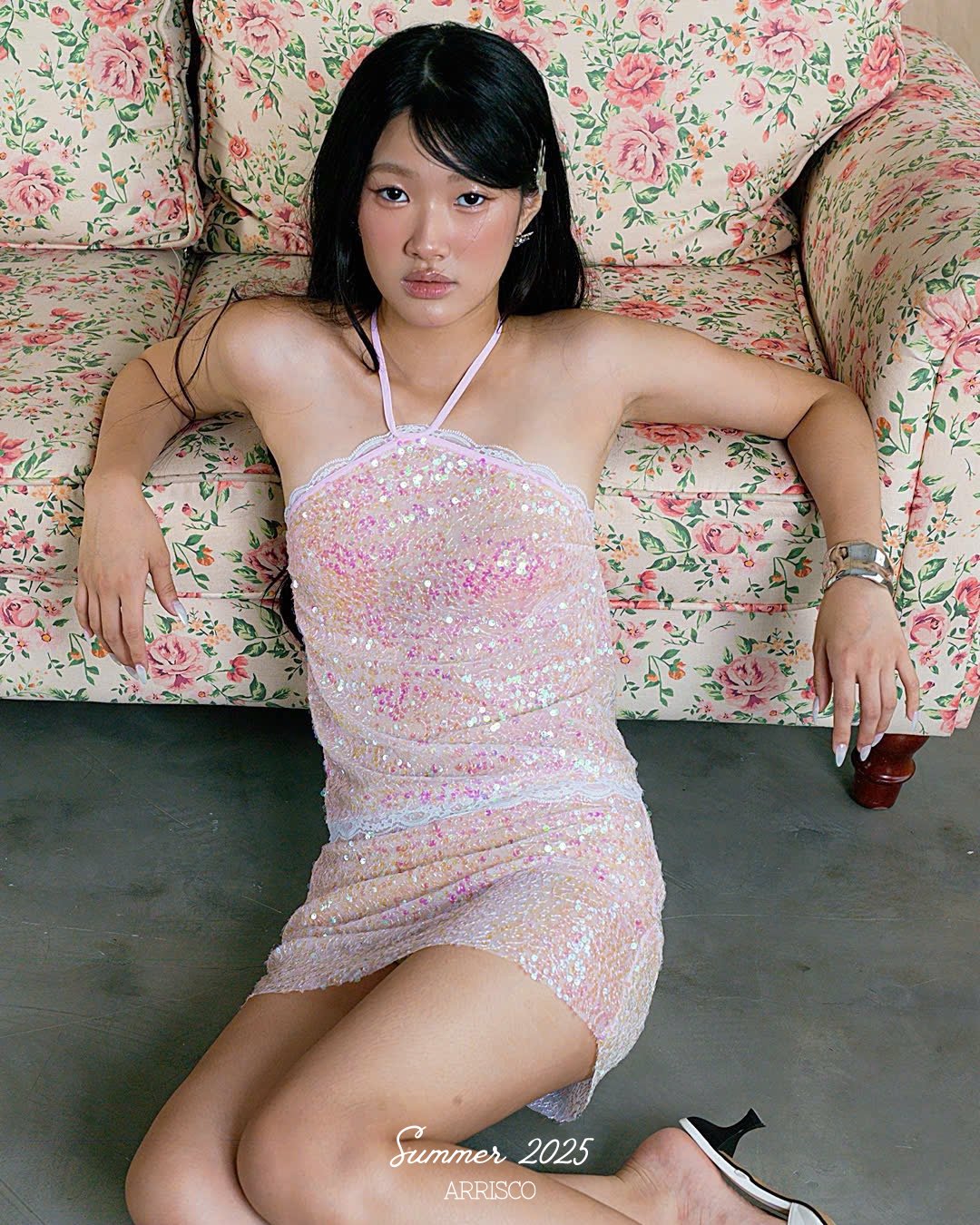
For online shoppers comparing contemporary pieces, Arrisco's Dress & Skirts collection includes the Donna Baby Pink Sequin Set, a pink occasion-oriented option that demonstrates how color and surface finish can shift a skirt's role. Treat sequins as eventwear rather than a commute solution, and judge the item by the same fit and care standards.
Arrisco offers contemporary dresses and skirts from its fashion label in Ho Chi Minh City, including pink occasion pieces such as the Donna Baby Pink Sequin Set. Visit Arrisco to explore options that fit your wardrobe plans, whether you're building a desk-to-dinner capsule or packing for travel.