


Think of it this way: matching the symbols for washing, drying, and ironing on your garment’s tag to your machine's settings is a quick check that prevents shrunken sweaters and faded colors. It’s like a two-second cheat sheet that helps your favorite pieces last so much longer, guaranteeing perfect laundry every time.
Why That Tiny Tag Is Your Wardrobe's Secret Weapon
Have you ever pulled a favorite sweater from the dryer, only to find it’s now fit for a doll? We've all been there. That tiny, often-ignored tag inside your clothes is the single best tool you have to prevent those heartbreaking laundry mishaps.
Seriously, it’s a direct message from the manufacturer—a secret weapon designed to preserve the fit, color, and texture you fell in love with at the store.
Once you learn how to read this tag, laundry day stops being a guessing game and becomes a precise science. You’re no longer just hoping for the best; you’re taking control and making sure your investment in your wardrobe pays off for years. It’s a small habit that saves you money, cuts down on textile waste, and keeps your clothes looking brand new.
More Than Just a Suggestion
It's tempting to think of care instructions as optional, but they're absolutely essential. And if you follow them, you're in good company! A 2021 GINETEX survey found that a whopping 71% of consumers follow care instructions, with over 80% finding them incredibly useful.
What's really interesting, though, is that while most people get the symbols for washing (90%) and ironing (98%), understanding drops off a cliff for bleaching (27%) and drying (25%).
The care label isn’t just about protecting one shirt; it’s about adopting a mindset of preservation. When you care for clothes properly, they last longer, which is a powerful step toward a more sustainable and cost-effective wardrobe.
If you want a fantastic resource to get started, this detailed guide on how to read clothing care labels provides a great foundation for decoding every symbol you'll ever encounter.
Connecting Symbols to Fabrics
Getting the symbols down is the first step, but the real magic happens when you connect those instructions to the fabric itself. A cotton tee and a silk blouse might both say "wash cold," but their needs are worlds apart.
The symbols are your starting point, prompting you to think critically about the material in your hands. This is exactly why a deeper knowledge of textiles is so valuable. To dive deeper, check out our Unraveling Fashion Fabrics: Your Go-To Guide, which will help you understand why certain materials need such specific care.
Mastering this connection is the key to becoming truly fluent in the language of clothing care.
Cracking the Code: The Five Core Laundry Symbols
Ever feel like you need a secret decoder ring to do your laundry? You're not alone. Those little symbols on your clothing tags are a language all their own, but once you learn the basics, you'll be able to care for your favorite pieces like a seasoned pro. Forget the guesswork—let's break down exactly what those icons mean so you can wash, dry, and iron with total confidence.
While most of us give the care tag a quick glance, there’s a surprising gap between knowing it's useful and actually understanding what it's telling us.
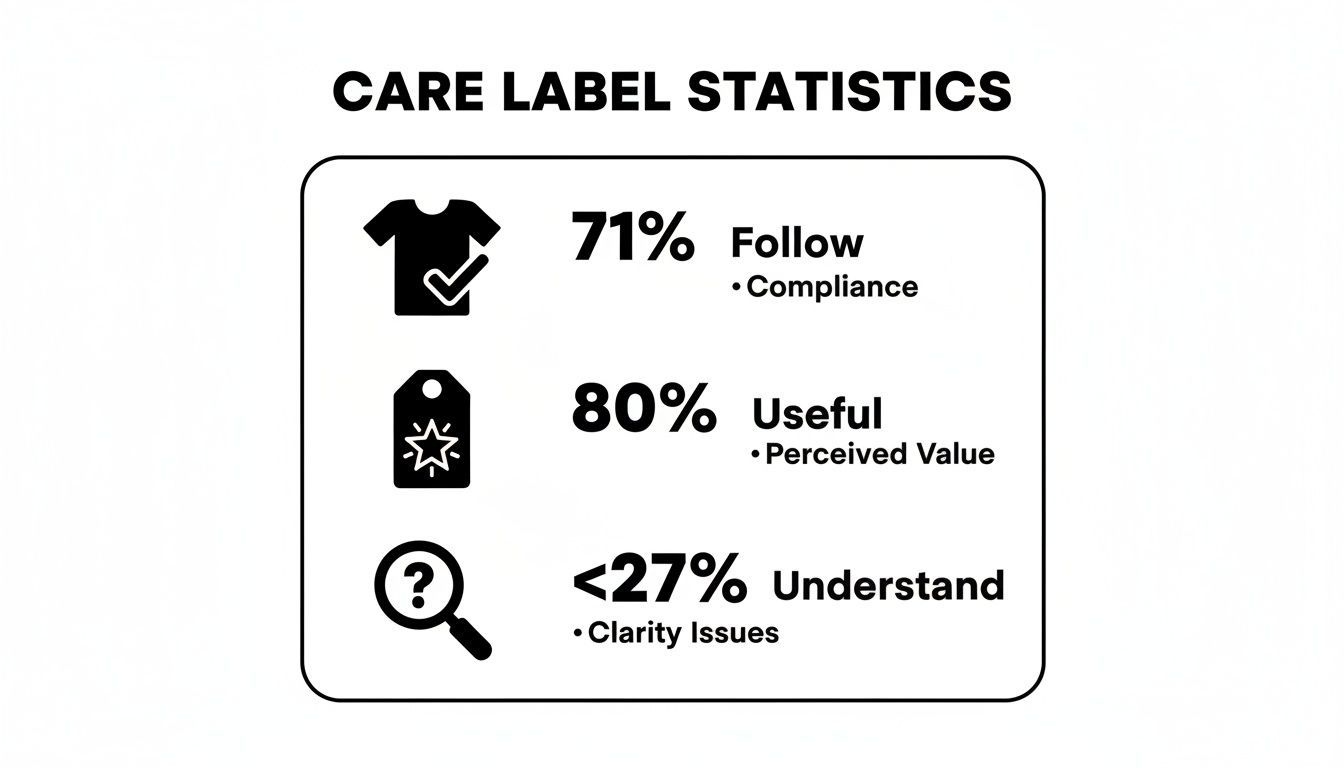
This eye-opening visual shows that while a massive 80% of us find care labels helpful, less than 27% actually understand all the symbols. That knowledge gap is where faded colors, shrunken sweaters, and other laundry tragedies happen.
To help you become a laundry expert, here's a quick cheat sheet for the most common symbols you'll encounter.
Quick Guide to Common Laundry Symbols
This table breaks down the basics so you can see at a glance what each symbol means and what to do.
| Symbol Category | What the Symbol Looks Like | What It Really Means | Pro-Tip for Best Results |
|---|---|---|---|
| Washing | A tub of water | This tells you if and how you can machine wash the item. | Pay close attention to the dots (temperature) and lines (cycle) for a perfect wash every time. |
| Bleaching | A triangle | This is your go-to for whitening and brightening—but only if the symbol allows it! | A triangle with diagonal lines means "color-safe bleach only." Don't risk it with chlorine! |
| Drying | A square | This covers all things drying, from the tumble dryer to air-drying. | The square is where most shrinking happens. If in doubt, choose a lower heat setting or air-dry. |
| Ironing | An iron | This lets you know if ironing is safe and at what temperature. | The dots inside the iron match the dots on your own iron's temperature dial. Simple! |
| Dry Cleaning | A circle | This is the universal sign to leave it to the professionals. | A plain circle means "dry clean," while any letters inside are instructions for the cleaner. |
Now that you have the big picture, let's dive into the nitty-gritty of each symbol so you know exactly what to look for.
The Washtub: Your Guide to a Perfect Wash
The washtub symbol is your starting point. If you see it, you're good to go in the washing machine. But the real magic is in the details—the dots and lines that tell you exactly how to wash it.
The dots inside the tub are all about water temperature. Getting this right is your best defense against shrinking that new sweater or fading your favorite jeans.
- One dot: Go cold! This means 30°C (86°F). It’s perfect for delicate fabrics like silk, dark colors that might bleed, or just being eco-friendly with your everyday cottons.
- Two dots: Use warm water, around 40°C (104°F). This is the sweet spot for most synthetic fabrics and blends that need a little more oomph to get clean.
- Three dots: Bring the heat. This is for hot water, typically 50°C (122°F) or higher. Save this setting for super-sturdy items that need a deep clean, like white cotton sheets, towels, or socks.
Now for the lines underneath the washtub. These dictate the machine cycle.
- No line: Normal cycle. Your tough stuff—like denim and heavy tees—can handle this standard, vigorous wash.
- One line: Permanent Press. This cycle has a slower spin, which is a game-changer for preventing wrinkles in synthetic fabrics.
- Two lines: Delicate/Gentle cycle. This is the VIP treatment. Think of it as a gentle spa day for your silks, lace, and anything else that needs a super light touch.
The Triangle: To Bleach or Not to Bleach
The triangle is all about bleach, and one wrong move here can ruin a garment for good. Using the wrong type can strip color, leave yellow stains, or even weaken the fabric.
My golden rule: An empty, open triangle means you can use any bleach, including good old-fashioned chlorine bleach. But if that triangle has two diagonal lines inside, you must use only non-chlorine bleach (often called oxygen or color-safe bleach). See an 'X' through the triangle? That's a hard "no"—step away from the bleach!
For instance, your white bath towels probably have an open triangle. Your new, brightly colored blouse? It's almost guaranteed to require non-chlorine bleach to keep its color vibrant. For special items like a sequin skirt, it's non-negotiable—always follow the label. You can find more advice in these top tips for caring for embellished clothes.
The Square: Your Roadmap to Drying
The square symbol governs all things drying, and honestly, this is where most laundry mistakes are made. High heat is public enemy number one for so many fabrics.
A square with a circle inside means it’s safe for the tumble dryer. Like the washtub, the dots inside the circle tell you the heat setting:
- One dot: Tumble dry on low.
- Two dots: Tumble dry on medium.
- Three dots: Tumble dry on high.
If you see an 'X' through the tumble dry symbol, don't even think about it! Instead, look for other symbols inside the square. A curved line at the top means line dry on a clothesline. A horizontal line in the middle means dry flat. This is crucial for heavy knits that can stretch out of shape if hung.
The Iron: For That Crisp, Wrinkle-Free Finish
The iron symbol is pretty straightforward, but ignoring the dots inside can lead to scorching or even melting your clothes. Luckily, these dots correspond directly to the settings on most irons.
- One dot: Low heat. Perfect for delicate synthetics like nylon or acrylic.
- Two dots: Medium heat. This is your setting for wool and polyester blends.
- Three dots: High heat. Reserved for linen and cotton, which can handle it.
And if you see a big 'X' through the iron? Put it down. Many modern performance fabrics or pieces with special coatings will be permanently damaged by the direct heat.
The Circle: When to Call in the Pros
Finally, we have the circle. This is your sign to let a professional take over. A plain circle means the item needs to be dry cleaned.
You might see letters inside the circle like 'P,' 'F,' or 'A.' Don't worry about memorizing those—they're specific instructions for your dry cleaner about which chemical solvents are safe. All you need to know is that it’s time to hand it off. A circle with an 'X' through it means do not dry clean. It's rare, but it happens
Caring for Your Favorite Fabrics
Okay, so you've got the five core symbols down. That's a huge first step! But the real magic happens when you connect those little hieroglyphics to the actual fabric in your hands. A cotton tee and a silk blouse might both have labels suggesting a cold wash, but they need completely different TLC to stay beautiful.
This is where you graduate from just following rules to truly mastering your wardrobe's longevity. Think of the care label as your recipe card—it gives you the ingredients, but knowing your fabrics tells you how to cook the meal to perfection.
The Secrets to Caring for Silk
Ah, silk. It's the very definition of luxury, but it's also famously sensitive. Its fibers are surprisingly strong, yet they're incredibly vulnerable to heat and rough handling. That's why the label will almost always show a hand-wash symbol or a delicate cycle with one dot for cold water (30°C/86°F).
Trust me, you never want to ignore this. Hot water can cause the delicate fibers to seize up and shrink, permanently robbing your garment of its signature luster.
- Pro-Tip: I always reach for a pH-neutral detergent made for delicates. Standard detergents are often too harsh and can strip the natural oils right out of the silk, leaving it feeling brittle and lifeless.
- Drying Wisdom: Whatever you do, never wring out silk. Gently roll it in a clean, fluffy towel to press out the excess water. Then, either lay it flat or hang it on a padded hanger far away from direct sunlight, which is notorious for yellowing the fabric.
Keeping Wool Cozy—Not Shrunken
Wool is an absolute miracle fiber. It’s warm, it breathes, and it naturally resists odors. Of course, it’s also infamous for shrinking if you so much as look at it the wrong way. The mortal enemy of wool is a combination of heat and agitation; that’s what causes the fibers to felt and lock together, turning your favorite sweater into a tragic, doll-sized version of its former self.
Your wool piece will almost certainly call for cold water on a delicate or wool-specific cycle. Many newer washing machines even have a dedicated "wool" setting that gently rocks the drum instead of spinning it, which is the next best thing to a gentle hand wash. If you have that setting, use it!
When it comes to wool, air drying is completely non-negotiable. Always lay your sweater flat on a mesh rack or a dry towel. Hanging a wet wool garment is a recipe for disaster—the weight of the water will stretch it out of shape, especially at the shoulders and sleeves.
Preserving Your Perfect Pair of Jeans
A great pair of premium jeans is a wardrobe cornerstone, but that deep, rich indigo color can vanish in the wash if you're not careful. The number one rule for denim lovers? Wash them as little as possible. But when the time comes, that care label is your best friend.
Before they even touch the water, always turn your jeans inside out. This incredibly simple step protects the outside of the fabric from the friction that causes fading and wear marks.
Stick to a cold water cycle to prevent the dye from bleeding and to keep the cotton from shrinking. When it's time to dry, air drying is the gold standard. The intense heat from a tumble dryer is a fast track to unwanted shrinkage and can set in creases that are a pain to get out.
Managing Modern Synthetics
Fabrics like polyester, rayon, and nylon are workhorses in modern fashion. They're incredibly versatile, but they all share one major weakness: heat. A hot iron or a high-heat dryer cycle can literally melt their fibers, leaving behind shiny, scorched patches or irreversible damage.
You’ll almost always see labels for synthetics recommending a warm or cool wash on a permanent press cycle (that's the symbol with one line underneath). This cycle's slower spin is a lifesaver for preventing stubborn wrinkles.
- Low Heat is Law: If you have to use a tumble dryer, make it a rule to always choose the lowest heat setting available.
- Steaming Over Ironing: For delicate synthetics like rayon, I find a handheld steamer is a much safer bet than a direct-heat iron for smoothing out wrinkles.
For those truly special pieces with intricate details, understanding the material is even more critical. Our guide on caring for lace and beaded dresses dives into specialized tips to help you protect those beautiful but fragile showstoppers.
Reading Between the Lines on Your Care Tag
Alright, so you’ve mastered the hieroglyphics—the little tubs, triangles, and squares. But that’s just half the story. The real pro move is to look past the symbols and read the fine print. This is where you get the inside scoop on your garment’s true personality and learn how to keep it looking fantastic for years, not just a few washes.
Think of the fiber content breakdown as a garment’s DNA. When a tag says “95% Cotton, 5% Spandex,” it’s telling you a story. That 95% cotton means it's going to be soft and breathable. But that little 5% of spandex? That's the magic ingredient giving it stretch, comfort, and the ability to snap back into shape. It’s the secret behind why your favorite tee moves with you instead of fighting against you.
Why Blends Matter in the Wash
Once you start paying attention to these percentages, you can almost predict how a piece of clothing will behave. For example, a sweater that’s mostly wool with a little acrylic will still need that gentle, wool-specific care. But the acrylic gives it a bit of extra durability and helps it resist wrinkles.
On the flip side, a mostly polyester top with a splash of cotton will be a champion at resisting shrinking, but it won’t feel nearly as airy on a hot day. Knowing these little details helps you make smarter choices that go way beyond the basic symbols.
Honestly, paying attention to the full tag is a game-changer. It’s where you’ll find those tiny but crucial notes like “wash with like colors” or “reshape and dry flat.” These are the instructions that save you from massive laundry fails, like that one red sock turning an entire load of whites a lovely shade of pink. We’ve all been there.
Navigating a Global Wardrobe
Your closet is probably a collection of pieces from all over the world—Italy, Japan, Vietnam, you name it. This can sometimes create a bit of a language barrier right there on the care tag. But don't sweat it; you don’t need to be a polyglot to do your laundry.
Here’s what I do:
- Trust the Symbols: Most global brands use the same standardized symbols we've been talking about. They’re the universal language of laundry.
- Whip Out Your Phone: A quick photo with an app like Google Lens can instantly translate any text you don't recognize, giving you total clarity.
- When in Doubt, Play It Safe: If you’re ever truly stumped, just default to the gentlest method possible. That means a hand wash or delicate machine cycle in cold water, followed by air drying.
A little bit of caution ensures that beautiful piece you picked up on your travels doesn't become a laundry-day tragedy. This same principle of understanding the material applies to accessories, too. For instance, if you have a great leather bag, its care is a whole different ballgame. For more on that, check out our leather bag maintenance guide.
The Rise of the Digital Care Label
Get ready, because the humble fabric tag is getting a serious tech upgrade. More and more brands are adding QR codes to their labels, turning that little piece of fabric into a gateway to a ton of useful info.
Scan one with your phone, and you might unlock:
- How-To Videos: Imagine watching a quick tutorial showing you exactly how to wash that specific sweater.
- Its Origin Story: Learn where the materials came from and the brand’s commitment to sustainability.
- Styling Tips: Get fresh ideas on how to wear your new favorite piece, straight from the source.
This isn’t just a gimmick; it’s a response to a real demand for more transparency and better product care. The global clothing care labels industry, currently valued at US$543 million, is expected to skyrocket to US$793 million by 2031, and this tech is a huge reason why. As we all become more conscious consumers, these smart labels are giving us the tools we need to make our clothes last two or even three times longer. You can learn more about the growth of the clothing care label market on valuates.com.
Your Smart Laundry Day Checklist
Alright, you've cracked the code on those mysterious laundry symbols and you know your fabrics inside and out. Now for the fun part: putting all that brilliant knowledge to work! This isn't just about getting clothes clean; it's about making your wardrobe last, look amazing, and fit perfectly, wash after wash.
Think of this as your pre-flight check before your clothes take a spin. A few simple habits can turn laundry day from a chore into a victory, keeping every piece you own looking as good as the day you bought it.
The Pre-Wash Ritual
Honestly, the five minutes you spend before you even open the washing machine door can make all the difference. This little ritual is your best defense against snags, stains, and those "oops" moments we all dread.
First things first: empty every single pocket. It sounds so basic, but I can't tell you how many times a forgotten lip balm or a stray pen has created a laundry apocalypse. A quick pat-down is all it takes to prevent a sticky, inky disaster.
Next, get the hardware in order. Zip up all zippers! On jeans, hoodies, and jackets, those metal teeth can act like tiny chainsaws, catching and tearing delicate fabrics as they tumble around. On the flip side, unbutton all your shirts. This simple move eases the stress on the buttonholes and thread, which is a major reason buttons go missing in the wash.
Finally, give that care label one last look. This is your final chance to make sure that sweater isn't about to end up in the hot water load. It's a quick, powerful habit that ensures you're giving every garment exactly what it needs to thrive.
The Perfect Wash Plan
Okay, your clothes are prepped and sorted. Time for the main event! This is where you combine what you know about symbols, cycles, and being kind to the planet for the perfect wash.
Sort Your Loads Like a Pro
Forget just sorting by lights and darks. The real game-changer is sorting by the care label's instructions.
- Hot & Heavy Duty: This is the pile for your workhorse whites—think cotton sheets and towels that can handle the heat (look for three or more dots on the washtub symbol).
- Warm & Wrinkle-Prone: Group your synthetics and blends here. They do best in warm water on a permanent press cycle (that’s the single line under the washtub).
- Cold & Delicate: This is the VIP lounge for silks, lace, and anything marked with the delicate cycle symbol (two lines under the washtub). Cold water is your best friend here.
Here's a tip I swear by: wash in cold water whenever you can. It's one of the easiest and most impactful sustainable habits to adopt. A staggering 90% of the energy a washing machine uses is just for heating the water! Switching to cold saves energy, shrinks your carbon footprint, and is way gentler on your clothes.
The Post-Wash Follow-Through
The machine has stopped, but your work isn't quite finished. What you do right after the spin cycle is crucial for locking in that fresh look and getting a flawless finish.
Before anything hits the dryer, give each item a quick stain inspection. The intense heat of a dryer will bake in any stain that didn't quite come out, making it permanent. If you see a lingering spot, treat it again and send it back through the wash. Don't risk it!
Now, it's time to dry according to the label. This is where most shrinking tragedies occur, so attention to detail is key!
- Tumble Dryers: For anything that can handle the heat, give it a good, vigorous shake before tossing it in. This helps fluff the fibers, release wrinkles, and lets everything dry more evenly. For peak performance and safety, keep your machine in top shape with a regular DIY dryer air duct cleaning.
- Air Drying: For your delicates and heavy knits, follow the air-dry instructions precisely. Hanging items on a line or laying them flat on a rack prevents stretching and keeps them from losing their shape. Plus, it’s another fantastic way to save energy.
And remember, proper care goes beyond laundry day! Knowing how to pack can keep your clothes looking fantastic when you're on the go. For more on that, check out our guide on how to pack clothes without wrinkles—it's a lifesaver for avoiding the hotel iron.
Got More Laundry Questions? Let's Clear Things Up.
Even when you feel like you've mastered the laundry symbols, real life throws you a curveball. You pull out a shirt with a tag that seems to contradict itself, or you’re just so tempted to snip off that scratchy label. Sound familiar? Don't worry, these are the questions everyone has. Let's get them answered so you can handle anything your hamper throws at you.
What Do I Do If a Tag Has Conflicting Symbols?
This happens more than you'd think, especially with clothes made from a mix of fabrics. Maybe the tag on your new blouse says "warm wash" for the main cotton body, but the delicate lace trim is definitely a "cold wash only" situation.
When you get mixed messages, the rule is simple: always follow the most delicate instruction.
Think of it as the path of least resistance. By choosing the gentlest setting, you’re protecting the most fragile part of the garment, which keeps the entire piece looking great. It's way better to be a little cautious than to risk ruining a favorite item forever.
Can I Just Snip Off That Itchy Care Label?
Oh, we've all been there. That tag is scratching your neck, and the scissors are calling your name. But hold on a second! That little label is your garment's official instruction manual. Once it's gone, you're flying blind every time you do laundry.
Here’s a brilliant little hack if you absolutely can't stand the tag: Before you cut it, grab your phone and snap a quick, clear photo. Create a special album called "Clothing Care" and save it there. That's it!
This simple trick gives you the best of both worlds—all the comfort, with none of the guesswork. You’ll have a permanent digital record you can check anytime, which is a total game-changer.
How Seriously Should I Take the 'Wash With Like Colors' Rule?
Take this one very seriously. This isn't just a friendly suggestion; it's a cardinal rule of laundry. Dye transfer is real, and it is ruthless. All it takes is one new red sock to turn an entire load of crisp white t-shirts a sad, splotchy shade of pink.
To be safe, always sort your laundry into at least three piles:
- Whites: All your pure whites, creams, and super light pastels.
- Lights: Think beiges, light grays, and other pale, non-staining colors.
- Darks: This is for your blacks, navies, deep reds, and any other vibrant, saturated colors that could bleed.
Here's a pro tip: for brand-new, deeply colored items—like dark-wash jeans or a bright red sweater—wash them completely alone for the first couple of cycles. This lets any excess dye rinse out without taking any casualties.
Does 'Dry Clean Only' Really Mean I Can't Wash It at Home?
Yes. It absolutely, positively does. When a tag says “Dry Clean Only,” it's a non-negotiable command. This label is reserved for clothes whose very structure, fabric, or embellishments would be destroyed by water and the tumbling of a washing machine.
We're talking about items like:
- Tailored Blazers & Structured Trousers: These pieces have internal materials like interfacing and shoulder pads that will warp, shrink, or even dissolve in water.
- Luxe & Delicate Fabrics: Materials like velvet, taffeta, and certain types of silk will lose their unique texture, shape, and sheen forever.
- Embellished Pieces: Intricate beading, sequins, or embroidery are often attached with special adhesives or delicate threads that simply can't handle a machine wash.
While you might see those at-home dry cleaning kits, they’re really only good for a light refresh between professional cleanings. Don't risk it with your investment pieces. Trust the tag—it’s trying to save your wardrobe!
At Arrisco, we pour our hearts into designing pieces with both style and longevity in mind. Following the care tag is the secret to keeping your favorite Arrisco garments looking just as amazing as the day you got them. Ready to find your next favorite piece? Shop the collection now at Arrisco.