


You're standing in front of a mirror, holding two tops that seem to promise the same thing, polish without fuss, but only one gives the neckline structure you want. A mandarin collar blouse does that with a clean upright band, a sharper frame around the face, and less visual clutter than a folded shirt collar. The catch is that the collar's height, closure, and fabric weight can make the same blouse feel crisp, restrictive, easy, or awkward depending on your body and how you wear it.
What Makes a Mandarin Collar Blouse Different
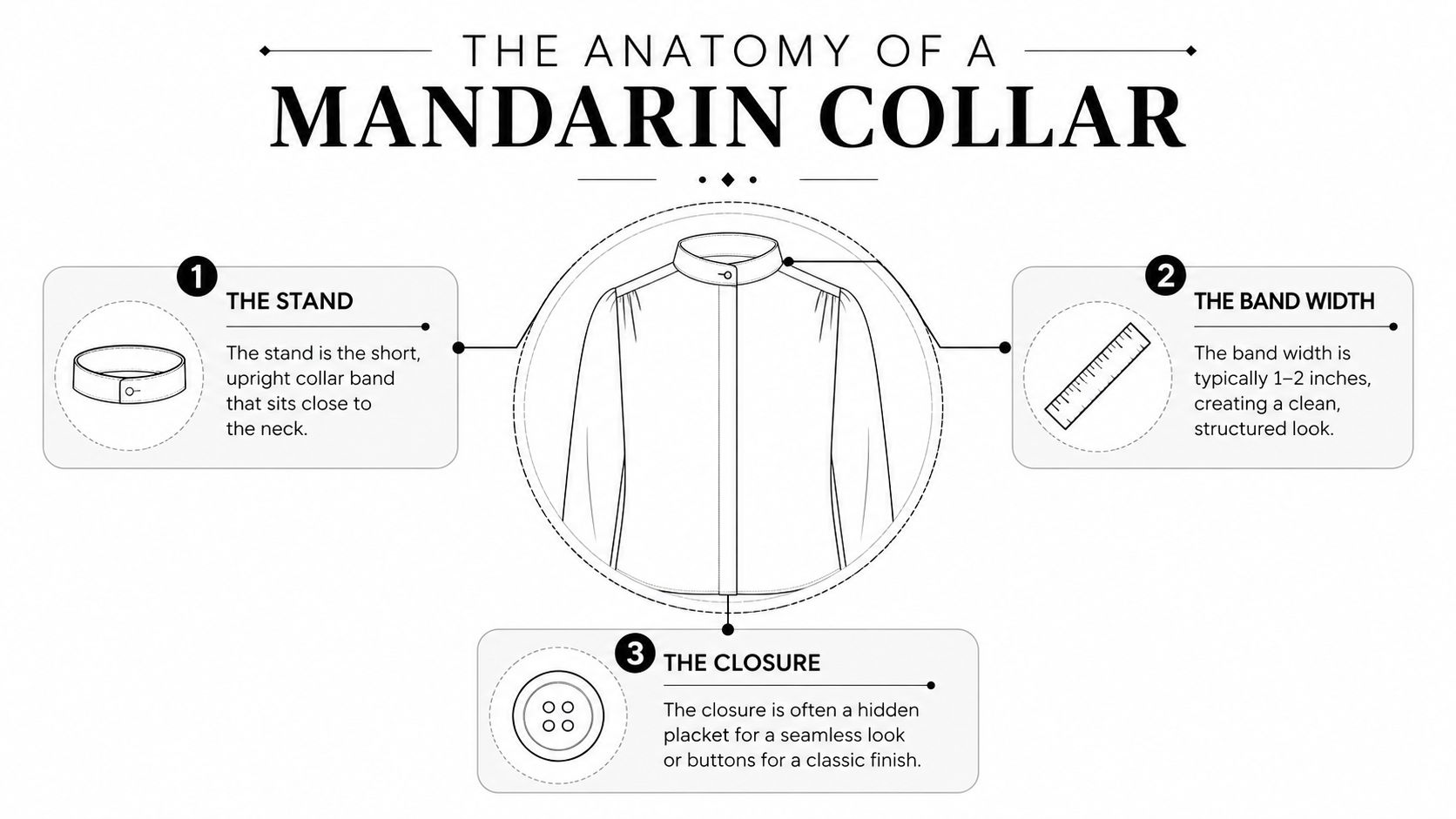
A mandarin collar blouse is defined by its standing collar, a short upright band that sits close to the neck instead of folding over into lapels or points. In dress history, that structure has a long lineage, with roots in Chinese court dress and later forms that became recognizable during the Qing dynasty (1644–1912), while earlier standing-collar forms are traced to the Ming dynasty and described as in fashion from the 16th to mid-18th century. That history matters because the neckline isn't decorative fluff, it's a structural choice that changes how the blouse sits on the body. Mandarin collar history and development
How the shape actually works
A true mandarin collar doesn't fold down. It stands up around the neckline, so the blouse reads as cleaner and more compact at the throat and shoulder line. Typical collar heights in sewing references cluster around 3–4 cm or 2–5 cm, which is why even small changes in height can noticeably change how open, formal, or constricting the blouse feels. Mandarin collar height guidance
Practical rule: If the collar feels too tall, the blouse starts to look stiff before it starts to look elegant.
What to look for before you buy
The details that separate a good blouse from a merely pretty one are usually subtle. Look for a concealed placket if you want a cleaner front, and check whether the collar is soft-fused or reinforced, because that affects how the neckline holds its shape over the day. Some versions also use darts to help the body of the blouse move without pulling the collar off balance. Construction details in a mandarin-collar blouse
The 400-Year Journey of the Mandarin Collar
The mandarin collar didn't appear out of nowhere on a boutique rack. It came out of imperial Chinese dress systems, where standing collars were worn by Qing-era bureaucrats and high-ranking officials as part of formal attire, and where earlier standing-collar forms are also traced to the Ming dynasty. That continuity is what gives the neckline its unusual staying power, it survived regime changes, reappeared in new garments, and kept its identity while the rest of fashion changed around it. History of the mandarin collar in Chinese dress
From court dress to modern clothing
By the late Qing dynasty, the style had moved closer to the collar shape people now recognize in blouses, shirts, cheongsams, and jackets. One historical account also places the collar's wider global spread across the 18th to 20th centuries, including adoption by the British army before it traveled to the Indian subcontinent and became associated with Jawaharlal Nehru's 1947–1964 premiership. That's where the related “Nehru collar” naming took hold. The mandarin collar's cross-cultural journey
Why the blouse version feels current
The blouse version works because it carries that old structure in a much lighter, more adaptable form. Historical fashion that can survive court formality, military wear, and modern tailoring usually does so because the shape solves a real styling problem, it frames the neck neatly without the visual weight of a folded collar. One source also notes that the collar became a defining feature in the fashion vocabulary of the 20th century, while qipao and cheongsam styles popular in the 1910s–1920s and especially the 1920s to 1960s helped normalize the neckline internationally. Fashion history timeline
The mandarin collar lasts because it behaves well across contexts, not because it tries to do too much.

Styling Your Mandarin Collar Blouse for Any Occasion
A mandarin collar blouse earns its keep because it stays clean under structure. For work, it pairs well with trousers, straight-leg skirts, or a sharp blazer, especially when you want polish without a heavy collar competing at the neck. If the blouse has a concealed placket and a smooth front, it layers more neatly under suiting than a blouse with visible bulk. How to style blazers with clean-neck tops
Workwear that looks intentional
The office formula is simple. Choose a blouse in white, ivory, navy, or another solid tone, then let the collar act as the frame for the face rather than the statement piece. A fitted blazer can sit comfortably over a standing collar, but the lapel break needs to leave enough room so the neckline doesn't bunch at the throat.
Weekend and evening looks that don't fight the neckline
For casual wear, I like the blouse with relaxed denim, cropped trousers, or a soft midi skirt. Add one layer at a time, a cardigan, a trench, or a light jacket, because the neckline already creates enough structure on its own. For evening, the same blouse reads more refined with black trousers, a sleek heel, and one stronger accessory rather than a pile of them.
Why this collar keeps showing up in hybrid pieces
Recent product and tutorial content shows mandarin collars appearing on stretch blouses and scrub-style tops, which tells you the silhouette isn't being treated only as traditional ornament. It's being used where people need movement, layering ease, and a cleaner neckline in hot or active settings. That's why the collar works so well in performance-to-fashion hybrids, it delivers form without asking the whole garment to become rigid.

Style rule: The more structured the collar, the simpler the rest of the outfit should usually be.
Finding the Right Fit, Fabric, and Size
Fit is where disappointment often happens, because a standing collar changes the neckline in a way a standard shirt collar doesn't. If you have a broader neck, a fuller bust, or a front that needs more room, the questions are not just size and color, they're closure length, collar height, and how much ease the front opening gives the body. That's the gap many pattern tutorials leave open, even though they explain how to draft the shape. Why fit guidance is underexplained for mandarin collars
Fabric is part of fit, not just hand feel
Lightweight woven fabrics are common because they help the collar keep its shape without making the blouse feel bulky. Verified retail specifications show a range from 115 g/m² poly-cotton blends to about 127 g 100% polyester, and some versions include 1–3% elastane for easier movement and less wrinkling. That small amount of stretch can make the blouse behave better over a long wear day, especially if the collar is standing rather than folding flat. Fabric weights and construction details
How to judge the right version for your body
Look at the opening first. A short closure can feel neat on a narrow neck and chest, but it can also pull if the blouse is too high in the front or if the collar stands too close to the throat. A deeper opening or longer front placket often gives more comfort on fuller busts, and a slightly lower stand can reduce that boxed-in feeling some people get with rigid collars. If you need size advice that goes beyond a basic chart, size chart guidance for apparel brands is useful because it shows why measurement logic matters more than guessing from the label.
| Fabric Type | Weight Range | Stretch | Best Use Case |
|---|---|---|---|
| Poly-cotton blend | 115 g/m² | Sometimes minimal | Daily wear, easier care, stable collar |
| Polyester | About 127 g | Usually little or none | Travel, low-maintenance dressing |
| Polyester with elastane | Similar lightweight range | 1–3% elastane | Movement, warmer climates, all-day comfort |
What actually makes it wearable
A blouse that fits well at the neck won't pinch when you sit, turn, or layer it under a jacket. The collar should sit upright without pressing into the throat, and the front should close cleanly without pulling at the bust. If the design uses darts or a soft-fused collar, those details can help the blouse move with the body instead of floating away from it or collapsing flat.
For fuller figures, the most useful comparison is often not size alone but silhouette behavior, which is why a separate fit reference like plus-size cheongsam styling and fit ideas can be helpful when you're thinking about standing collars, closure room, and visual balance.
Caring for Your Mandarin Collar Blouse
The best care routine protects two things at once, the fabric and the collar structure. Because many mandarin collar blouses rely on lightweight woven fabrics and soft-fused reinforcement, rough washing and high heat can flatten the collar or twist the front opening. Gentle handling keeps the neckline crisp without making the blouse look starched into stiffness.
Wash for shape, not just cleanliness
Use a mild detergent and follow the care label first, because the fiber content determines how much agitation the blouse can take. A poly-cotton version will usually tolerate easier laundering than a more delicate piece, while 100% polyester tends to resist wrinkling better but still benefits from gentle treatment. If you're checking label symbols and fiber instructions, how to read clothing care labels is the fastest way to avoid damage from guesswork.
Drying and storage matter more than people think
Air drying is the safer choice for the standing collar, because machine heat can deform the band and make the neckline lose its shape. Hang the blouse on a shaped hanger and smooth the collar while it's still slightly damp so it sets in a clean line. If you need to remove wrinkles, use steam lightly and keep the iron off the collar edge unless the care label clearly allows direct pressing.
Practical rule: Treat the collar as structure, not decoration. Once the band warps, the whole blouse looks less precise.
Small maintenance habits that extend wear
Store the blouse with enough space that the collar isn't crushed under heavier garments. Don't fold the neck sharply for long periods, because repeated creasing can leave a dent in the stand and make the blouse look tired faster. If the blouse includes elastane, avoid aggressive heat even more carefully, since stretch fibers don't love high temperatures.
Where to Buy a Mandarin Collar Blouse That Fits
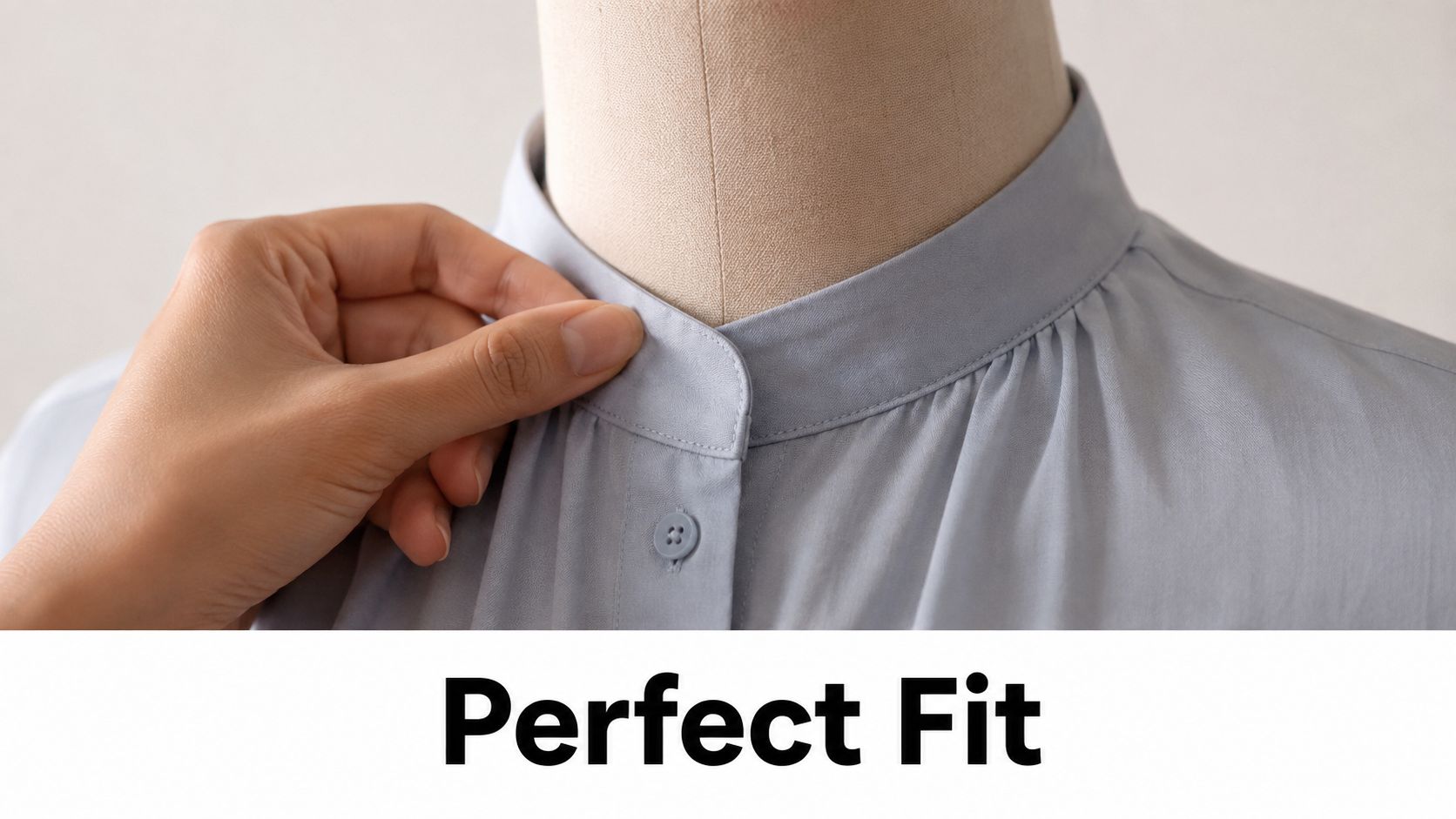
A good purchase starts with reading the product page like a fitter, not a browser. You want evidence of collar stability, seam placement, and fabric transparency, because those details tell you whether the blouse will sit cleanly on a real body or only look polished on a mannequin. The best listings usually show the front and side views clearly, mention the exact fabric composition, and explain whether the collar is reinforced or soft.
What separates a strong buy from a risky one
Look for these signals before you check out.
- Collar stability: The band should look upright and smooth, not floppy or collapsed at the seam.
- Seam placement: Shoulder seams and side seams should look balanced, because poor placement often causes pulling at the neck.
- Material clarity: A product page should tell you whether the blouse is poly-cotton, polyester, or a stretch blend, not just “soft fabric.”
- Closure logic: Hidden plackets, button spacing, and opening length matter if you have a fuller bust or prefer more breathing room.
- Return practicality: International buyers should check shipping timelines, exchange terms, and whether size notes are detailed enough to reduce guesswork.
Why international shoppers need better fit information
A blouse that looks perfect in photos can still fail if the collar stand is too high or the front opening is too short for your shape. That's why brands with strong fit communication stand out, especially for fashion-forward buyers shopping across borders who need both precision and dependable logistics. The example that matters here is not just a stylish garment, but a brand that treats fit as product design rather than afterthought.
For a more efficient online shopping process, how to shop for clothes online helps you compare measurement notes, image clues, and policy details before you commit.
Why the Mandarin Collar Blouse Deserves a Place in Your Wardrobe
A mandarin collar blouse is one of those rare pieces that keeps paying off after the novelty wears off. It has historical depth, but the reason to own one is practical, the collar creates a clean frame, works across dressed-up and casual outfits, and can feel modern without needing loud details. If you choose the right height, fabric, and closure, it becomes the kind of top that makes getting dressed easier, not more complicated.
The strongest versions also solve a real fit problem. They hold structure without choking the neckline, and they carry enough visual presence to stand on their own or sit under a blazer. That balance is hard to beat, and it's why the blouse stays relevant across wardrobe styles, body types, and seasons.
If you want a mandarin collar blouse that takes fit seriously, Arrisco offers thoughtful construction, modern styling, and international delivery from Ho Chi Minh City. Browse Arrisco and look for the details that make a standing collar comfortable on your body, not just beautiful on a hanger.