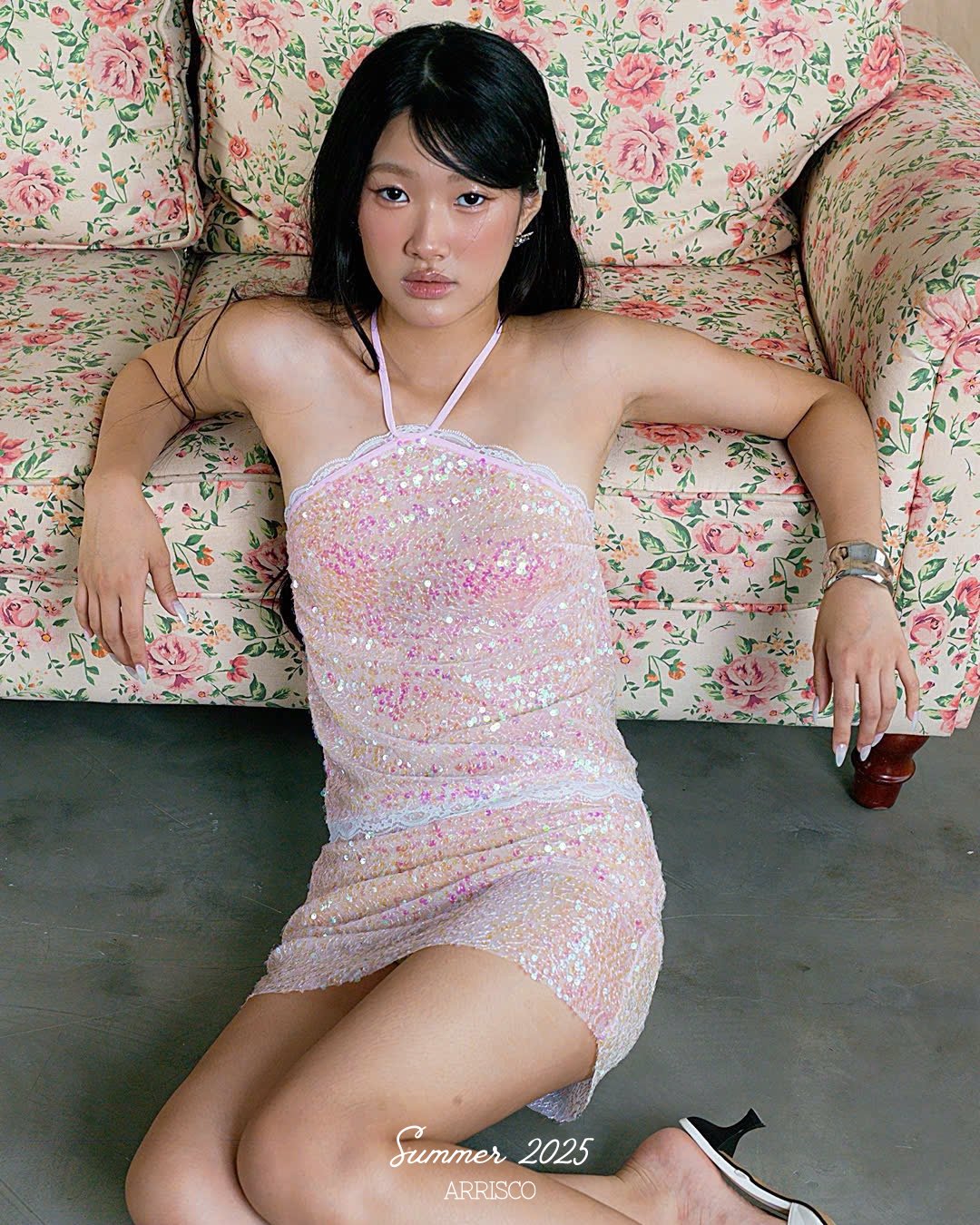


You know the moment. You're scrolling late at night, you spot a lace trim dress, and everything about it feels right, delicate, romantic, a little more special than the usual stuff flooding your feed. Then the practical questions hit fast, and rightly so. Will the trim look cheap in real life, will the fit hold up, and is this one of those dresses that feels memorable from afar but disappointing in person?
A great lace trim dress doesn't need to shout. It needs clean construction, thoughtful proportions, and a trim that looks intentional, not tacked on. That's why the smartest way to shop is to read the dress like a stylist, not like a scrolling impulse buyer, especially if you're buying from a niche brand in Vietnam with an international audience in mind.
The Enduring Allure of the Lace Trim Dress
The reason a lace trim dress still feels magnetic is simple, it carries history in a way most trendy details never do. Lace emerged in Europe during the 16th century, with early production centers in Antwerp, Brussels, and Venice, and by the 1600s it had become a powerful status symbol in elite dress (history of lace). That old association with refinement never really left. Even now, a tiny edge of lace can make a dress feel softer, more considered, and more personal.
Why it still reads as special
The appeal isn't just nostalgia. Lace has always sat between art and utility, which is why it feels more intimate than a plain decorative finish. When John Heathcoat's bobbinet machine in 1809 helped pave the way for modern lace production, lace trim stopped being reserved for a tiny luxury class and became more accessible in everyday fashion (history of lace). That shift matters because it explains why today's best lace-trimmed dresses can feel elevated without looking costume-like.
A niche brand like Arrisco, based in Ho Chi Minh City, has an advantage here if it respects that balance. The right designer knows lace trim should feel deliberate, not decorative noise. That's the difference between a dress you wear once and a dress you keep reaching for.
Practical rule: if the lace detail feels like it could be removed without changing the entire design, the dress probably isn't built around it well enough.
For that reason, I'd always lean toward a dress that uses lace to sharpen the silhouette, frame the body, or soften an edge, rather than one that piles lace everywhere. The strongest pieces feel edited. They have restraint.
If you want to see how a contemporary label can use vintage-coded romance without turning it heavy, the Vintage Allure collection is a useful reference point.
Decoding the Details of a Quality Garment

A good lace trim dress starts with the trim itself. Lace trim is a narrow, decorative strip, usually about 1–20 cm wide, and it's designed to sit on edges and accent zones, not replace the whole garment body (what is lace trim). That means the trim should support the dress, not fight it. If the lace looks oversized for the neckline or too flimsy for a hem, the proportions are off.
What to look for on the product page
Start with the attachment points. I want to see lace trim that lies flat at the neckline, sleeve, hem, or waistline, with no obvious pulling. The stable selvage matters because it makes the trim easier to attach cleanly to the dress structure, which is exactly what separates a polished piece from a rushed one (what is lace trim).
Then zoom in. High-resolution photos should show whether the stitching is neat, whether the trim follows the seam evenly, and whether the lace pattern stays consistent across the garment. When a dress looks romantic in the thumbnail but messy in close-up, trust the close-up.
If you're comparing silhouettes, a narrower trim usually suits cuffs, collars, and hems, while a wider trim makes more sense when the designer wants the lace to read as a focal border. That width choice changes the mood of the whole dress. You don't need more lace, you need the right amount in the right place.
My buying rule: if the trim looks like an afterthought in the photos, it'll probably feel that way on your body too.
For a quick technical comparison, a quality-control guide suggests checking width consistency at five points over a 30 cm sample, and notes that variance above ±1.5 mm can visibly distort seams. It also says thread density of ≥180 threads/cm² is suitable for machine stitching, while <120 threads/cm² suggests hand-basting only (apparel quality guide). You won't always get those exact specs online, but the logic is useful. Fine dressmaking shows up in the details you can't unsee once you know where to look.
If you want a broader fabric reference while browsing, this fabric guide for fashion shoppers is worth keeping open in another tab.
Finding Your Flawless Fit from Across the Globe

International shopping gets stressful when a dress looks perfect and the size chart feels like a riddle. Don't guess. Measure yourself properly, then match your measurements to the garment, not to your ego, not to your usual retail fantasy size.
Measure what matters
Use a soft measuring tape and stand relaxed, not sucked in. Measure your bust, waist, and hips where your body is widest or narrowest in the correct places. If a brand offers fit notes like bodycon or relaxed, take them seriously because they tell you whether the dress is designed to skim, cling, or float.
A Vietnamese niche brand can be a smart buy for international shoppers when it gives clear garment measurements and honest fit descriptions. That's where the confidence comes from. I'd rather see a brand describe a dress accurately than dress it up with vague praise and no fit context.
Read the chart like a stylist
Don't compare your body to a chart and stop there. Compare your measurements to the actual garment measurements if they're provided, then think about whether you want breathing room or a close fit. Lace trim dresses often look more expensive when they fit cleanly through the waist and bust, even if the skirt has ease.
If the fabric has little stretch, give yourself room in the bust and waist first. Tight lace never looks refined.
Tailoring is your friend when the design is otherwise right. A hem that's slightly off, a waist that needs a small nudge, or straps that need shortening can turn a good purchase into a personal favorite. The point is not perfection on arrival. The point is getting close enough that a minor alteration makes it feel made for you.
If you're shopping from a brand with international sizing, the size chart conversion guide should be your first stop before you click buy.
Styling Your Dress for Every Occasion

A lace trim dress earns its keep when it can do more than one job. The trick is to change the accessories, not the dress, and let the lace do the softening for you. That's how one thoughtful piece moves from casual to polished without losing its charm.
Sunny weekend brunch
For daytime, I'd keep it relaxed. Pair the dress with flat sandals, a woven tote, and jewelry that catches light without competing with the trim. The lace should feel airy, so the rest of the look needs to stay easy and unfussy.
For a more playful take, the stylish lace mini dresses idea works well if you want the silhouette to feel younger and less formal. A shorter hem can make lace trim feel crisp instead of precious. That's a smart move when the weather is warm and the setting is casual.
Evening elegance
At night, the same dress should feel sharper. Swap in heeled sandals, a small clutch, and a bolder lip, then let the lace act like a frame rather than the main event. When the accessories are sleek, the trim reads as intentional and feminine instead of sweet.
Workplace chic
If the dress is structured enough, layer a blazer over it and add ankle boots or refined flats. The contrast matters. A structured layer calms the romance of the lace, which makes the whole outfit feel modern and very wearable.
| Occasion | Footwear | Accessories | Vibe |
|---|---|---|---|
| Sunny Weekend | Flat sandals | Woven bag, light jewelry | Relaxed and fresh |
| Evening Elegance | Heeled sandals | Clutch, statement lip | Sleek and romantic |
| Workplace Chic | Ankle boots | Structured blazer, clean jewelry | Polished and confident |
A designer dress gets much more mileage when it works across settings like this. That's why I like pieces that don't overcommit to one mood.
A useful way to see styling in motion is this video demo, which shows how small changes shift the entire feel of a look.
Keeping Your Lace Delicate and Lovely

A beautiful lace dress can survive real life if you treat it like a special garment, not a throwaway trend piece. Follow the care label first. If washing is allowed, use cool water and a gentle detergent, and keep the dress in a mesh laundry bag if you're machine-washing it.
Care that protects the shape
The trim's recovery matters because lace needs to snap back cleanly after movement. A quality-control guide for apparel says lace trim should recover to within 10.3 cm after being stretched from 10 cm to 12 cm for 10 seconds (apparel quality guide). That elasticity helps prevent ripples at seams, which is exactly why rough handling shows up so quickly on delicate dresses.
Heat is the enemy here. Dryers and hot irons can damage the lace, so keep temperatures low and skip any aggressive drying method. If you need to reshape the dress, let it air dry flat or hang it carefully away from direct heat.
Storage matters too. Use a padded hanger so the shoulders don't stretch out, and keep the dress away from crowded closet pressure. A tiny snag should be dealt with immediately, gently, before it turns into a bigger pull.
Store it with enough space to breathe. Lace looks expensive when it isn't crushed.
If you like a clear breakdown of garment labels and symbols, this care label guide is a practical companion before you wash anything.
Your Confident Purchase from a Niche Designer
The market for lace has changed completely from the era when it was locked behind extreme labor and scarcity. In the 19th century, one reported price shift took lace from 5 pounds to 5 pence per yard over a 25-year period as industrial production expanded, and by 2024 the global lace market was valued at about $1.2 billion (Berkeley lace economics). This marks the pivot, from rarity to design judgment. Today, what matters most is whether the piece looks smart, feels well-built, and fits your life.
Why a niche label is worth your attention
A contemporary niche brand has room to make decisions that fast fashion usually skips. It can choose a narrower trim, a cleaner attachment, a more thoughtful proportion, and a size chart that effectively helps international buyers. Those choices matter more than hype. They decide whether the dress feels like a disposable trend or a keep-forever piece.
If you want a useful framework for how direct-to-customer brands can present clear product information, the comprehensive guide for DTC retailers is a sharp read. Good brands make the buying process easier because they respect the shopper's time and uncertainty.
Arrisco fits that mindset as a contemporary Vietnamese niche fashion brand in Ho Chi Minh City, especially for buyers who want distinctive dresses with a clearer point of view. If you're looking for a lace trim dress that feels designed rather than assembled, that's where I'd focus my attention. The point isn't to chase the most decorated option, it's to choose the one with the cleanest execution and the smartest fit.
If you want a lace trim dress that feels refined, wearable, and special, browse Arrisco and look closely at the trim, the fit notes, and the styling potential before you decide. Their dresses are made for shoppers who care about detail, and that's exactly the mindset that leads to a piece you'll reach for often.