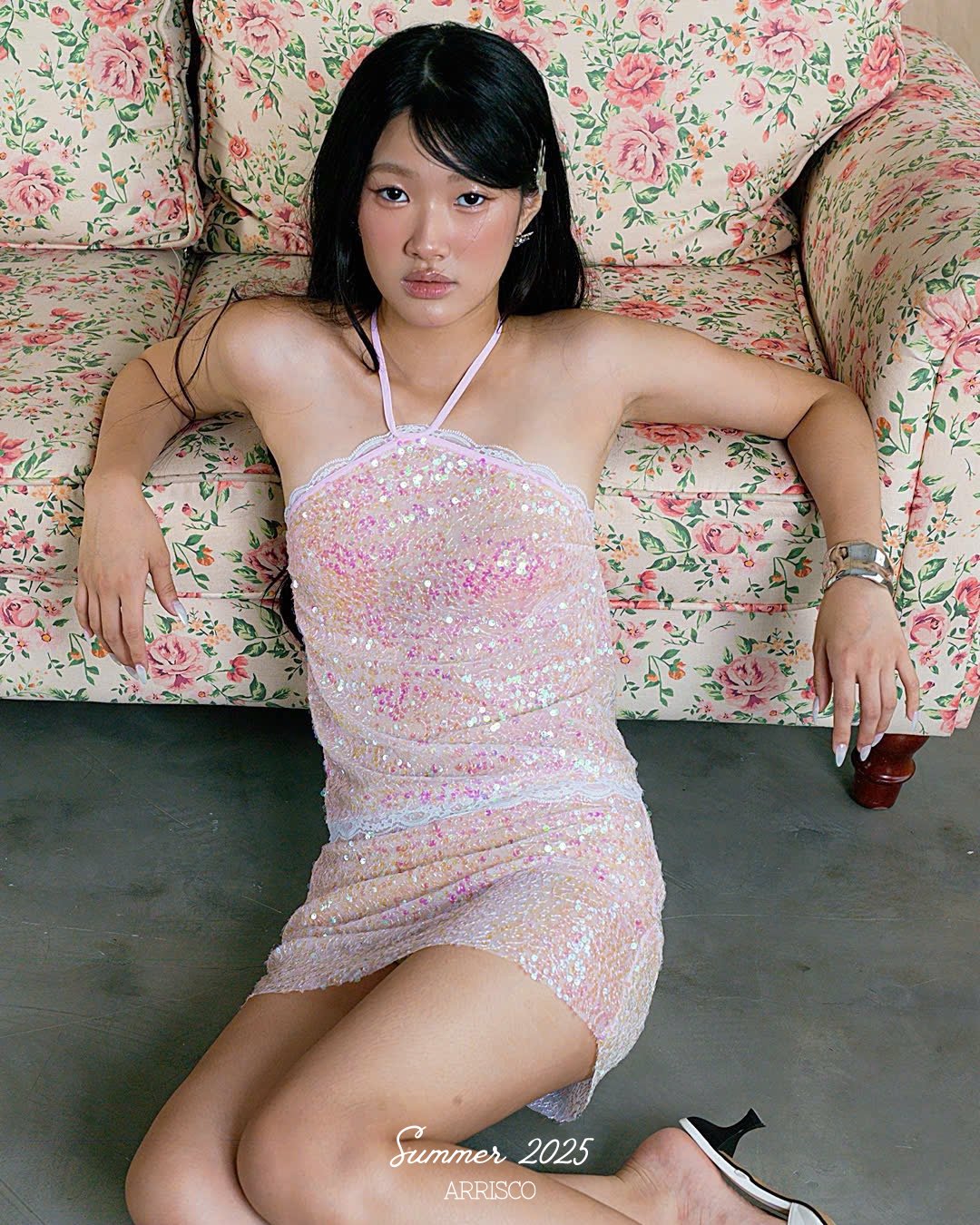


Mistake during editing. The biggest issue with a dress off shoulder is whether the band, elastic, and upper-arm fit can survive a wedding toast, a subway ride, or a full night of dancing without turning into a constant tugging problem.
The silhouette has real fashion history, too. It rose in the early 19th century, read as status in Victorian evening wear, then lost ground by the 1890s as styles shifted toward puffed sleeves and a more structured look tied to the “new woman” era and wider social change (historical overview). It came roaring back in 2016, when online arrivals of off-the-shoulder tops and dresses rose 110% year over year in the first quarter, while cold-shoulder styles rose 218% (retail spike context). That history matters because this neckline keeps coming back when fashion wants visible shoulders and softer lines.
The hard truth is simpler. Off-shoulder is not universally flattering, especially on broad or athletic shoulders, because the full shoulder line can read wider. The best version is the one that stays anchored, frames the body, and doesn't fight your proportions.
Why Off-Shoulder Is a Fit Problem First and a Style Choice Second
A dress off shoulder succeeds or fails on mechanics, not fantasy. If the band is wrong, the whole look becomes a hands-on task, and nobody wants to spend a reception pulling fabric back into place every ten minutes. The neckline can be romantic, elegant, and camera-friendly, but only after it passes the fit test.
Why the shoulder itself is not the main fit variable
A reliable off-shoulder pattern is built from vertical body measurements, not shoulder width. The expert tutorial that measures front neck length, back neck length, high-shoulder-to-waist length, and shoulder seam-to-center-front neckline drop separately makes the point clearly, the shoulder is no longer the controlling dimension (pattern measurement guide). That same tutorial's 9.25-inch diagonal front neck drop gives you a concrete benchmark for how intentional neckline depth should look and feel.
Practical rule: if the neckline depth feels random on the hanger, it'll feel worse in motion.
That's why I always tell clients to stop asking whether the dress is “pretty” first. Ask whether the neckline is symmetrical, whether the band sits where it should, and whether the upper-arm opening gives you enough room to move without exposing the wrong things. A beautiful off-shoulder dress that you can't wear comfortably is just expensive frustration.
The old assumption says this cut flatters everybody. It doesn't. The better question is whether the dress supports your frame or exaggerates it, and that answer changes with construction, body balance, and what you plan to do while wearing it. If you want a broader fit-first perspective, these tailoring notes on body types reinforce the same logic, fit comes before styling.
The 30-Second Fit Test You Should Run Before You Buy

Don't buy an off-shoulder dress unless it passes movement. A mirror pose tells you almost nothing. What matters is whether the neckline stays put when your body does normal human things, like reaching, sitting, and twisting.
Run the fit test exactly this way
- Reach & Pull. Raise both arms. The neckline should not ride up or shift more than 0.5 inch during the motion, and you should not feel underarm pinching.
- Sit & Lean. Sit for 90 seconds, lean forward slightly, and check for gaping or slip at the chest and back.
- Hug & Twist. Hug someone or simulate the motion, then twist at the torso. The fabric should not expose more than it should or collapse across the band.
That movement protocol lines up with independent garment guidance that emphasizes arm raises, seated checks, gaping checks, and minimal back cutouts for stability (fit guidance). It also matches the mechanical reality of elastic. If the elastic is too tight, it tries to close itself and rides up. If it's too loose, it slides down. One popular sewing guide even recommends drafting the bodice without darts, adding a 1-inch seam allowance, and inserting elastic into the top edge, which tells you how much the band carries the whole garment (construction guide).
For shoppers who buy online, measurement matters before the dress even arrives. Use how to measure for clothes online to compare your bust, upper torso, and shoulder area against the product chart. If the seller doesn't give enough detail, skip it.
You can also sanity-check shoulder proportions with this shoulder-measurement guide before you click buy. That's the difference between a flattering neckline and an outfit you keep adjusting all night.
If a dress needs constant rescue in the fitting room, it'll need constant rescue at dinner.
Fabrics and Band Construction That Hold Their Shape
Fabric choice changes everything. A dress off shoulder in chiffon behaves nothing like one in scuba, and a structured band behaves nothing like a soft elastic edge. I judge these pieces by how they feel after movement, not how expensive they look on a hanger.
What to pick for the occasion
Stretch cotton is the easiest live-with option for casual weekends because it moves with you and doesn't feel precious. Scuba keeps the neckline shape better for events and gives the band more body. Chiffon works when you want softness, but it needs better internal support because it will not do the anchoring for you. Linen blends can look effortless in heat, but they only work when the cut is clean and the neckline is reinforced. For warm-weather dressing, the fabric for summer dresses guide is a useful way to think about breathability without guessing.
Band construction comparison
| Feature | Elastic Band | Structured Band |
|---|---|---|
| Feel | Forgiving, flexible | More precise, more anchored |
| Fit range | Easier to size | Demands closer sizing |
| Stability | Good at first, can relax over time | Holds shape longer |
| Best use | Casual wear, flexible body shapes | Weddings, long events, polished looks |
| Trade-off | May lose tension | Less forgiving if sizing is off |
A good buying rule is simple. If the dress is meant for dancing, choose stronger support and a firmer band. If it's for a relaxed brunch or a weekend outing, a softer construction is fine. The key is whether the neckline is reinforced and symmetrical, not whether the fabric sounds fancy.
Use a broader fabric reference before you buy. This fabric guide helps you read material behavior before the fitting room. The best technical sourcing language is internal reinforcement, and that can mean a wider band, partial boning, or a more structured top edge. When a sewing guide recommends a band at least 2.5 inches wide with 8–12% spandex, it is pointing in the right direction. The band has to hold tension without fighting your body, and band construction notes show the same logic in practical terms.
Bra Solutions and Layering That Don't Ruin the Line

Undergarments should disappear, not compete. The right support depends on the cut, the bust, and how long you'll wear the dress. I'm blunt about this because the wrong bra shows instantly under an off-shoulder neckline.
Match the support to the dress cut
A bandeau-friendly dress can sometimes handle a clean strapless bra or built-in support if the fabric is thick enough. A structured bodice usually works best with a strapless convertible bra that has a secure band and molded cups. A flowy bohemian style often does better with adhesive cups or built-in support, especially if the top edge is soft and light. A backless variation calls for adhesive solutions or going braless only if the dress has enough internal structure to hold its shape.
That aligns with the bra guidance that makes strapless bras the most reliable choice for many fuller busts, while adhesive options suit smaller cup sizes and lightweight fabrics better (bra guide). The same source points to wide underwire bands, silicone grip strips, and side boning as the features that matter when you're moving.
Keep layers short and deliberate
If you need a layer, choose one that respects the neckline. A cropped denim jacket, a short cardigan, or a blazer with a clean shoulder line usually works better than a long layer because it leaves the neckline visible. The shoulder reveal is the point. Cover too much and the silhouette loses its edge.
For bra sizing, this bra-size guide is a useful check before you commit to a strapless style. The worst mistake is buying the right dress and the wrong support, then blaming the neckline for a problem the undergarment created.
Simple decision rule: if the dress is fitted and structured, the bra should be too. If the dress is soft and relaxed, the support can be lighter, but the band still has to stay put.
Matching Silhouettes to Body Types Without the Old Rules
Off-shoulder works best when the neckline shape matches the body shape, not when you force the same version onto everyone. The old advice says, “Anyone can wear it.” My advice is better: choose the version that doesn't fight your proportions.
Pick the neckline that flatters your frame
A straight-across Bardot neckline gives the cleanest shoulder line and looks strongest on balanced frames and narrower shoulders. A sweetheart off-shoulder softens the upper body and adds curve, which is useful when you want more romance and less sharpness. A V-shaped drape creates vertical movement through the chest, which helps when you want the eye to travel downward instead of across.
Broad or athletic shoulders need the most care. The wrong off-shoulder band can widen the upper body visually, especially if the neckline is tight and flat. Softer drape, vertical seaming, and a slightly wider back support read better because they reduce the horizontal emphasis. That view lines up with expert style advice that says off-shoulder can be a poor choice for broad shoulders when the neckline exaggerates width (broad-shoulder guidance).
Use skirt shape to balance proportion
An A-line skirt is the safest partner for fuller hips because it balances the exposed shoulder line with gentle movement below. Petite frames usually benefit from cleaner lines and less fabric crowding the neckline. Tall frames can handle more dramatic off-shoulder structure because the extra vertical length gives the look room to breathe.
I'd keep the shortlist simple. If you have broad shoulders, try softer drape first. If your frame is narrow, structured bands can look sharp and secure. If your hips are fuller, let the skirt do the balancing work instead of overworking the bodice.
Three Outfits That Make One Dress Earn Its Keep
A good dress off shoulder should not be a one-occasion piece. If it only works at a single event, it's not a smart buy. I want a dress that can move from a Saturday coffee run to a dinner reservation without looking overstyled.
Casual weekend
Start with a midi off-shoulder dress in a breathable fabric, then add flat sandals and a cropped denim jacket. The jacket keeps the outfit casual while the short length preserves the neckline. A small crossbody bag finishes it without cluttering the shoulder line.
Date night
Choose a more fitted version, then add statement earrings and block heels. Skip the necklace unless the neckline is very open and clean, because earrings pull the eye upward and let the shoulders do the work. A sleek clutch keeps the outfit focused and sharp.
Wedding guest
Go for a polished cut with a structured band, then pair it with minimal jewelry and a structured clutch. If the ceremony is formal or religious, bring a coordinating cover-up so the dress works in both modes. That's the responsible way to wear a neckline that bares the shoulders while still respecting the setting.
The right outfit depends on the cut. A soft bohemian dress works best for weekends, a fitted Bardot shape shines at dinner, and a cleaner structured silhouette belongs at events. One dress can do all three if the band is stable and the rest of the styling stays disciplined.
Care and Storage That Protect the Band
Most off-shoulder dresses die slowly. The neckline stretches, the elastic loosens, and the dress starts looking tired long before the fabric itself is worn out. That's why care matters more here than it does with many other silhouettes.
Protect the parts that fail first
Hand-wash over machine-wash whenever you can. Lay the dress flat to dry so the band keeps its tension, and fold it instead of hanging it, because hanger stretch can distort the shoulders. Keep it out of direct sunlight so the color doesn't fade unevenly. The care label tells you the truth, so check it before you improvise, and this clothing care-label guide is a useful reference if the symbols look confusing.
Know when to retire it
Retire the dress if the band has become visibly loose, if the neckline no longer returns to shape, or if the stretch recovery is gone. Those are not minor flaws. They're the sign that the dress has stopped doing its job.
A practical habit helps. After washing, let the dress cool and dry completely before you try it on again. That gives you a clean read on whether the elastic still holds. If it flops the second you move, the garment is done.
A good off-shoulder dress should come back to shape as fast as you do.
If you want off-shoulder pieces that look good in motion, not just on a hanger, shop with the band first and the trend second. Arrisco builds around fit, movement, and modern styling, which is exactly what this neckline demands. Visit Arrisco and choose the next dress you can wear all night.