


You're standing in front of the mirror with an oversized shirt half-buttoned, straight-leg jeans waiting on the chair, and one question doing all the work: would a black lace-up corset pull this outfit together, or make you look like you're heading to a costume party?
The answer depends on what you want the garment to do. A corset can cinch an everyday layer, anchor evening tailoring, sharpen a slip dress, or provide occasional waist shaping. It can also pinch, distort, and look awkward if you buy by dress size, tighten too quickly, or ignore the construction underneath the black fabric.
The useful way to shop for black lace up corsets is to treat them as silhouette tools for modern layering. You'll find the practical difference between fashion wear, event dressing, and waist shaping here, along with fit checks, outfit formulas, lacing technique, and care habits that make sense outside a photo shoot.
Why a Black Lace Up Corset Belongs in a Modern Wardrobe
You have an oversized shirt, relaxed trousers, and a jacket that feels shapeless. Add a black lace-up corset, and the outfit gains a waist without turning every other piece tight. That is its modern job: shaping the silhouette while letting the rest of the look stay easy.
A black corset earns wardrobe space when it does more than decorate. It can define an everyday layer, give event tailoring a stronger line, or provide occasional waist shaping. Those jobs require different designs, so choose the purpose before choosing the garment.

Choose the job before the garment
For everyday layering, start with an underbust style. Wear it over a fitted tee, crisp shirt, or thin knit, and let the base layer provide coverage and softness. The corset shapes the waist without demanding that it become the entire outfit. Black works especially well with denim, cream, oxblood, silver, leather, and other black pieces.
For events, an overbust style can take the place of a conventional bodice under a jacket or above a skirt. It creates a stronger architectural line through the upper body, while changing how the neckline and sleeves sit. Try the complete outfit before the event. A corset that works alone may fight the jacket, bra, or skirt once everything is on.
For occasional waist shaping, construction and fit matter more than decoration. Measure your bust, waist, hip, and center-back length before ordering. Any maker who does not ask for these measurements is not selling you a fitted garment.
Stylist's rule: If the corset only looks good when you stand still and pose, it isn't ready for real life.
A usable black corset should let you sit, walk, reach, and breathe comfortably enough for its intended wear. Lace it to shape the outfit, not to overpower it. The contrast between a defined waist and relaxed layers is what keeps the silhouette current for 2026.
Anatomy of a Black Lace Up Corset
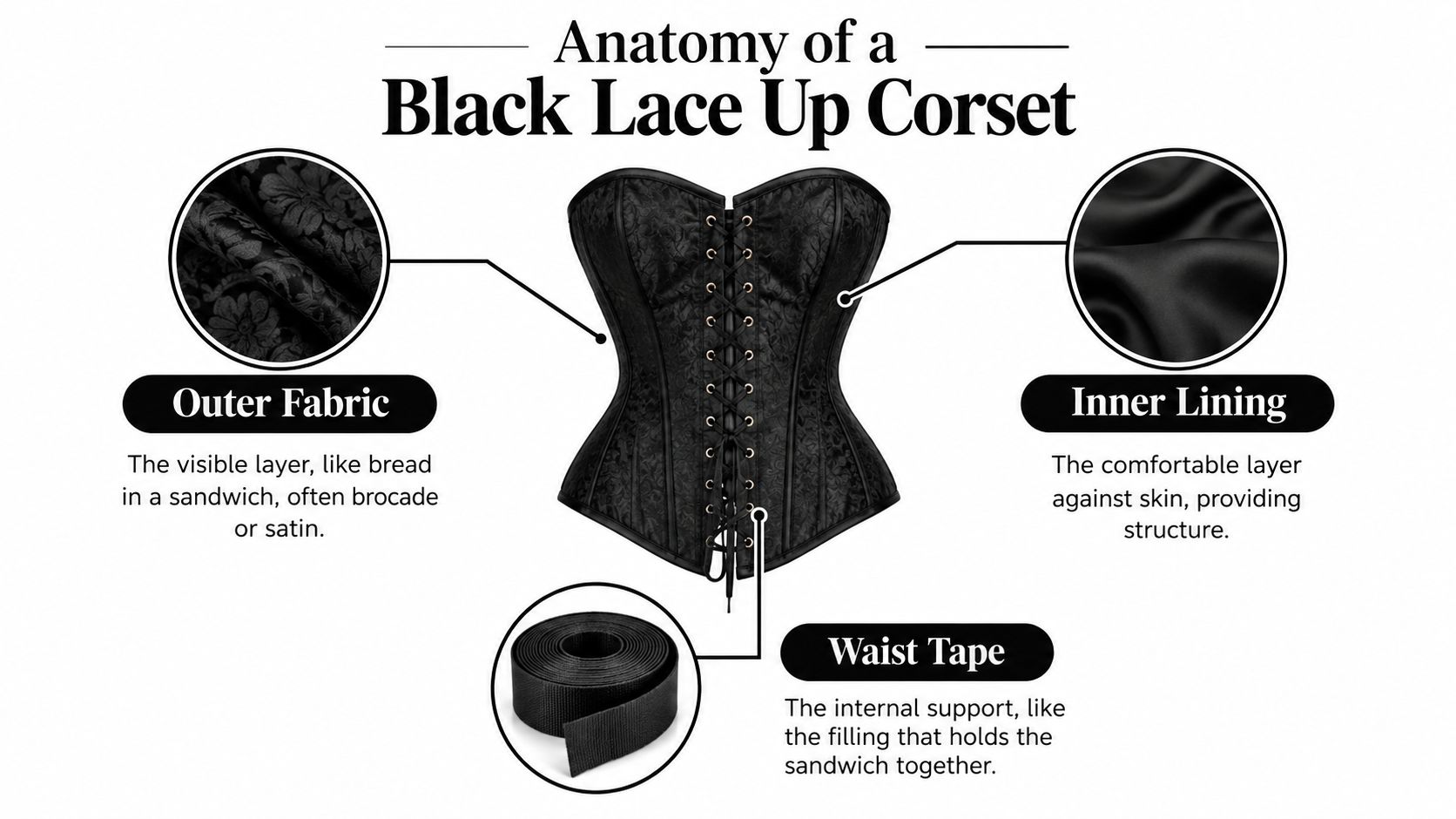
A corset is best understood as a structured sandwich. The outer fabric is the visible bread, the lining is the layer against your body, and the waist tape is the filling that helps hold the whole structure together. Remove or weaken any layer, and the garment may still look attractive on a hanger while failing under tension.
Start at the front. You'll usually find a busk with metal fastening loops and pins, although some fashion corsets use a zipper or another closure. The closure decides how easily you can put the garment on and whether the front remains stable while the back lacing is adjusted.
At the back, the lacing panel carries the fit adjustment. Metal grommets should sit evenly so the laces pull across the opening instead of concentrating force in a few spots. The history of corsetry shows why this detail matters mechanically. By the 1830s, metal eyelets had replaced hand-sewn eyelets, allowing laces to be pulled tighter with less strain on the fabric, as explained in this history of nineteenth-century corset construction.
The parts that decide how it feels
Boning channels hold the vertical supports. Flat steel typically works at the center front and back, where the garment must resist bending. Spiral steel suits curved panels because it can flex in two directions without kinking the fabric. Historical corsets used materials including baleen, steel, reed, and wood, while steel became especially popular because it combined strength with flexibility, according to this overview of historical corset patterns and techniques.
The waist tape is an internal reinforcement that carries tension around the waist. It helps transfer the pull of the lacing through the garment rather than leaving the fashion fabric and seams to absorb everything.
The binding finishes the top and bottom edges, protecting the layers and keeping them together. A modesty panel behind the laces covers the gap at the back, protects your clothing or skin from direct contact with the lacing, and makes the opening look finished.
Construction guidance recommends channels slightly wider than the boning, filed or capped metal ends, evenly spaced grommets, and dense woven strength layers such as coutil or twill. Those details matter more than a pretty satin surface, as explained in this guide to boning and corsetry construction. If the structure is sound, the black fabric can do its visual job without carrying the entire garment.
For a closer look at custom construction and fitting considerations, compare the details in this custom-made corset guide.
Why Black Lace Up Corsets Keep Showing Up in 2026
You can wear the same black lace-up corset to a gallery event, under a blazer for errands, or over a soft dress for dinner. Its appeal in 2026 comes from that range. It creates a deliberate silhouette, then changes character through layering instead of reading as a costume piece.
The adjustable back matters because real outfits change. A corset worn over a thin tee needs a different setting from one worn over knitwear, and posture shifts throughout the day. The lacing lets you refine the fit for each layer and keep the waistline controlled without forcing every outfit into the same shape.
Runway and editorial coverage reflects this shift. Simone Rocha used ribboned lace-up corsetry at London Fashion Week, Harper's Bazaar highlighted a black lace corseted mini dress in 2026, and ELLE suggested pairing corsets with everyday pieces such as velvet tops and lace skirts, as discussed in coverage of corsetry's move into mainstream fashion.
The design works because black gives the structure room to lead. The lace-up back adds detail from behind, while the waist creates a clean break between loose and fitted layers. Pair it with cream, oxblood, washed denim, tailoring, or a slip dress, and the corset supports the outfit without requiring a necklace, ornate print, or theatrical styling.
The same garment can serve three distinct jobs:
| Use | How the corset behaves |
|---|---|
| Events | Defines the waist and gives a simple dress or skirt a sharper focal point |
| Everyday layering | Sits over a tee, shirt, or knitwear piece to add structure without replacing the base outfit |
| Waist shaping | Adjusts the torso line beneath or over clothing, depending on the cut and construction |
A market forecast cited in the same coverage places the global corset market at USD 2.15 billion in 2025 and USD 3.55 billion by 2033. Those figures are projections, not guarantees, but they match the visible shift toward corset tops and dresses as established outfit categories rather than specialist undergarments.
The important change is practical. The 2026 lace-up corset does not ask the entire outfit to perform. It gives a relaxed look a waist, gives tailoring a stronger center, and lets one structured piece work across events, daily layering, and deliberate waist shaping.
How to Choose the Right Fit and Size
Start with your body, not the size label. Corset sizing varies by maker and region, and standard dress sizes don't tell you enough about ribcage, waist, hip, or torso length.
Take the measurements that control the shape
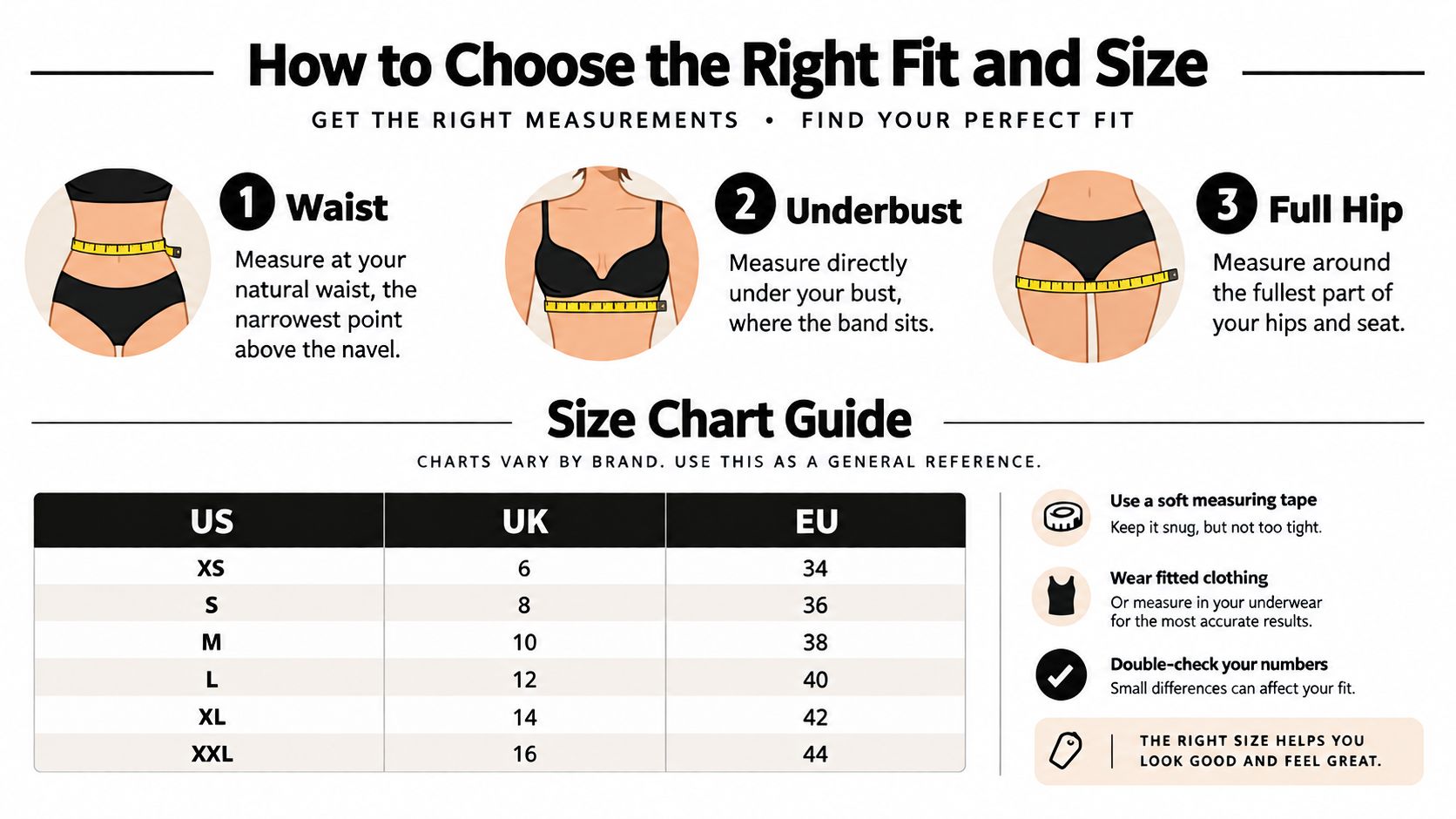
Use a flexible tape and measure without pulling it tight.
- Natural waist: Measure at the narrowest point of your torso.
- Underbust: Measure directly beneath the bust, where the upper edge may sit.
- Full hip: Measure around the fullest part of your hips and seat.
- Center-back length: Check the maker's guidance if the corset has a long waist or extends toward the hips.
Write the measurements down in the unit used by the brand. Then compare every relevant measurement with the brand's chart, including regional labels for US, UK, EU, or Asian sizing. A corset can match your waist while cutting into your ribs or hips, so don't choose from the waist number alone.
Use the back gap as a fit test
A snugly laced corset is commonly intended to leave roughly 2 inches of space at the center back, according to this guide to accurate body measurements. The opening should look parallel from top to bottom. If the edges form a dramatic V, the corset may be too small, your proportions may not match the pattern, or the lacing tension may be uneven.
Fit guidance commonly recommends starting with a 4 to 6-inch reduction from your natural waist, while more dramatic shaping may use a 15% reduction. These figures come from corset-fitting guidance, not ordinary clothing advice, so treat reduction as a progressive target rather than a reason to force the garment closed on the first wear. A total gap variance of up to 2 inches can still be considered acceptable when the garment feels balanced and the opening remains even, as outlined in practical corset fit guidance.
Your buying routine should be simple:
- Measure: Record waist, underbust, full hip, and any required length.
- Match: Use the specific brand chart, not your usual dress size.
- Check: Look for an even back opening rather than chasing a fully closed corset.
- Plan: Begin with a manageable reduction and increase only when your body tolerates it.
The correct size doesn't punish your ribs, force the bust upward, or create sharp pressure at the hips. It supports the shape while leaving enough adjustability for movement.
Styling Black Lace Up Corsets for Real Outfits
The best styling choice depends on the occasion and the silhouette job you need. Don't wear the same corset formula to a weekday meeting and an evening event, then blame the garment when the proportions feel wrong.
Weekday layering
Wear an underbust corset over a fitted white tee, straight-leg jeans, and a relaxed blazer. The tee softens the structure, the jeans keep the outfit grounded, and the corset cinches without turning the look into a costume. This is the easiest entry point because every piece remains recognizable as ordinary daywear.
For a more detailed version of this combination, use the corset and T-shirt styling guide.
Evening tailoring
Put a corset under an oversized black blazer with tailored trousers. An underbust style leaves room for a camisole or bare neckline beneath the jacket, while a controlled waist keeps the generous blazer from swallowing your shape. Choose simple accessories. The construction already provides the focal point.
Date night
Layer an underbust corset over a slip dress for contrast. The dress contributes movement and softness, while the corset creates a defined horizontal break through the middle. Check the dress fabric before tightening. Thin satin can show every edge, so a smooth lining or lightweight base layer may make the finish cleaner.

Festival and streetwear
Pair the corset with cargo pants and chunky boots. Here, the corset anchors the volume below the waist, so choose a clean black finish rather than excessive trim. You can add a graphic long-sleeve underneath if the outfit needs color or texture, but keep the waistline visible.
Bridal or formal dressing
For a crisp shirt and long skirt, an overbust corset creates the strongest shirt-and-skirt shape. Wear the shirt slightly open at the neck or fully buttoned depending on the mood, then let the corset define the torso over it. This works particularly well when the skirt is fluid and the shirt is sharp.
Two mistakes show up repeatedly. The first is treating the corset as a costume piece by surrounding it with too many historical or theatrical signals. The second is forgetting that shaping the waist changes nearby hemlines and necklines. Recheck the shirt tuck, skirt waistband, and dress drape after lacing.
If the outfit looks complete without the corset, the corset is doing its job.
For a visual walkthrough of these outfit directions, watch the styling video below.
How to Lace and Break In Your Corset
Loosen every lace before putting the corset on. A structured corset should slide into position without force. Pulling it over your body while the laces are tight strains the grommets and can distort the panels.
Start with an even crisscross pattern. Keep the lace flat, without twists, and leave moderate tension while you position the garment. Once it sits correctly, tighten gradually from the middle. Yanking only the top or bottom creates uneven pressure and makes the waist look crooked.
Use the bunny-ears method for control
The bunny-ears method leaves two adjustment loops at the back, usually around the waist. Lace through the upper grommets, divide the lace into two tails, and form matching loops. Pull both loops evenly to bring the sides closer, then tie the tails securely.
This setup gives you separate control over the upper and lower sections, so it suits a corset you plan to wear as a silhouette tool under different layers. Back lacing changes compression according to how it is tightened. Common approaches include top-down, bottom-up, and bunny ears, as summarized in this overview of corset lacing.
Break it in slowly
Your first wear should test comfort, not toughness. Follow a staged routine:
- Week one: Try a 2-inch reduction for 1 to 2 hours.
- Week two: Move to a 3-inch reduction for 3 to 4 hours.
- Week three: Try 4 inches for a full day if your body remains comfortable.
- Week four: Work toward your target reduction without forcing closure.
These reductions and durations follow the specified break-in plan, while your body decides whether you continue. Stop for sharp pain, numbness, breathing difficulty, or pressure concentrated in one place. Do not force the schedule just because the next stage is written down.
Skip tight-lacing beyond 4 inches on day one, sleeping in the corset, and dry-cleaning during the initial break-in period. Keep it dry, avoid lacing over fresh piercings, and release the garment immediately if discomfort turns sharp. For a softer decorative finish, review this corset ribbon styling guide.
Most early damage comes from rushing the curve. Pull evenly, loosen the laces fully before removal, and note where the pressure settles. That information tells you whether to adjust the fit, change your layers, or stop wearing the corset.
Care and Maintenance That Actually Works
Corset care is a quick routine after each wear. Waiting until the lining has absorbed sweat, skin oil, and lotion makes cleaning harder and can shorten the garment's useful life.
Open the corset and wipe the inner lining with a damp cloth and mild soap. Do not soak it. Lay it flat with the lining exposed, then let it dry completely before storing. Trapped moisture around steel hardware can encourage corrosion and leave the fabric holding an unwanted shape.
Build care into your wardrobe rotation
If you wear corsets regularly, rotate between two or three garments. Each piece gets time to air out and recover, and you avoid repeatedly washing one structured garment. Airing is enough after light wear when there is no odor or visible mark.
Store the corset snapped or laced loosely, flat in a drawer or on a wide hanger. A narrow hanger presses into the edges. Hanging it by the laces for months pulls on the grommets and can distort the back opening.
Storage rule: Support the garment by its body, never by the lacing.
Avoid the shortcuts that cause damage
Keep a structured corset out of the washing machine. Agitation can bend the boning, warp the panels, stress the seams, and expose metal components to unnecessary water. Its rigidity makes machine washing especially destructive.
For a mark, use a lightly damp cloth and a gentle cleaner suited to the fabric. Test an inconspicuous area first, particularly when the outer layer is satin, lace, coated fabric, or another finish that may react differently from the lining.
Dry cleaning makes sense when the corset is heavily soiled, has a persistent odor, or carries a fabric-specific care requirement. For ordinary post-wear freshness, air it out and wipe the lining instead. Check the care symbols with this guide to clothing care labels before selecting a cleaning method.
Inspect the laces, grommets, binding, and exposed seams from time to time. Address a loose grommet or rough metal edge early, before it abrades the surrounding fabric. That small check matters most when you are using the corset as a regular layering piece rather than saving it for occasional event wear.
Quick Answers for New Corset Shoppers
How should I compare US, UK, and EU charts?
Don't assume a regional size conversion is enough. Corset makers may label the same body measurements differently, and some charts use inches while others use centimetres. Convert your measurements into the unit shown by the brand, then compare waist, underbust, and hip information together.
| US Size | UK Size | EU Size | Waist (inches) | Waist (cm) |
|---|---|---|---|---|
| Check brand chart | Check brand chart | Check brand chart | Use your measured waist | Convert using the seller's chart |
| Check brand chart | Check brand chart | Check brand chart | Compare pattern fit | Confirm before ordering |
A centimetre-based listing can appear to run slightly larger than an inch-based listing when the seller rounds conversions or uses different measurement points. That's why you should compare the actual chart and not translate the label by instinct.
Should I wear it over a shirt or on skin?
Wear it over a thin, smooth layer. A cotton tee can protect the lining from body oils and reduce irritation, but bunching becomes a problem if the shirt is loose. Tuck it smoothly, pull the fabric downward before tightening, and check the side seams after you lace.
Direct skin contact can work for short fashion wear if the lining feels comfortable and the edges don't rub. It's less forgiving during longer use because sweat, lotion, and friction reach the garment directly.
How do I judge an unfamiliar brand?
Look for a measurement chart with more than one body point, clear fabric and boning information, close-up photos of the grommets and seams, and a stated return policy. A product page that only gives a generic dress size isn't giving you enough information for a structured garment.
Arrisco offers the Serein Black Lace Corset, a product directly suited to this styling category, alongside fitting guidance for shoppers considering custom-made corsets. Treat the product description as a starting point, then verify your measurements before ordering.
What should comfort feel like?
A new corset can feel firm, but pressure shouldn't concentrate sharply over one rib, hip, or point of the spine. You should be able to breathe normally, move your arms, sit, and remove the garment without wrestling against the laces.
Keep the first wear short. Numbness, sharp pain, restricted breathing, tingling, or discoloration are red flags that the fit or lacing is wrong, not proof that you need to “get used to it.” Loosen the garment immediately and reassess the measurements, panel length, and back gap.
The most useful test is simple: after you take it off, your body should feel relieved from pressure, not injured by it.
If you're ready to make the silhouette part of your everyday wardrobe, explore Arrisco's corset-focused pieces and fitting guidance, including the Serein Black Lace Corset. Visit Arrisco to find a black lace-up option that works for layering, events, or occasional shaping.