







Let’s face it, shopping for clothes from brands all over the world is exciting, but figuring out the sizing can be a real headache.This is where an international clothing size conversion chart becomes your absolute best friend. Think of it as your secret weapon for translating sizes between different systems—like US, UK, EU, and Asian standards—so you can click “buy” with total confidence, no matter where that awesome piece is coming from. Your local size is really just the starting point.
Your Quick-Reference Size Conversion Guide
Welcome to the club, global shopper! Trying to find your perfect fit from an international brand can sometimes feel like you're trying to crack a secret code. Ever ordered a Medium, your go-to size in the US, only to find it fits like a Large in Europe or even an Extra-Large from an Asian brand? You're not alone. This happens because different countries developed their own sizing standards over the years, and there's just no single, universal system.
My goal here is to get rid of that confusion for good. This guide is your first step to becoming a pro at navigating global sizing and shopping like you own the place. Before we get into the nitty-gritty charts for every type of clothing, let's kick things off with a quick, high-level overview.
At-a-Glance International Size Equivalents
To get you started, here's a quick-glance table with some of the most common conversions for women's dresses and men's shirts. It's perfect for a fast comparison when you're just browsing and need a ballpark idea.
| Category | US Size | UK Size | EU Size | Asian Size (Approx.) |
|---|---|---|---|---|
| Women's Dress | 8 (M) | 12 | 40 | L |
| Men's Shirt | M | M | 48-50 | L |
This table is a fantastic, on-the-spot tool for a first look at sizing. But keep in mind, Asian sizing can have its own quirks, especially Korean sizing. If you want to dive deeper into that, you can check out our detailed guide on how Korean clothing sizes compare to US standards.
Pro Tip: Always, and I mean always, treat conversion charts as a starting point. The absolute best source of truth will be the specific brand's own size guide. They know their fit models and fabrics better than anyone.
Getting a handle on these initial differences is a game-changer. It helps you move past simply swapping letters and start thinking about how things will actually fit. Now, let’s get into why these global sizing inconsistencies exist in the first place.
So, Why Are Global Sizes So Wildly Different?
Ever ordered your go-to size "Medium" from a brand overseas, only to find it fits like a tent or, worse, a straightjacket? It's a classic online shopping headache, and it all boils down to one simple fact: there's no single, universal sizing system. What we have instead is a global patchwork of standards, each shaped by its own history, cultural norms, and even a little marketing magic.
This sizing puzzle is exactly why a trusty international clothing size conversion chart is an absolute must-have for any savvy shopper. Without knowing the story behind the numbers and letters on the tag, you're pretty much flying blind. Each system, from the US to the EU to Japan, has its own unique logic.
The Secret Story on the Size Tag
Let's start with the United States, which has a sizing system famous for being... well, a little generous. This is largely thanks to the rise of "vanity sizing." For decades, brands have been labeling clothes with smaller sizes to give shoppers a little confidence boost. It’s a clever psychological trick, but it means a size 8 today is often the same size as a 16 from the 1950s!
On the other hand, many European sizing systems are much more straightforward. They're often based directly on body measurements in centimeters, which makes them far more consistent and reliable from the get-go.
This wild evolution of sizing across continents is why your favorite international clothing size conversion chart can feel like a secret code. Vanity sizing has dramatically inflated US labels since the 1950s, making a modern size 8 fit like a vintage size 16 as brands chased feel-good vibes. For Arrisco's fashion-forward crowd eyeing fresh styles from Vietnam, knowing this is gold. For example, a US 0-2 often swaps to a UK 4-6 or EU 32-34, while China's GB/T system prioritizes height, making a 175cm wearer grab a 100A suit jacket. You can learn more about these historical sizing shifts for a deeper dive.
Why Is There Still So Much Variation?
It's not just vanity sizing causing all the confusion. A few other key factors are at play, and understanding them will make you a much smarter shopper.
- Different Body Proportions: Let's be real—sizing standards are often built around the average body type of the local population. This is why you'll often find that Asian sizes, for instance, are designed with a slimmer cut and shorter inseams compared to their Western equivalents.
- A Jumble of Histories: The US sizing system actually grew out of data from military uniforms! Meanwhile, over in Europe, countries like France, Italy, and Germany all developed their own standards independently, which is why they still have distinct systems today.
- The Brand's "Fit Model": At the end of the day, every single brand designs its clothes around its own unique fit model. This could be a real person or a standardized mannequin. It’s the reason why two T-shirts, both labeled 'Large' and from the same country, can fit you in completely different ways.
This tangled history is exactly why you can't just rely on converting a number or letter. The true secret to getting a perfect fit every time is to forget the label and focus on your real measurements—which is exactly what we’ll get into next.
How to Measure Yourself for a Perfect Fit
Let's be real for a second. The numbers and letters on clothing tags? They're suggestions, not gospel. The single best tool you have for finding clothes that actually fit, especially when shopping internationally, is knowing your own measurements. This is the secret sauce that turns online shopping from a risky guess into a total win. Ready to become your own best tailor? Let’s do this!
Getting accurate measurements is easier than you think, but precision is key. You'll need a soft, flexible measuring tape—the kind a tailor uses, not the metal one from your toolbox! Just make sure you keep the tape snug against your body, but not so tight that it's digging in.
The Four Key Measurements
To decode any sizing chart on the planet, you really only need to master four essential measurements. These are the building blocks for finding the perfect fit for everything from a stunning dress to your new favorite pair of jeans.
-
Bust/Chest: Stand up tall with relaxed shoulders. Wrap the tape around the absolute fullest part of your bust or chest. The trick here is to make sure the tape is perfectly straight and parallel to the floor all the way around your back.
-
Waist: Now, find your natural waist. This is the slimmest part of your torso, usually located just a smidge above your belly button. Wrap the tape right around that spot, and remember, no sucking in! Breathe normally for a true measurement.
-
Hips: Stand with your feet together and measure around the widest point of your hips and rear. Just like with the bust, keeping that tape measure parallel to the floor is crucial for an accurate number.
-
Inseam: This one is all about pants! Measure from the very top of your inner thigh straight down to your ankle bone. Honestly, the easiest way to do this is to grab a pair of pants that already fit you perfectly, lay them flat, and measure from the crotch seam down to the bottom of the hem.
These numbers are your golden ticket to a great fit. It's also worth knowing that designers add 'ease' to garments—a bit of extra room for movement and comfort. If you're curious about the technical side of how that works, it's fascinating stuff, and you can dive deeper by understanding the concept of ease in sewing for a truly perfect fit.
Pro Tip: Measure yourself while wearing the kind of undergarments you'd typically wear with the item you're buying. A padded bra or smoothing shapewear can definitely change your measurements and how the final piece hangs on you.
Want an even more in-depth guide with pictures and a few more expert tricks? We've got you covered. Check out our complete tutorial on how to take accurate body measurements. Once you have these numbers, you're officially equipped to conquer the size charts ahead
Women's International Size Conversion Charts
Ready to shop the world? Now that you have your measurements, you're all set to find that perfect fit, no matter where it's from. This is your go-to guide for making sense of it all—a comprehensive international clothing size conversion chart covering everything from dresses and tops to pants. Let's make sure that next international find is a flawless fit.
We're breaking it all down: sizing in the United States (with its tricky numeric and letter sizes), the United Kingdom, Europe, and key Asian markets like Japan. Each chart is built for quick and easy cross-referencing. You'll be able to see in a snap how a US size 8 lines up with a UK 12 or an EU 40. Think of this as your command center for confident global shopping!
Comprehensive Women's Size Conversion Chart (Dresses, Tops, Pants)
Dresses and tops can be the toughest things to buy online, right? The fit across the bust, waist, and shoulders has to be just right. It's wild how one country's 'Medium' can feel completely different from another's. This table is your secret weapon for translating those sizes, using your own body measurements as the ultimate source of truth.
Always, always compare your measurements in centimeters (cm) against the brand's own chart for the most accurate fit possible.
| US | UK | Europe | Japan | Bust (cm) | Waist (cm) | Hips (cm) |
|---|---|---|---|---|---|---|
| 0 (XS) | 4 | 32 | 5 | 76-80 | 60-64 | 84-88 |
| 2-4 (S) | 6-8 | 34-36 | 7-9 | 81-86 | 65-70 | 89-94 |
| 6-8 (M) | 10-12 | 38-40 | 11-13 | 87-94 | 71-78 | 95-102 |
| 10-12 (L) | 14-16 | 42-44 | 15-17 | 95-102 | 79-86 | 103-110 |
| 14-16 (XL) | 18-20 | 46-48 | 19-21 | 103-112 | 87-96 | 111-120 |
| 18 (XXL) | 22 | 50 | 23 | 113-119 | 97-103 | 121-127 |
With this table, you have a powerful reference to start with. It connects the dots between different sizing systems so you're never left guessing.
The image below shows you exactly where to measure for the bust, waist, and hips.
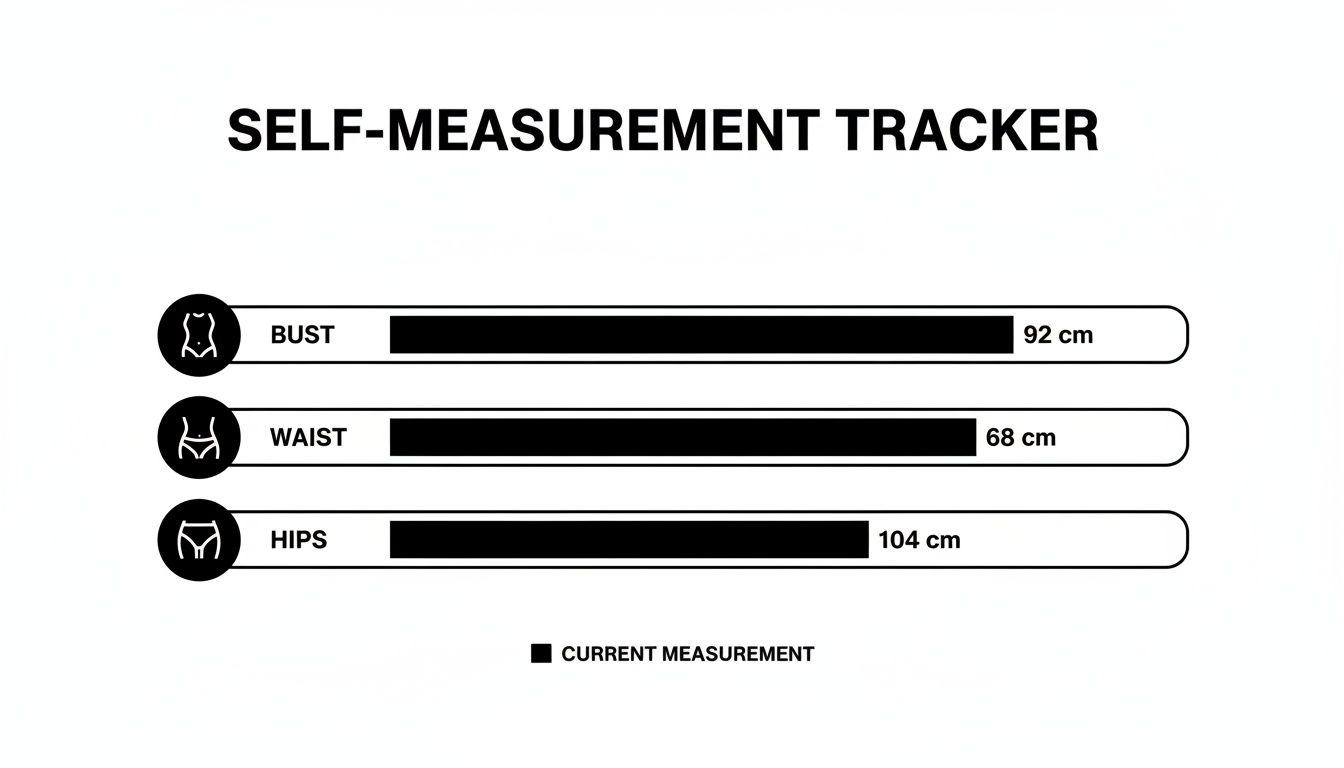
It’s a fantastic visual reminder that these three core measurements work together to define your size—so much more reliable than just a letter on a tag!
The Nuances of Asian Sizing
Shopping from brands based in Japan, Korea, or Vietnam? Here's a pro tip: their sizing often runs smaller and is typically cut for a slimmer body profile. A size "L" from a Japanese brand might actually fit more like a US "M," or sometimes even a "S."
This is precisely why leaning on your centimeter measurements is the smartest move you can make. Always prioritize what the brand’s specific size chart says over any generic conversion guide. Paying close attention to this detail is what ensures those amazing pieces from brands like Arrisco will fit like they were tailor-made for you.
Heads up! It's a classic mistake to assume bra sizes convert just as easily as dress sizes. They absolutely do not! Band and cup sizing is a whole different ballgame with its own set of rules.
For anything undergarment-related, you need a separate, much more detailed chart. To dodge any and all fit issues, I strongly recommend you learn how to calculate your correct bra size for international brands, because the approach is completely different from standard clothing. Taking that extra step guarantees the comfort and support that form the foundation of any killer outfit.
Men's International Size Conversion Charts
Ready to shop the world without the guesswork? Let's be honest, figuring out men's international sizing can feel like cracking a code, but once you have the right keys, it’s a total game-changer. This is your go-to guide for making sense of it all, whether you're eyeing a tailored Italian suit or some casual trousers from a cool Japanese brand. We’ll lay out the charts you need to instantly see how a US size stacks up against its European or Asian equivalent.
Sizing confusion is easily the biggest hurdle for international shoppers. It’s the main reason that a staggering 70% of buyers get cold feet before clicking "purchase," and it’s a huge driver of returns in online fashion. Getting a handle on these differences isn't just about convenience—it's about shopping with total confidence. If you're curious about the backstory, you can dive deeper into how global sizing systems evolved and their impact on e-commerce, but for now, let's get you that perfect fit.
Suits, Jackets, And Coats Sizing
This is where the differences really show. When it comes to sharp tailoring like suits, blazers, and coats, the US and UK stick to chest measurements in inches (think 40, 42). Hop over to Europe, and you'll find a completely different set of numbers (like 50, 52).
It can look confusing, but there’s a simple trick that works most of the time: just add 10 to your US or UK size to get a solid estimate for your EU size. For instance, if you're a size 40 in the US, you should be looking for a size 50 in Europe.
| US / UK | Europe | Japan | Chest (inches) |
|---|---|---|---|
| 36 (S) | 46 | 38 (M) | 35-37" |
| 38 (M) | 48 | 40 (L) | 38-40" |
| 40 (M) | 50 | 42 (L) | 40-42" |
| 42 (L) | 52 | 44 (XL) | 42-44" |
| 44 (L) | 54 | 46 (XL) | 44-46" |
Men's Shirt Size Conversion
Shirts are a tale of two sizing systems. You've got your casual shirts (T-shirts, polos) that go by letters like S, M, L, and then you have dress shirts, where the fit is all about the neck measurement. You'll want to be familiar with both.
By Letter Size (T-Shirts, Polo Shirts)
This is your chart for all the easy, everyday stuff.
- US Small (S): Typically corresponds to EU 44-46 and fits a chest around 36 inches.
- US Medium (M): Look for EU 48-50; this usually fits a chest of 38-40 inches.
- US Large (L): This aligns with EU 52-54 and works for a chest of 42-44 inches.
By Neck Measurement (Dress Shirts)
For that crisp, buttoned-up look, the collar fit is non-negotiable. Here's how the inches-to-centimeters conversion usually plays out.
| US / UK (inches) | Europe (cm) |
|---|---|
| 14.5 | 37 |
| 15 | 38 |
| 15.5 | 39-40 |
| 16 | 41 |
| 16.5 | 42 |
| 17 | 43 |
Trousers and Pants Sizing
Thankfully, pants are a bit more straightforward. The US and UK almost always use the waist measurement in inches, which makes things simple. But once you start shopping from European or Asian brands, you'll see different numbering systems pop up.
Pro Tip: Keep an eye out for Asian sizing. It often runs slimmer, and some brands even include a height marker on the tag (like 175/88A). When in doubt, especially with Vietnamese brands like Arrisco known for their sleek, modern cut, it's often a smart move to size up. But your golden rule should always be to check the brand's own size chart first—it’s the most reliable source of truth.
Expert Tips for Nailing Your International Online Shopping Haul
So, you've got your international clothing size conversion chart handy. That's a huge first step, but what are the real secrets to making sure that amazing piece you found overseas actually fits? As someone who has navigated this world for years, I can tell you a few insider tricks that turn risky clicks into wardrobe wins.
The golden rule, the one thing you absolutely must do, is to always, always prioritize the brand’s own size chart. Seriously. Think of our charts as your trusty map, but the brand’s specific chart is your final destination. They know their clothes best because they designed them, so their measurements are the truest source of information you'll find.
Look Beyond the Label
Before you even think about hitting that "add to cart" button, put on your detective hat. The product page is a goldmine of clues if you know where to look.
-
Scour the Customer Reviews: This is your secret weapon! You're getting firsthand advice from people who have already bought and tried on the item. Hunt for key phrases like "runs small," "true to size," or "super stretchy." The best reviews are from people who share their own stats—their height and weight give you priceless context.
-
Check the Fabric Content: This is a game-changer. A garment with even 5% elastane (or spandex) is going to fit very differently than something made from 100% rigid cotton. Knowing the material helps you guess how forgiving or structured the piece will be.
Pro Tip: Don't just stop at the fabric type; consider the weave. A cozy cotton jersey will always have more give than a crisp cotton poplin, even if they're both 100% cotton. It’s a subtle detail that can mean the difference between a comfortable fit and a constricting one.
Set Yourself Up for Success
A little prep work can save you a massive headache later. Smart international shoppers know that a smooth experience starts before you even begin browsing.
First off, get intimately familiar with the store’s return policy. International returns can be tricky and sometimes costly. Make sure you understand the process, who pays for shipping, and how long you have to make a decision. Knowing you have a solid backup plan provides major peace of mind.
And remember, becoming a master of online shopping goes beyond just sizing. For a full rundown of strategies to make every purchase a great one, take a look at our complete guide on how to shop for clothes online.
Combine these tips with your trusty conversion charts, and you're ready to shop the world with total confidence
Getting to Grips with Vietnamese and Asian Sizing
Diving into the incredible world of Asian fashion, especially from up-and-coming Vietnamese local brands, is a total blast! But before you jump in, there's one crucial thing you need to know: Asian sizing plays by its own rules. It's not just about converting letters from one chart to another; it’s a whole different way of thinking about fit. Getting this right is your secret weapon for building a killer wardrobe.
So, what's the big deal? You'll immediately notice that Asian clothing typically features slimmer, and often shorter, cuts. This isn't just a stylistic choice. It's because the entire system is often built around precise body measurements in centimeters, not just abstract letters like S, M, or L. It’s common to see a tag with numbers like 175/100A. That’s not a secret code! It literally means the garment is designed for someone 175 cm tall with a 100 cm chest. This measurement-first approach is why the clothes have such a sharp, tailored feel.
The "Size Up Twice" Rule of Thumb
If you're in a hurry, here’s a fantastic quick tip: as a general rule, assume an Asian size is one to two sizes smaller than its US or European equivalent. So, if you're normally a US Medium, you'd likely be looking at an Asian Large or even an XL. This simple guideline is a lifesaver when you're quickly scanning an international clothing size conversion chart.
But let’s be real, the best fits come from knowing the specifics. For example, when you’re shopping from an awesome brand like Arrisco in Ho Chi Minh City, an Asian Medium (M) often fits like a US Small (S). However, you might find that a jacket in an Asian M actually fits like a US M. Why the difference? It all goes back to those centimeter measurements (175/100A). This system results in trimmer cuts that often run about two sizes smaller than what you're used to in the West. A Vietnamese size L shirt from Arrisco, for instance, might fit you as perfectly as a European size 50.
Key Takeaway: Stop focusing only on the letters! The absolute best way to nail your size is to find the brand's specific size chart and look for the measurements in centimeters. This is the only way to guarantee that amazing piece from a brand like Arrisco will fit you just right.
Ready to explore this exciting fashion scene even more? Check out our guide on what makes clothing from Vietnam's local brands so unique. Understanding these sizing details is the final step to becoming a truly confident global shopper.
Got Questions About Size Conversion? We’ve Got Answers.
Still have a few things you're wondering about? Trust me, you're not the only one. Diving into the world of international sizing can feel a little confusing at first. I've pulled together the most common questions we get from shoppers around the globe to give you clear, straight-to-the-point answers.
Think of this as your personal cheat sheet for shopping with complete confidence, no matter where you are.
What Should I Do If I Am Between Two Sizes?
Ah, the classic "in-between" dilemma! My advice? It really comes down to the style and fabric of the piece you're eyeing.
If you're looking at something structured and fitted, like a tailored blazer made from a fabric with no give, sizing up is always the smartest bet. A good tailor can easily take it in for that perfect, custom-made feel.
On the other hand, for items with a bit of stretch (think anything with elastane) or designs that are meant to be relaxed and oversized, you can usually get away with sizing down. Always hunt for clues in the product description—look for terms like "slim fit" or "relaxed fit"—and see what other customers are saying in the reviews.
Do All Brands from the Same Country Use the Same Sizing?
This is a big one, and the answer is a definite no! It’s a common myth that all brands from, say, Italy or France follow the exact same sizing rubric. While national standards provide a decent starting point, sizes can be wildly different from one brand to another.
A high-fashion label, a fast-fashion chain, and a small indie boutique all use their own unique fit models and sizing guidelines. This is why the golden rule is to always, always check the specific size chart provided by the brand you're buying from. It is your single most reliable source of truth.
How Accurate Are Online Size Conversion Calculators?
Those online conversion tools can be a fantastic starting point, but you should treat them as a rough guide, not gospel. They’re great for getting a general ballpark idea of your size in another country's system.
The catch is that they work off averages and can't possibly account for the unique quirks of every brand, the cut of a specific garment, or the type of fabric used. Use them to get your bearings, but for the final decision, nothing beats comparing your own measurements directly against the brand's size chart. That’s your surefire way to get the fit just right.
Ready to put all this newfound sizing knowledge into practice? Go explore the latest collections at Arrisco and find some incredible, contemporary pieces that fit you like a dream, shipped straight from our home in Ho Chi Minh City. Shop the collection now!