

The usual advice says a long leather skirt is dramatic but hard to wear. That's lazy advice. The right one is sharper: a long leather skirt is one of the most useful pieces you can buy, if you choose the right length, enough room to move, and a lining that doesn't fight your skin.
It has real fashion history behind it, too. Skirts have been standard dress for both men and women since ancient Mesopotamia and Egypt, with skirt-like forms traced as far back as 3900 BC in Armenia and the Old Kingdom of Egypt, and skirt length has long signaled wealth, modesty, and prestige because textiles used to be expensive before industrialization (history of hemlines). That's why the long leather skirt doesn't read like a random trend to me. It reads like a silhouette with staying power.
Why the Long Leather Skirt Deserves a Second Look
A lot of women still treat leather skirts like a going-out item. That misses the point. A long leather skirt has more range than a short one because the length smooths out the material's edge and gives you a cleaner line with knits, shirts, boots, and jackets.
The silhouette has history, not hype
Fashion keeps coming back to long skirts for a reason. Hemlines have tracked social mood for decades, from wartime restraint to postwar release, and skirt length has even been shaped by public policy. The U.S. government's L-85 regulation in April 1942 set skirt lengths at 17 inches above the floor to conserve fabric, which shows how much meaning people attached to length during World War II.
That still matters because leather works best when it reads as structure, not costume. A long leather skirt gives you that structure, but it also moves differently from a rigid pencil skirt or a flimsy fast-fashion version. When the cut is right, it looks polished with little effort.
Practical rule: if a leather skirt only looks flattering when the model strikes a specific stance, it is the wrong skirt for real life.
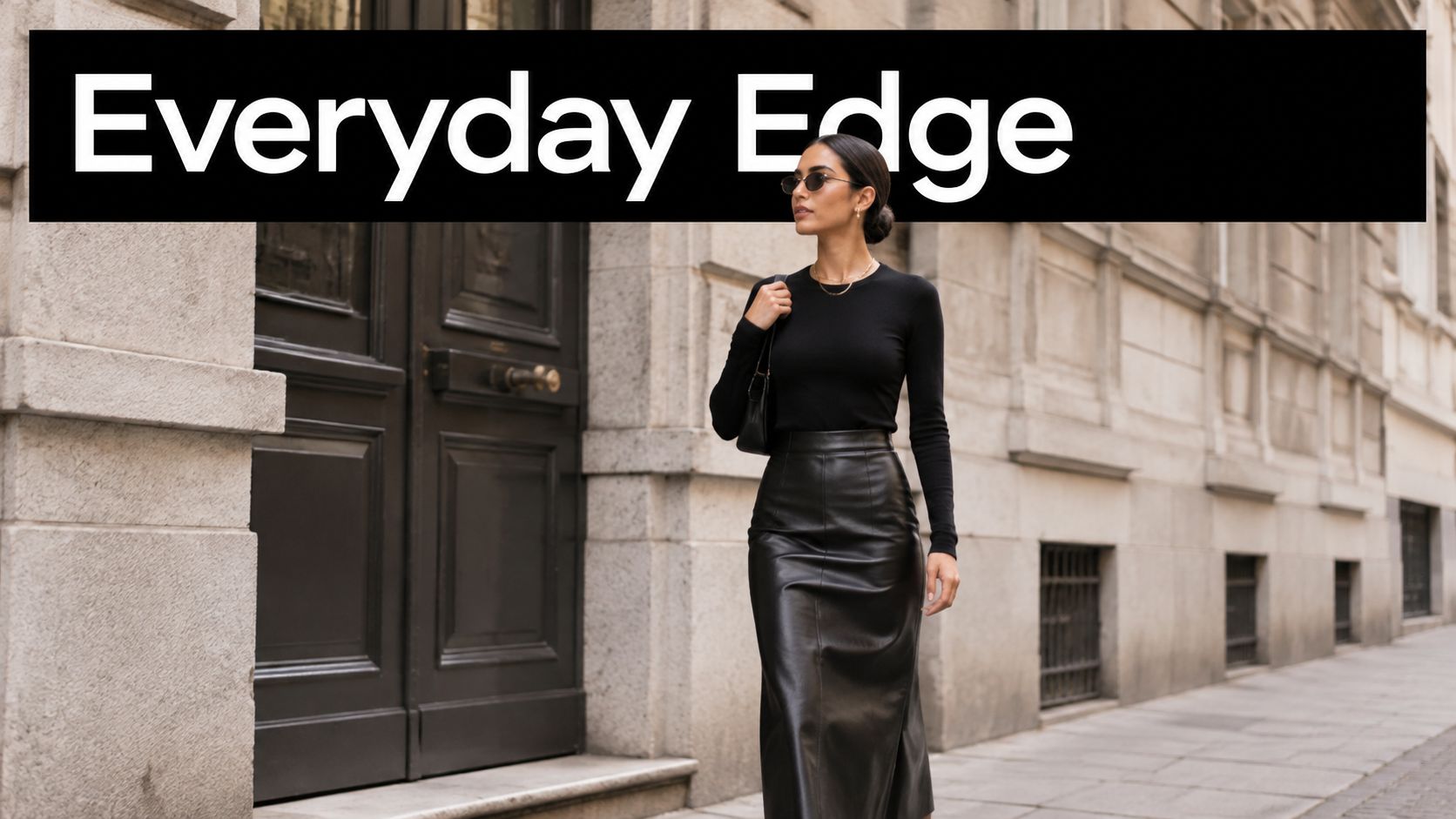
The silhouette also fits a modern wardrobe better than people admit. You can wear it with a simple black top, a relaxed sweater, or a sharp blazer and get a different read every time. That flexibility is why I would rather buy one well-made long leather skirt than several trend-driven pieces that only work one way.
Why it feels current again
Long skirts keep resurfacing when style gets tired of speed and excess. The modern long-skirt category reappeared through the midi-skirt in 1970, defined as below the knee or above the ankle, and later skirt cycles kept proving that length changes with culture, not just taste (history of hemlines). That is exactly why a long leather skirt feels relevant now. It is strong, but it is not noisy.
It also works for shoppers who want fewer, better things. A sleek long leather skirt can bridge casual and polished styling without looking overdone. That is the kind of wardrobe buy that earns its keep.
Understanding Long Leather Skirt Silhouettes and Lengths
The difference between a midi and a maxi leather skirt is not just a few inches. It changes how the skirt moves, where it hits your leg, and whether you can sit, walk, and commute in it without fighting the fabric. That is the part online listings usually skip.
Mini, midi, and maxi are not interchangeable
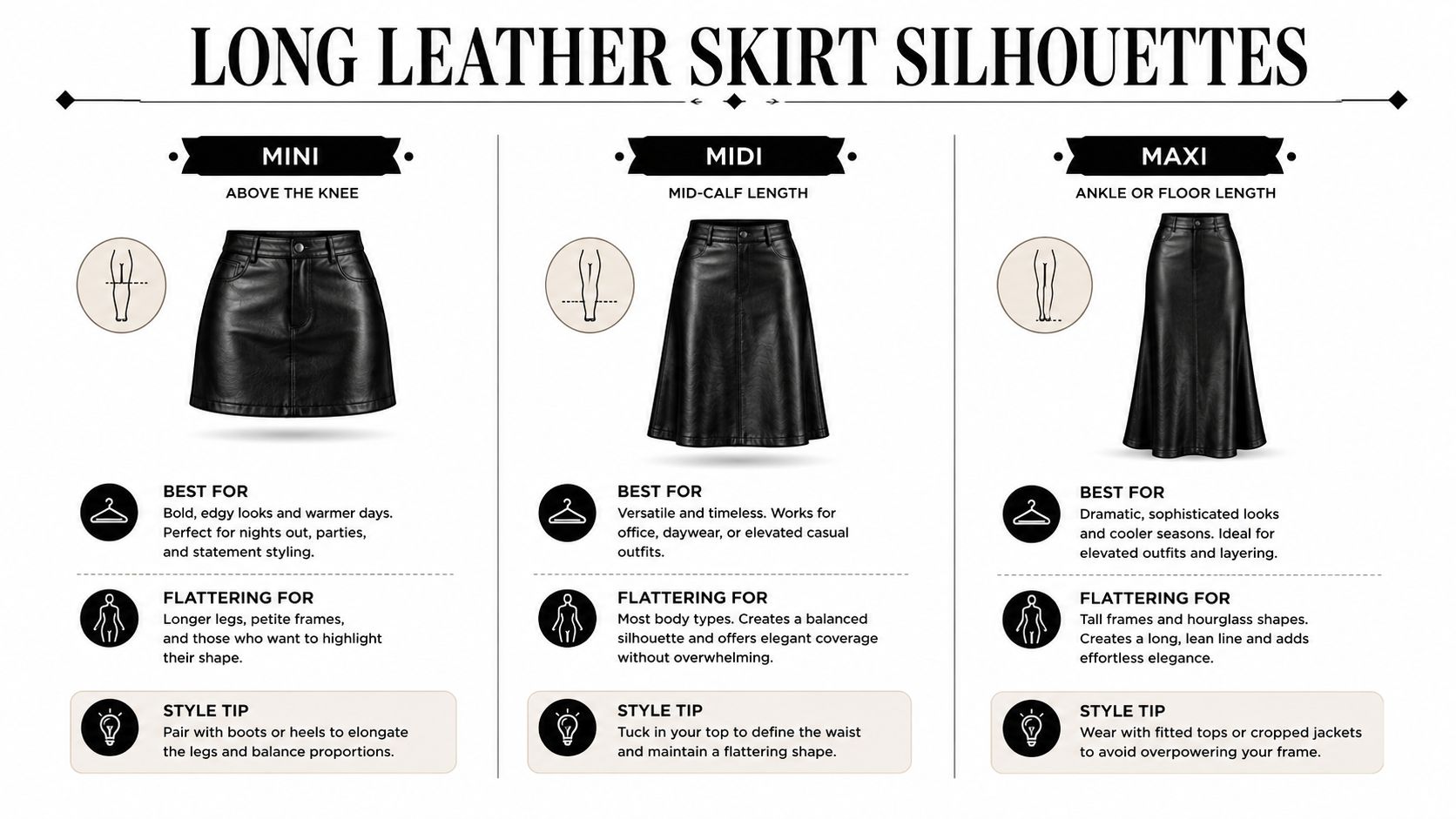
Retailers usually sort leather skirts into three length bands, mini, midi, and maxi, and some also offer custom lengths (LeatherCult myths and facts). That vocabulary matters before you buy, because a long leather skirt can look elegant on a product page and feel completely different on your body.
- Mini: the shortest option, visually sharp, and the least forgiving if you need freedom of movement.
- Midi: the middle ground, easier to dress up or down, and usually the most versatile length.
- Maxi: the longest category, the one most shoppers mean when they say long leather skirt.
A maxi leather skirt usually reaches at least to the knees, and some styles go farther past the knees. Another guide describes maxi leather skirts as the lengthiest type, commonly falling to the ankles (LeatherCult complete guide). That extra length changes the whole fit. It can lengthen the body, but only if the hem sits cleanly and the skirt does not drag when you walk.
Length changes proportion and movement
Shorter versions usually feel more aggressive and directional. Midi and maxi versions feel more composed, which is why they work better with leather's weight and structure. If you want one skirt that can handle dinner, the office, and travel days without feeling repetitive, the longer cuts make more sense.
How real leather is tanned also affects how a long skirt hangs and moves, because the finish changes how supple or structured the leather feels. That matters more than a lot of shoppers realize. A stiffer leather holds shape and reads more architectural, while a softer one follows the body and makes walking easier.
Fit and climate matter too. A long leather skirt that looks clean in a cool showroom can feel heavy and restrictive in warm weather, especially if the lining traps heat or the hem hits awkwardly at the calf. If you are shopping online, focus on the actual hem position, how much room the skirt leaves at the stride, and whether the cut matches your climate and daily movement.
Material Quality and Construction Details That Matter
A long leather skirt can look expensive and still wear badly if the construction is weak. Leather isn't forgiving. It needs the right lining, the right seam work, and enough material to hang properly without pulling at the waist or sticking at the thighs.
Start with how the skirt is built
A quality long leather skirt uses more material than most buyers expect. One sewing pattern estimates about 29–37 square feet of leather depending on size, which gives you a sense of how much skin has to be matched, cut, and finished properly (buying guide). If a product listing feels vague about construction, assume corners were cut.
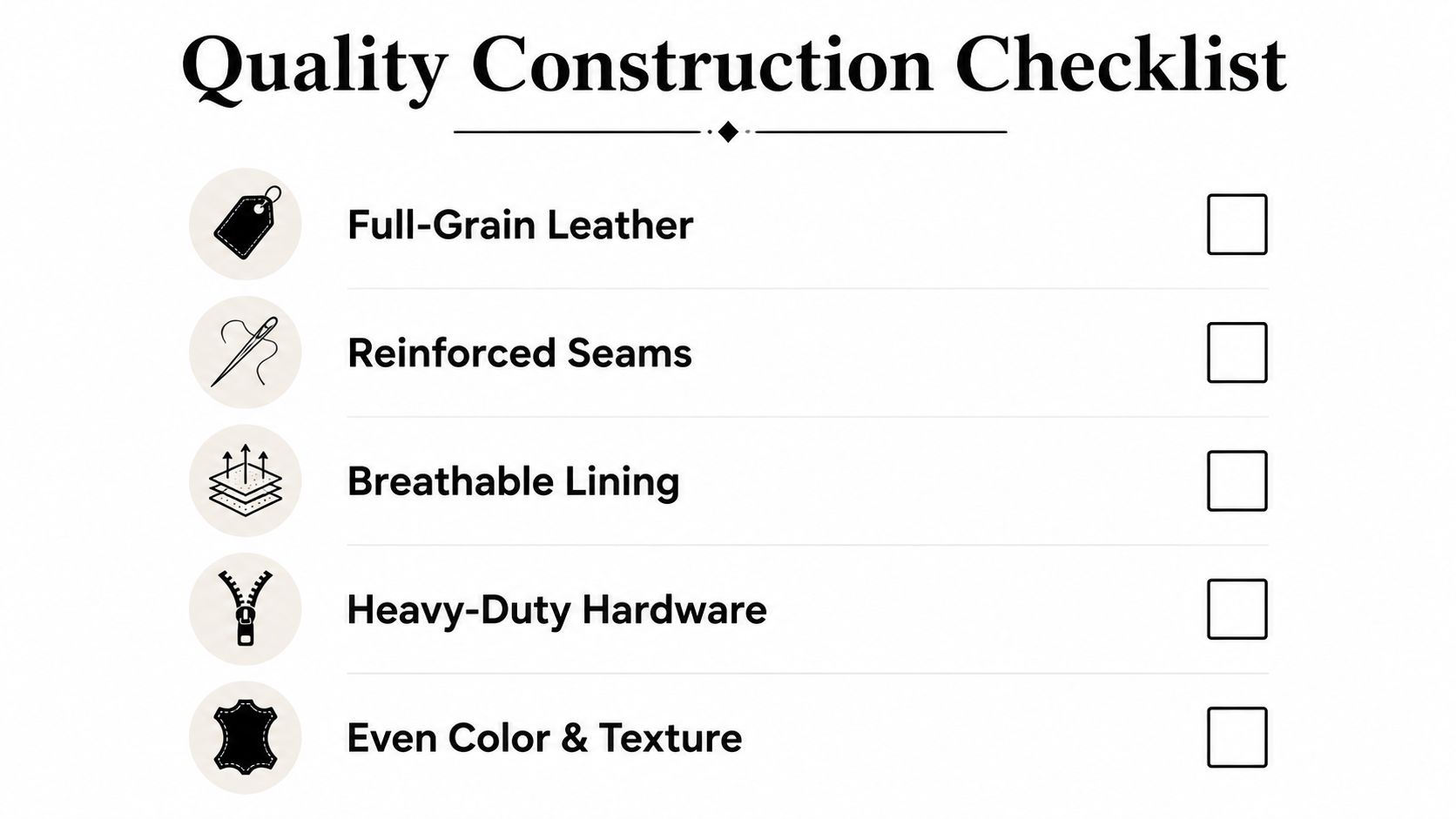
Look for these details first:
- Reinforced seams. Technical guidance recommends double-needle topstitching, because leather panels take stress at the seams and hems.
- Tight stitch spacing. Even stitches of about 3–4 per cm hold the shape better and look cleaner from the outside.
- Full lining. Breathable linings such as cupro or silk blends help reduce friction, heat buildup, and interior wear.
- Hardware quality. Zippers and closures should look substantial, not like an afterthought.
- Clean edge finishing. The hem should hang with intent, not twist or ripple.
One detail shoppers ignore too often is lining. Without a proper lining, leather can feel hot, clingy, and abrasive, especially if you're seated for long periods. I'd take a slightly simpler outer design over a beautiful skirt with a cheap interior every time.
Read the product page like a buyer
If the description is doing too much mood language and not enough technical talking, that's a red flag. I want to see how the leather is finished, whether the skirt is lined, and whether the waistband is structured enough to keep its shape.
For shoppers comparing leather types, I'd use Arrisco's guide to real leather and vegetable tanning as a reference point for what a serious material conversation should sound like. If a seller can't explain the material, they probably didn't prioritize the build.
Styling a Long Leather Skirt for Every Occasion
A long leather skirt works when the rest of the outfit respects its weight. Don't overload it with competing drama. Let the leather do the heavy lifting, then keep the top, footwear, and accessories disciplined.
Weekend brunch and everyday wear
For daytime, I like a long leather skirt with a soft knit or a crisp tee and a jacket that doesn't compete with the hem. Flat shoes make the look more relaxed, but low boots or a refined loafer can still keep the line sharp. If the skirt is especially full, I'd keep the top tucked or cropped enough to define the waist.
A clean black sweater with minimal jewelry is enough for a coffee run or a casual lunch. If you want a little more polish, add a slim belt and a structured bag. The skirt already gives you presence, so don't crowd it.
Creative workplace and dinner
At work, pair it with a sharp shirt, a fine-gauge turtleneck, or a blazer. The goal is contrast. Leather plus crisp tailoring reads intentional, while leather plus slouch can drift into sloppy unless the proportions are exact.
For evening, I'd go simpler rather than louder. A fitted top, sculptural earrings, and heeled boots are enough. If you like strong lines, a monochrome outfit makes the skirt look more expensive. If you prefer edge with ease, add one metallic accessory and stop there.
Wear the outfit like it has one focal point. If the skirt is the statement, everything else should support it.
For styling range, it helps to think like you would with other leather pieces too. This leather pants outfit guide is useful for understanding how to balance shine, texture, and volume across the rest of the outfit.
Warm weather and travel
When the weather gets warmer, show some skin elsewhere to keep the look light. Sleeveless tops, open necklines, or shorter jackets help balance the visual length of the skirt. For travel, I'd choose the least fussy top and the safest shoe, because a leather skirt already gives you enough visual structure.
If the skirt is tight through the knees, don't force it into a packed travel day. Wear something that lets you sit, stand, and move without constant adjusting.
Getting the Fit Right When Shopping Online
Online shopping is where most long leather skirt purchases go wrong. Leather doesn't stretch like a jersey knit, and the fit is usually more about waist and hip measurements than your usual dress size. Ignore that, and you'll buy a skirt that looks right in a photo but feels wrong in real life.
Measure the body, not the label
Use a soft tape measure and check your waist where you want the skirt to sit, then measure the fullest part of your hips. That matters because some long leather skirts are high-waisted and fitted through the seat, while others fall straighter from the waist. A size label without body measurements tells you almost nothing.
One retail example maps sizes from XS to XXL with waist ranges from 25.5" to 35" and hip ranges from 36" to 45.5" (product spec). That kind of sizing makes the point clearly. You're not buying a vague fashion size. You're buying a shaped garment with limited give.
Use the fit photo as evidence
When you study product photos, look at the waistband, side seam, hemline, and how the fabric sits over the hips. If the model is standing with one leg angled forward, that's normal styling, but it can also hide tightness. A skirt that only looks good when posed is a bad sign for mobility.
Here's the fit check I'd use before checking out:
| Size | Waist (inches) | Hip (inches) |
|---|---|---|
| XS | 25.5 | 36 |
| S | 27.5 | 38 |
| M | 29.5 | 40 |
| L | 31.5 | 42 |
| XL | 33.5 | 43.5 |
| XXL | 35 | 45.5 |
If your measurements sit between sizes, I'd usually favor the option that gives the hips more room, especially in leather. A waistband can sometimes be adjusted, but a skirt that pulls across the seat usually stays uncomfortable.
For measurement technique, Arrisco's body-measurement guide is worth using as a check against your own tape-measure work. And if you like precision over guesswork, ask the retailer whether the skirt can be made to a custom length.
Seasonal Wearability and Climate Considerations
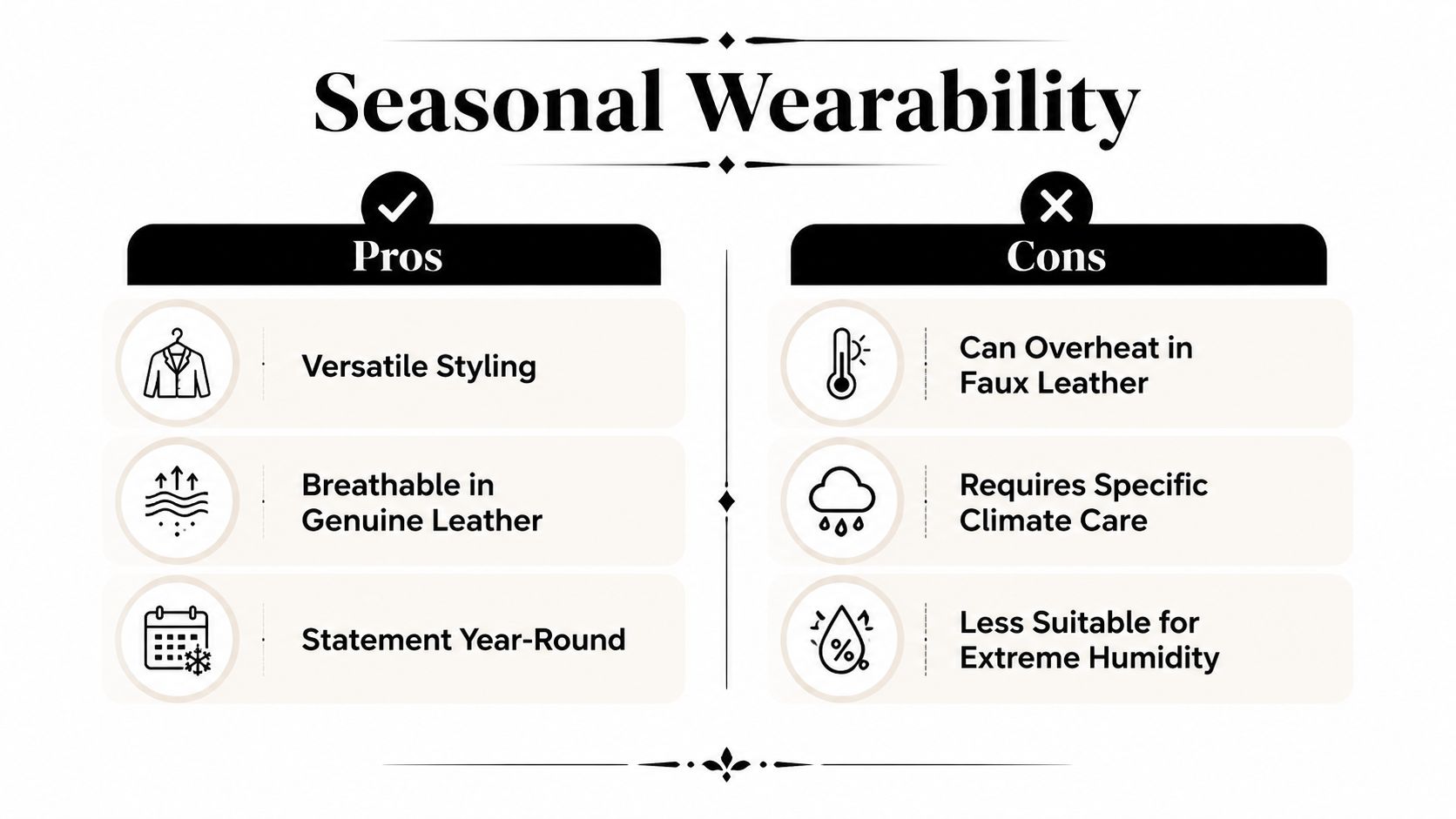
A long leather skirt can work year-round, but not every material choice handles climate the same way. In hot or humid weather, leather demands more from the wearer. In colder months, it becomes much easier to style because the outfit can absorb its weight.
Pick the material for your climate
Genuine leather, faux leather, and mixed-material designs all behave differently. Genuine leather is usually the better choice if you care about breathability and long-term wear. Faux leather can look sleek, but it often traps more heat and can feel less forgiving in warmer conditions.
The practical question is simple. Where do you live, and what do you wear most often? If your climate runs hot, a heavy faux leather skirt is the wrong default. If your climate is cool and damp, you can get away with more structure and thickness.
There's also strong market evidence that shoppers still want this category. One major market estimate projects the leather/faux-leather apparel segment to reach about USD 66.5 billion by 2029. That's a projection, but it still signals that buyers want leather-look clothing and are actively comparing materials by use case.
Dress for the season, not the fantasy
In winter, the easiest fix is layering. Tights, leggings, or long underwear make a long leather skirt much more realistic in cold weather, and the skirt's length helps create a dramatic winter silhouette. For a smarter cold-weather formula, this winter skirt styling guide is the kind of reference that keeps the outfit grounded.
Summer needs a different answer. If you insist on leather in heat, keep the rest of the outfit light and choose a skirt with a breathable lining. I'd also avoid over-layering. The skirt is already doing enough.
The best climate choice isn't the most glamorous one. It's the one you'll actually wear comfortably.
If you travel across climates, think harder about lining and flexibility than about trend appeal. A mixed-material or well-lined skirt can make more sense than a heavier statement piece that only works in one season.
Caring for Your Long Leather Skirt
Leather rewards consistency. Treat a long leather skirt like a throwaway novelty piece, and it will age badly. Store it properly, keep it dry, and clean it with restraint, and it stays sharp for years.
Keep the routine simple
Brush off light surface dirt after wear, and handle spills quickly with a soft, dry cloth. Do not soak leather, and do not reach for random household cleaners that can strip the finish. Conditioning matters, but too much product is just as bad as none, especially on softer finishes that already need support.
Store the skirt on a hanger that supports the waistband and keeps the shape straight. Avoid folding it tightly, because creasing is harder to remove from leather than from fabric. If you are putting it away for a season, give it room to breathe, and keep it away from damp closets.
Know when to stop DIY
Small scuffs can often be managed at home, but moisture damage, cracked finish, or stretched seams need more care. If the skirt has warped or the lining has failed, professional repair may be worth it. I would repair a good long leather skirt before I would replace it, but I would not overspend on a badly made one.
A fitted leather jacket can help you judge quality in the same practical way. Arrisco's leather jacket care and styling reference is useful because the same basic logic applies, structure, fit, and responsible care win every time.
If you want a skirt that keeps its shape, dry-clean it only when the label calls for it, then hang it out of direct sun so the lining and finish do not dry out or fade. Arrisco's Dress & Skirts collection is a sensible place to start if you want to look at skirt options with that same fit-first mindset.