


Before you even start lusting after that perfect dress or those must-have sneakers, there’s a crucial first step: giving the website a quick security once-over. This isn’t about being paranoid; it's about being smart. Turning these simple checks into a habit is your best defense against the sketchy side of the internet.
The Smart Shopper's Digital Safety Checklist
Let's be real, online shopping is a thrill. But with a million boutiques popping up overnight, how do you know which ones are legit and which are just clever traps? You don't need a degree in cybersecurity. All you need is a quick mental checklist to run through before you even think about clicking "add to cart."
Think of this as your digital gut check. It’s the first and most powerful move you can make to shop with total confidence.
Foundational Security Checks
The very first thing I do on any new site, before I even start scrolling, is glance up at the address bar. I’m looking for two things: a tiny padlock icon and a URL that starts with https://. That 's' stands for 'secure,' meaning the connection between your browser and the site is encrypted. It’s the absolute bare minimum for any website that’s going to ask for your personal info.
Next, a real business isn't trying to hide. I always scroll down to the footer or find their "Contact Us" page. What I expect to see is:
- A physical address: A legit street address always adds a layer of trust.
- A real phone number: Bonus points if it's a direct line, not just a generic 1-800 number.
-
A professional email: An email like
hello@coolbrand.comis a good sign. An address ending in@gmail.comor@yahoo.com? That’s a major red flag for me.
This isn't just about appearances; it's about a brand's commitment to its customers. And shoppers are definitely paying attention. Recent data shows that a whopping 92% of U.S. online shoppers see security as a top priority. With 81% convinced that online fraud is a huge problem, it's clear that visible security builds the trust we need to shop freely.
To give you a super-fast reference, I've put the essential checks into this table. Keep these in mind every time you land on a new site.
Quick Safety Check Before You Buy
| Security Check | What to Look For | Why It Matters |
|---|---|---|
| HTTPS & Padlock | The URL begins with https:// and there's a padlock icon in the address bar. |
This confirms your connection to the site is encrypted, protecting your data from being intercepted. |
| Contact Information | A physical address, a phone number, and a professional email address. | Legitimate businesses are transparent and provide multiple ways for customers to reach them. |
| Online Reviews | Search the store's name plus "reviews" or "scam" on an external search engine. | Real customer feedback from outside the site itself is the best way to spot potential issues. |
Making these checks second nature is the goal. It’s all about building smart habits that protect you everywhere online.
Pro Tip: My go-to move before buying from a new brand? I open a new tab and search the store's name plus "reviews" or "scam." If other shoppers have been burned, you'll usually find out in seconds. It’s saved me more than a few headaches!
Ultimately, mastering these basics will make you a more confident and secure shopper. For a deeper dive, exploring some smart tips for protecting your online privacy can safeguard your entire digital life, not just your shopping sprees. It frees you up to focus on the fun stuff, like exploring how cool new tools are making shopping even better. In fact, our guide on virtual try-on technology shows just how trusted brands are using tech to elevate the experience.
2. Lock Down Your Payments and Accounts
Alright, you've found a fantastic new online boutique that passes the vibe check. Now, let's make sure your personal and payment info is locked down tighter than a drum. Think of your digital wallet like your favorite designer bag—it's valuable, and you need to protect it. This isn't just about having a "strong" password; it's about creating layers of security that work together to keep you safe.
Let's be real, nobody can remember F@shionL0ver!2025 for every single store. That's where a password manager comes in and completely changes the game. These tools are lifesavers. They create and store unique, super-strong passwords for every site you shop on. All you have to do is remember one single master password, and the manager does the heavy lifting, securely auto-filling your login details. One simple tool prevents a data breach at one store from becoming a nightmare for your entire online life.
Take Your Account Security to the Next Level
Beyond a killer password, the single most powerful move you can make is flipping on multi-factor authentication (MFA), which you might also see called two-factor authentication (2FA). It’s simple: when you log in, you'll need your password plus a second form of verification, like a code from an authenticator app or a quick text message. It's basically adding a high-tech deadbolt to your digital front door.
Turning on MFA is a non-negotiable for safe online shopping. It drastically slashes the risk of someone getting into your account, even if they somehow manage to steal your password. As more and more retailers get on board with this, it's quickly becoming the gold standard for stopping account takeovers. If you're curious about the bigger picture, you can read up on how experts are tackling emerging e-commerce risk trends and see why MFA is so heavily recommended.
Pro Tip: If a site gives you the choice, always go for an authenticator app (like Google Authenticator or Authy) instead of SMS text messages for MFA. It's way more secure and protects you from tricks like SIM-swapping scams.
Get Smart About How You Pay
The payment method you choose at checkout really, really matters. Your debit card might feel easy, but it’s directly tied to your bank account. If those details get compromised, a scammer has a direct line to your cash, and getting that money back can be a massive headache.
This is exactly why credit cards are the undisputed champion for online shopping. They come with incredible fraud protection, and most have a zero-liability policy, which means you're not on the hook for bogus charges. If a scammer snags your credit card number, you're just disputing the bank's money, not your own.
Here's the quick and dirty on your best payment options:
- Credit Cards: Hands down, they offer the best consumer protection against fraud. This is your go-to.
- Digital Wallets (PayPal, Apple Pay): These services are fantastic because they act as a secure go-between. They process the payment without ever showing the merchant your actual card number.
- Virtual Card Numbers: This is next-level security. Some banks and services let you create a temporary, single-use card number for one specific purchase.
When you put it all together—a password manager, MFA, and a smart payment choice—you've built a seriously powerful security system. This setup lets you get back to the fun part: discovering amazing pieces from the best online fashion boutiques without a worry in the world.
4. Learn How to Spot Scams and Deceptive Deals
Alright, let's talk about developing your scam-spotting superpower. Now that your accounts are locked down, the next step is learning to see through the smoke and mirrors of a shady deal. In the wild world of online fashion, if an offer seems way too good to be true, it’s time to hit the brakes and do some digging.
Scammers are absolute masters of emotional manipulation. They use sneaky high-pressure tactics like a frantic countdown timer for a "flash sale" that never actually ends or a "Only 2 left in stock!" banner to trigger your Fear Of Missing Out (FOMO). This is all designed to rush you into a bad decision before your logical brain has a chance to catch up.
Don't Fall for Phishing Emails or Fake Texts
One of the oldest tricks in the book is the phishing email, and it's still incredibly effective. You might get an official-looking email from a major shipping carrier about a “failed delivery attempt.” It has the right logos, the right colors, and asks you to click a link to pay a tiny redelivery fee or confirm your address.
Stop right there. This is a classic trap. Legitimate companies will almost never ask you to provide sensitive payment information or login details through an unsolicited email. Instead of clicking the link, open a new browser tab and type in the company's official web address yourself to check on your order status.
How to Sniff Out a Counterfeit Website
Scammers have also gotten frighteningly good at creating clone websites that look almost identical to your favorite brands. They might snag a URL that’s just one letter off or use a different domain like .net instead of .com. These are the sites you see advertised on social media, screaming about 80% off a designer handbag that's currently sold out everywhere else.
Before you even think about adding to cart, play detective and look for these tell-tale signs:
- Weird Grammar and Spelling: Legitimate brands invest in professional copy. If the product descriptions are full of clunky phrases or obvious typos, that's a huge red flag.
- Generic Stock Photos: Real stores shoot their own unique product photography. Scammers often just rip generic, low-quality stock images from other places.
- Zero (or Fake) Reviews: A complete lack of customer feedback is suspicious. Even worse are a bunch of glowing five-star reviews that all sound the same and were posted on the same day.
The explosion of e-commerce has been incredible, but it's also created a massive playground for fraudsters. The statistics are genuinely staggering: back in 2015, online shopping scams made up just 2.8% of global scams. By 2023, that number had catapulted to 41.9%. It's a whole different ballgame out there.
To help you tell the good from the bad, here’s a quick comparison of what to look for.
Legit Deal vs Likely Scam
| Characteristic | Legitimate Retailer | Potential Scam |
|---|---|---|
| Pricing | Realistic discounts (e.g., 20-40% off during sales). | Unbelievable discounts (e.g., 80-90% off new luxury items). |
| URL | Uses a standard domain (.com) and matches the brand name. | Misspelled brand name or uses an odd domain (.biz, .shop). |
| Contact Info | Clear physical address, customer service phone number, and email. | Only a contact form or a generic Gmail address. |
| Payment Options | Accepts major credit cards, PayPal, Apple Pay. | Only accepts wire transfers, Zelle, or cryptocurrency. |
| Social Media | Established presence with genuine engagement and history. | New accounts with few followers and generic, stolen content. |
Seeing the differences laid out like this makes it much easier to spot a fake before you risk your money.
Once you’re confident a site is the real deal, you still need to pay smart. This visual breaks down the most secure ways to complete your purchase.
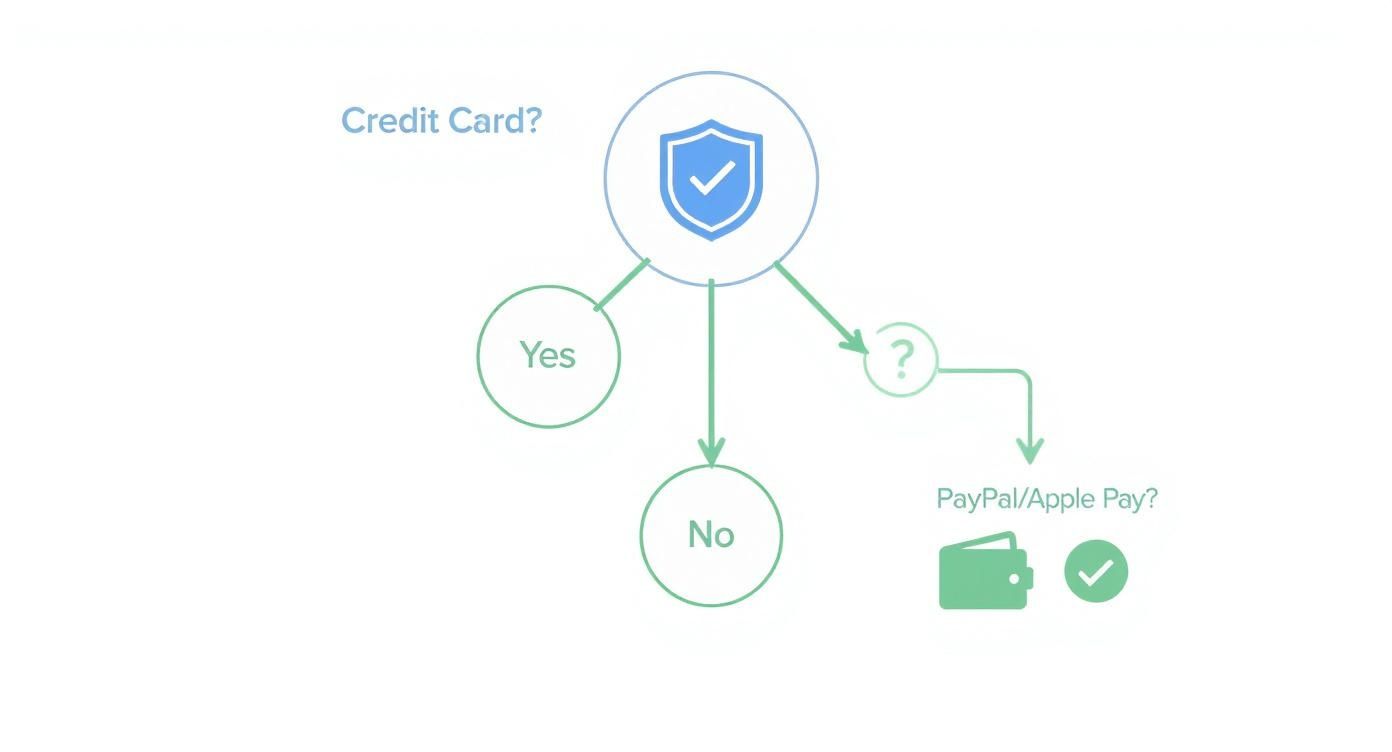
As you can see, using a credit card or a digital wallet like PayPal is always the best move. It creates a critical security buffer between the merchant and your actual bank account.
Here's a classic scenario: You see a slick Instagram ad for a pair of limited-edition sneakers at 50% off retail. You click through, and the site looks legit, but when you get to checkout, the only payment options are a direct bank wire or Bitcoin. Abort mission! Those payment methods are irreversible and untraceable, which is exactly why scammers love them.
Ultimately, shopping safely online comes down to trusting your gut and being methodical. When you know what to look for, you can shop with total confidence, avoid the scams, and put your money toward brands that are actually doing things right. If you’re on the hunt for stores you can trust, start with our guide to ethical online clothing stores that are as committed to integrity as they are to style.
Think Past the "Buy Now" Button
That little thrill you get when you find the perfect piece and click "Confirm Order"? We live for it. But let's be real, a truly great online shopping win isn't complete until that package is in your hands and you're totally obsessed with what's inside.
The real secret to being a savvy shopper is knowing what happens after the payment goes through. This is where hidden fees and return policy nightmares can completely kill the vibe of a new purchase. Getting into the habit of checking the fine print is a total game-changer.
Think of it this way: a brand that's upfront and clear about its policies is a brand that respects you and stands by its products. That’s a massive green flag.
A 60-Second Scan That Saves You Headaches
Before you even think about adding to cart, take a minute to play detective. A store’s policies are like its personality—are they cool and flexible, or are they hiding a bunch of traps? All the juicy details are usually linked right in the website’s footer.
Here’s what you need to look for:
- The Return Policy: Is it fair? A 30-day window is pretty standard and a good sign. Be on the lookout for red flags like "final sale" on items that aren't on clearance, "store credit only" refunds, or sneaky restocking fees that chip away at what you get back.
- Shipping Deets: Do they offer tracking? How much is it going to cost? If a store is super vague about shipping times or the costs seem off, it can sometimes be a sign of a less-than-reliable operation.
- The Privacy Policy: Okay, I know this one sounds like a total snooze-fest, but it's important. A quick glance tells you what they’re doing with your data. A trustworthy brand will be crystal clear about how they protect your info, not sell it to the highest bidder.
Spending a little time on this upfront is a core part of our philosophy on how to shop for clothes online and is key to avoiding that post-purchase regret.
If a brand makes their return policy confusing or impossible to find, that tells you everything you need to know about their customer service. Trust me, if it’s hard to figure out how to send something back, the actual process will be a nightmare.
The International Shopping Surprise
Finding a cool boutique across the globe is one of the best parts of online shopping, but it can come with a sting in its tail: customs duties and import taxes.
These are fees your own government charges when a package crosses the border, and they have absolutely nothing to do with the store's shipping fee. You could get a surprise bill from the courier holding your package hostage until you pay up.
The best international stores are upfront about this. They’ll often have a duty calculator at checkout or clearly state that you're responsible for any fees. If a site says nothing at all about it? Be wary. Always check their "Shipping" or "FAQ" page for a section on international orders to avoid a seriously expensive surprise.
Keep Your Tech and Network Locked Down
Think of your phone, laptop, and home Wi-Fi as your personal Fort Knox for online shopping. If any of them has a weak spot, you might as well be leaving the vault door wide open for cybercriminals. Seriously, locking down your personal tech is one of the most powerful things you can do to shop safely. It creates a secure bubble for every single click and purchase.
This isn't just about dodging viruses. It’s about creating a digital environment that’s a total nightmare for anyone trying to snoop on what you’re doing or snatch your info.
Your Digital Immune System: Keep It Updated!
The easiest and most effective habit you can possibly build is keeping your software updated. You know those "update available" pop-ups on your phone, laptop, and browser? They aren't just there to annoy you or give you new emojis—they are absolutely essential for your safety.
These updates are packed with security patches that plug up newly discovered holes. When you ignore them, you're leaving a known vulnerability exposed, and that's exactly what hackers are looking for.
- Operating System (OS): Whether you're on iOS, Android, or Windows, just switch on automatic updates. This keeps your device’s core defenses razor-sharp.
- Web Browser: Your browser is your window to the shopping world. An up-to-date browser has the latest and greatest anti-phishing and malware-blocking tech built right in.
- Antivirus Software: Think of a good antivirus program as your personal digital bodyguard. It actively scans for and neutralizes malicious software trying to steal your data.
Making this part of your routine is non-negotiable. It’s basic digital hygiene that ensures you’re protected against the newest threats out there.
The Problem with Public Wi-Fi
I get it—that free Wi-Fi at the airport or your favorite café is super convenient. But it’s also one of the absolute riskiest places to enter your credit card details. These public networks are usually unsecured, meaning any data you send is flying through the air completely unencrypted.
It’s the digital equivalent of shouting your credit card number across a crowded room. Anyone on that same network with some simple tools could grab your information. A great deal on that designer bag just isn't worth it.
A huge part of shopping safely online is making sure your home base is secure. Following a few key home network security best practices turns your private network into a true safe haven for all your devices.
So, what’s the solution when you’re out and about? A Virtual Private Network (VPN). A VPN is a total game-changer. It creates a private, encrypted tunnel for your internet connection, scrambling your data so it's unreadable to anyone else. It's like throwing an invisibility cloak over your online activity.
Using a VPN is a pro move that gives you total peace of mind, no matter where you are. As our tech becomes more intertwined with our lives and even our clothes, this kind of data protection is more important than ever. Dive into our look at the future of fashion and wearable tech to see just how personal digital security is becoming.
Got Questions? We've Got Answers
Even the most seasoned online shoppers have questions pop up from time to time. That's a good thing! Being curious is the first step to being a smarter, safer shopper.
We get a lot of the same questions, so we've rounded them up here to tackle them head-on. Let's get you that final boost of confidence before you hit "complete purchase."
Credit Card vs. Debit Card: What's the Safest Bet Online?
Hands down, credit cards are the way to go for online shopping. It all comes down to one simple thing: whose money is at risk?
When you use a credit card, you're technically borrowing the bank's money for the purchase. If a sketchy charge shows up, you can dispute it immediately. The credit card company freezes those funds and launches an investigation, all while your own money stays safely in your account. Federal law caps your liability for fraudulent charges at just $50, and most major card issuers have a zero-liability policy.
A debit card, though? That’s a direct line into your checking account. If a scammer gets those details, your actual cash is gone. Getting it back can be a long, drawn-out battle, leaving your bank account empty while the fraud investigation plods along.
Think of it this way: with a credit card, a fraudulent charge is the bank's problem. With a debit card, it's your problem. That layer of protection is priceless.
How Can I Tell if a Fashion Site Is Legit or a Total Fake?
Spotting a genuine e-commerce store is like being a detective—you're looking for a collection of clues that all point to the same conclusion. No single sign is a silver bullet, but when they all line up, you can shop with confidence.
First, your eyes should go straight to the URL bar. Look for that little padlock icon and https:// at the start of the web address. This is non-negotiable; it means your connection is secure and encrypted. Beyond that, just get a feel for the site. A real brand invests in professional design. Is it riddled with spelling errors or weird, clunky grammar? Big red flag.
Next, do some quick recon. A legitimate business isn't trying to hide. Look for an "About Us" or "Contact Us" page with a physical address and a real customer service phone number.
Finally, see what the rest of the world is saying.
- Go Off-Site for Reviews: Don't just trust the testimonials on their homepage. Pop the store's name into Google Reviews or Trustpilot to see what real customers have experienced.
- Check Their Socials: Do they have an active Instagram or TikTok with genuine comments and engagement? A ghost town or brand-new account is suspicious.
- No Online Footprint is a Bad Sign: Honestly, having no reviews or social media presence at all is often sketchier than having a few mixed ones. It suggests the site just popped up overnight.
I Think I Got Scammed. What Do I Do NOW?
Okay, take a deep breath. If you suspect you've been scammed, the absolute most important thing is to act fast. The quicker you move, the more you can contain the damage.
Your very first call should be to your bank or credit card company. Tell them exactly what happened, report the fraudulent charge, and have them cancel that card and issue a new one immediately. This stops the scammers in their tracks.
Next, it's time for digital damage control. Change the password for any account associated with the scam, especially your email. If you used that same password on other sites (we all do it, but this is why a password manager is a lifesaver!), you need to change those, too.
Finally, report the scam. It might feel like a hassle, but filing a report with the Federal Trade Commission (FTC) helps them build cases against these fraud rings and protects other shoppers from falling into the same trap.
Are Services Like Klarna and Afterpay Actually Safe?
Yep, for the most part, "Buy Now, Pay Later" services like Klarna and Afterpay are safe and secure. They operate as regulated financial tech companies and have their own heavy-duty security and buyer protection policies.
The real danger isn't the service itself, but the website you're using it on. Scammers are experts at creating fake online stores that look legit right down to the checkout page, complete with logos for these popular payment options. They're hoping to trick you into entering your Klarna or Afterpay login details on their phony site.
The golden rule is to always, always double-check that you're on the real retailer's secure website before you even think about logging into a third-party payment service.
At Arrisco, we believe shopping should be exciting, not stressful. We build trust into everything we do, from our incredible virtual fit technology that helps you find the perfect size to our crystal-clear policies on shipping and returns. Our goal is to make your style journey as secure as it is inspiring.
Ready to shop with total peace of mind? Explore our latest collection at https://shoparrisco.com.