

You're halfway dressed, coffee in hand, and the fitted white blouse on your bed looks perfect until you button it. The bust pulls, the front placket gaps, and the sleeves feel restrictive the moment you reach for your bag. That blouse isn't failing because white is difficult. It's failing because a fitted silhouette needs engineering, not guesswork.
I've fitted enough clients to know the difference is usually small but decisive: the shoulder seam sits correctly, the waist follows the body without clinging, and the fabric moves before it strains. A blouse can look polished on a hanger and still be uncomfortable in real life.
The fitted white blouse has earned its staying power. Its recognizable form grew from the shirt-waist silhouette of the 1890s, when the waist became a central visual feature and skirts with shaped waists were paired with fitted blouses. Versions were already being worn in the 1860s, while museum records document closely fitting white blouses with shaped bodies and front openings across the long transition into modern dress. You can see that evolution in this Metropolitan Museum collection record.
By the late Victorian era, the blouse had developed into fitted shirt-waists and looser middy-blouses. The fitted version became especially important as women entered professional life, teaching, tourism, and sports, bringing together mobility, modern femininity, and polished presentation. Academic and museum research on the blouse's evolution describes the shirt-waist as a principal upper-body garment with features such as a fitted collar, fitted waist, pleating, and sometimes rear buttoning. Research on the blouse's history in India places that shift within the wider development of practical, fashionable women's clothing.
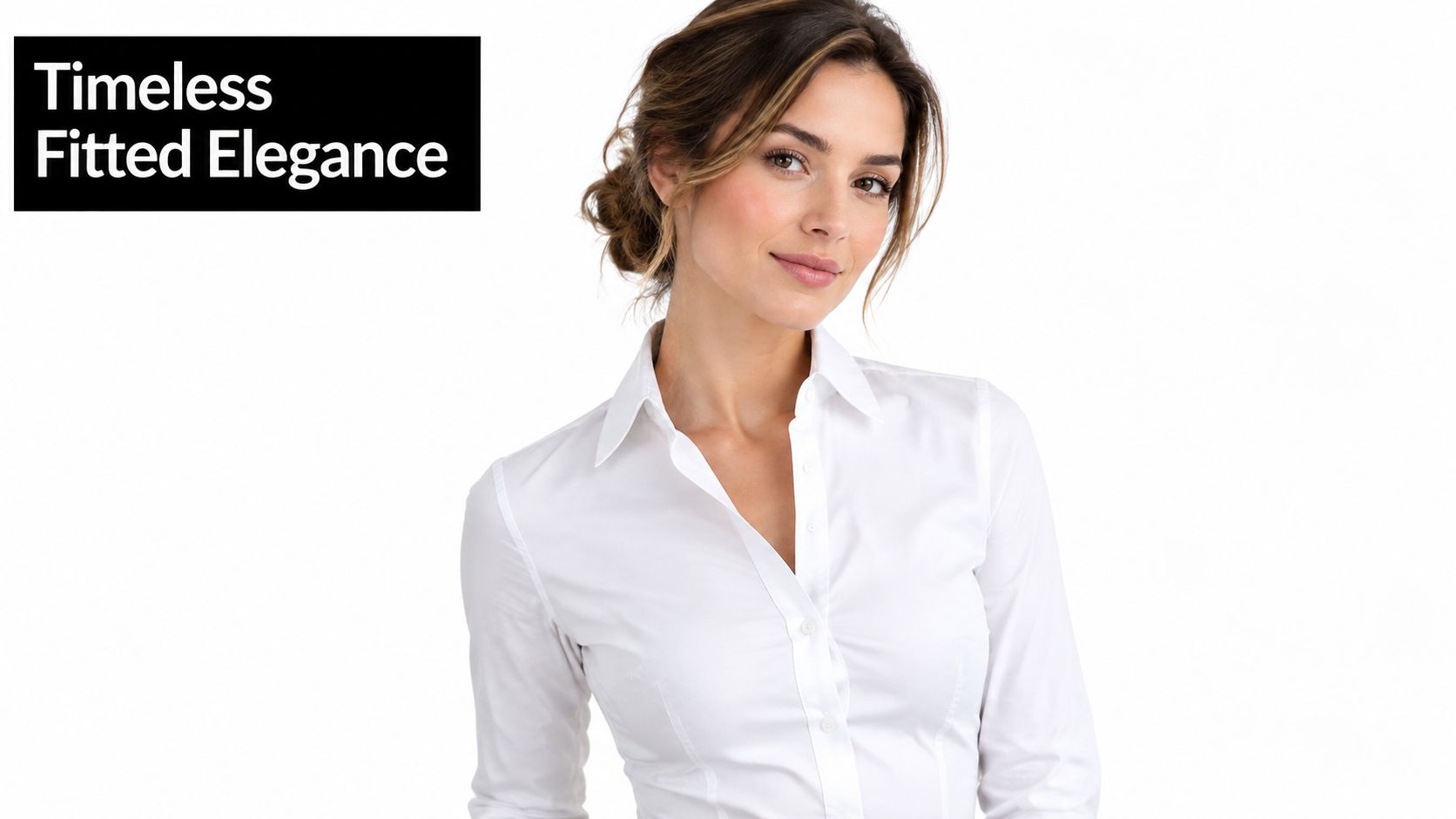
For the spring and summer 2026 fashion season, coverage points toward sharply fitted, body-skimming, corset-like, and sculptural white-shirt shapes, alongside modern Victorian references and softer power dressing. The Guardian's coverage of the white shirt's fashion direction reflects the shift from anonymous office basic to intentional statement layer.
The right blouse will give you a cleaner waist, stronger shoulder line, and more outfit options without making you feel trapped. You'll learn how to measure it, test it, choose fabric intelligently, style it for different settings, and keep it crisp after travel.
Why a Fitted White Blouse Still Earns Its Place
A fitted white blouse can rescue a difficult morning. Pair it with trousers when you need authority, denim when you want ease, or a dramatic skirt when the rest of the outfit needs restraint. The color gives you clarity, but the cut creates the impression.
I once watched a client reject three white blouses in a fitting room because each one looked “too corporate.” The problem wasn't the color or even the buttons. One had a boxy shoulder, another had excess fabric at the waist, and the third had a stiff collar that fought her proportions. Once we chose a blouse with a shaped waist, a moderate collar, and enough room through the upper bust, the same white shirt looked modern rather than managerial.
That distinction matters now because the fitted white blouse is moving beyond basic workwear. Current fashion coverage describes body-skimming lines, sculpted fits, corset-like construction, and modern Victorian details. The blouse can look polished without looking dated, but only when the fit is deliberate.
Fit is the visual language
A successful fitted blouse should follow the body's architecture without tracing every contour. The shoulder line must stay stable, the bust area needs enough room for movement, and the waist should create shape without forcing the buttons apart.
Stylist's rule: If you're constantly adjusting the placket, sleeves, or hem, the blouse isn't fitted. It's under-fitted.
The shirt-waist history explains why expectations remain high. This garment was developed alongside tailoring, changing silhouettes, women's public visibility, and practical movement. It has always carried more than decoration. It signals readiness, competence, and personal style.
For 2026 dressing, I prefer a blouse that has one strong sculptural feature rather than several competing ones. That might be a sharply shaped waist, a curved collar, a pronounced shoulder, or a fitted sleeve. Keep the rest clean so the garment looks intentional instead of costume-like.
The payoff is versatility. A well-cut blouse can sit under a blazer without bunching, stand alone with a skirt, or soften a tailored trouser outfit when you open the neckline and add jewelry. You're not buying another basic. You're choosing a repeatable foundation with a visible point of view.
How to Nail Fit and Sizing Without Guesswork
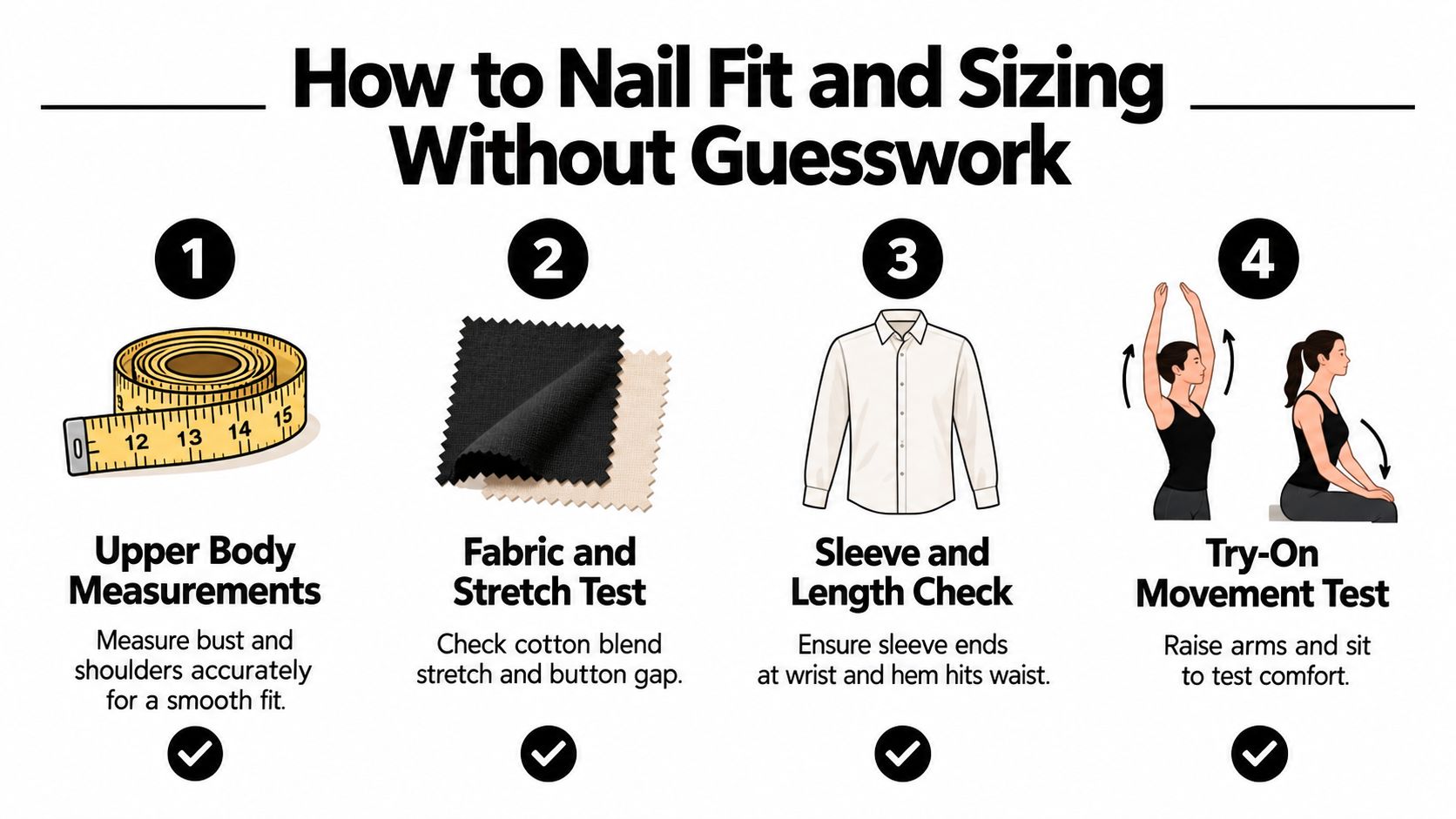
Forget the label first. Start with the body measurements that control how a fitted blouse behaves: upper bust or full bust, shoulder width, waist, and arm length. A single size label rarely describes all four accurately.
Fit research makes that mismatch clear. In a study of 677 participants, only 63 people, or 9.15%, had consistent bust, waist, and hip categories, while 614 people, or 90.84%, showed variation across measurements. The same study reported that 35.45% didn't fit any existing sizing category well. These figures come from the blouse sizing study published in PMC, and they explain why buying the same nominal size across brands often produces different results.
Measure the controls that matter
- Start with the bust. Keep the tape level around the fullest point without compressing the chest. If your bust measurement is larger than the brand's standard chart for your waist size, prioritize bust fit and plan for waist refinement rather than sizing down.
- Check the shoulders. Measure across the back from shoulder point to shoulder point. The seam should end near the natural shoulder edge. If it falls too far outward, the blouse will look oversized even when the waist fits. If it sits inward, arm movement will suffer.
- Record the waist. Measure where the blouse's shaped section sits. A waist-length shirt-waist and a longer blouse may use different shaping points, so compare your measurement with the garment's finished measurements whenever the retailer provides them.
- Measure arm length. Check from the shoulder point to the wrist with the arm relaxed. The sleeve should allow bending and reaching without pulling the cuff upward.
For a more reliable process, combine objective measurements with personal information. Independent blouse-sizing research used age, height, weight, bra size, and subjective assessments of waist, hip, and arm length to estimate fit. You can also follow this accurate body measurement guide before ordering.
Use a real movement test
Button the blouse completely, then raise both arms, reach forward, sit down, and rotate your shoulders. Look for tension lines radiating from the bust, front-button gaping, and sleeve restriction. A clean fit should stay composed while you move.
Full-bust corrections need both horizontal width and vertical length. A fitting guide associated with the research notes that adjustments can require roughly 1/4 inch of pattern adjustment per inch of bust difference, but treat that as a technical starting point, not a universal alteration command. Adding width without length can leave the blouse pulling diagonally across the bust.
The sizing study also found an SVM sizing model reached 89.66% accuracy using primary measurements, compared with 68.97% when extra dimensions were added through PCA-SVM. The practical lesson is simple: more data doesn't automatically create a better fit system. Prioritize the measurements that control the garment's actual structure.
Choosing Fabric and Details That Flatter
Fabric decides whether your fitted white blouse looks crisp, fluid, sculptural, or flimsy. Construction decides whether that impression survives movement. I judge both together because a beautiful pattern can fail in a fabric that collapses, clings, or reveals every button.
Cotton poplin gives the sharpest office finish. It holds a collar and crease well, but it can wrinkle and may feel rigid if the cut is too close. Stretch cotton offers easier movement and can work well through the bust and shoulders, though too much stretch can make the blouse look like a thin top rather than a fitted shirt.
Organdy has a crisp, airy character and historical relevance. A museum record describes a white organdy blouse as waist-length and closely fitting, which reinforces how structured sheerness can support a fitted silhouette. Use it with attention to layering because white transparency changes dramatically under indoor and outdoor light.
Crepe drapes softly and reduces the formal stiffness of a shirt-waist. It suits evening outfits and softer tailoring, but it needs enough structure at the collar and seams to avoid looking limp. Satin catches light beautifully and makes the blouse feel elevated, yet it exposes pulling, stains, and uneven button tension quickly.
| Fabric or Detail | Best For | Watch Out For |
|---|---|---|
| Cotton poplin | Crisp office dressing and defined collars | Stiffness, wrinkling, and bust pulling |
| Stretch cotton | Commuting, movement, and close shaping | A thin or overly clingy finish |
| Organdy | Airy structure and sculptural layering | Sheerness and delicate handling |
| Crepe | Soft tailoring and evening outfits | A collapsed collar or excess drape |
| Satin | Dressy styling and statement texture | Visible tension, shine, and marks |
| Darts and princess seams | Controlled waist shaping | Misplaced shaping that points away from the bust |
| Pleating | Decorative volume and ease | Bulk under jackets |
| Closely spaced buttons | A clean front line | Gaping if the bust needs more room |
Read the construction online
Look for words such as shaped waist, princess seams, bust darts, stretch content, opaque, double-layered, and finished measurements. Product photography should show the blouse from the side as well as the front. A front-only image can hide a back that pulls or a hem that rides upward.
Collar scale matters. A narrow collar keeps a sculptural blouse sleek, while a larger pointed collar adds vintage drama. Button stance also changes the neckline. Buttons placed too far apart invite gaping, while a higher first button can make a sharply fitted blouse feel formal.
If you wear a camisole or tank underneath, compare the layer's neckline, stretch, and hem length before buying. This Nuage Wears tank fit guide is useful for thinking through what should sit smoothly beneath a close blouse. For shoppers who prioritize natural fibers, this organic cotton blouse guide offers another material-focused reference.
Styling Your Fitted White Blouse for Any Occasion
The easiest way to modernize a fitted white blouse is to balance its close shape with a contrasting proportion. Pair it with volume below, expose a little skin at the neckline, or add a relaxed layer so the outfit doesn't become a corporate uniform.

Work with controlled contrast
For the office, wear the blouse with high-waisted wide-leg trousers and a low-profile loafer. Tuck it fully, keep the belt narrow, and choose a bag with structure. The fitted top defines the waist while the trouser volume keeps the look current instead of rigid.
A pencil skirt can work, but it needs a modern detail, such as a longer length, an unusual texture, or a strong shoe. Avoid pairing a tightly fitted blouse with a tightly fitted skirt and a sharp blazer. That combination can look dated because every line competes for control.
For a more relaxed professional outfit, try the blouse under a softly cut jacket with straight jeans. Keep one element undone, either the top button or the jacket closure. The outfit reads polished because the blouse supplies precision, while the denim removes excessive formality.
Weekend and travel formulas
Wear the blouse with a mini skirt and flat boots when you want the 2026 sculptural direction to feel youthful rather than costume-like. Keep the blouse tucked and let the skirt provide the visual movement. A small shoulder bag and simple earrings are enough.
For warm weather, pair it with shorts and flat leather sandals. A cropped fitted blouse can work here, but the waistband should meet the hem cleanly. If the blouse is longer, use a partial tuck instead of bunching the fabric at the front.
Proportion rule: A close blouse needs breathing room somewhere else. Choose a wide trouser, a short skirt, a fluid skirt, or an oversized outer layer.
For casual denim, use the formulas in this blue jeans and white top styling guide. I like a high-rise straight jean, the blouse tucked on one side, and a colorful shoe or bag to break up the neutrality.
Evening and monochrome dressing
At night, leave the neckline open, add sculptural earrings, and pair the blouse with a satin midi or sharply cut black trouser. The white fabric becomes a light source against darker pieces. If the blouse has corset-like shaping, skip a belt and let the waist construction do the work.
Monochrome white can look polished when textures differ. Combine a crisp blouse with matte trousers or a softly draped skirt, then add metallic shoes. Avoid making every item the same shade and finish, or the outfit can look flat.
Here's a visual reference for balancing a fitted top with softer lower proportions:
Care Packing and Smart Shopping for Global Buyers
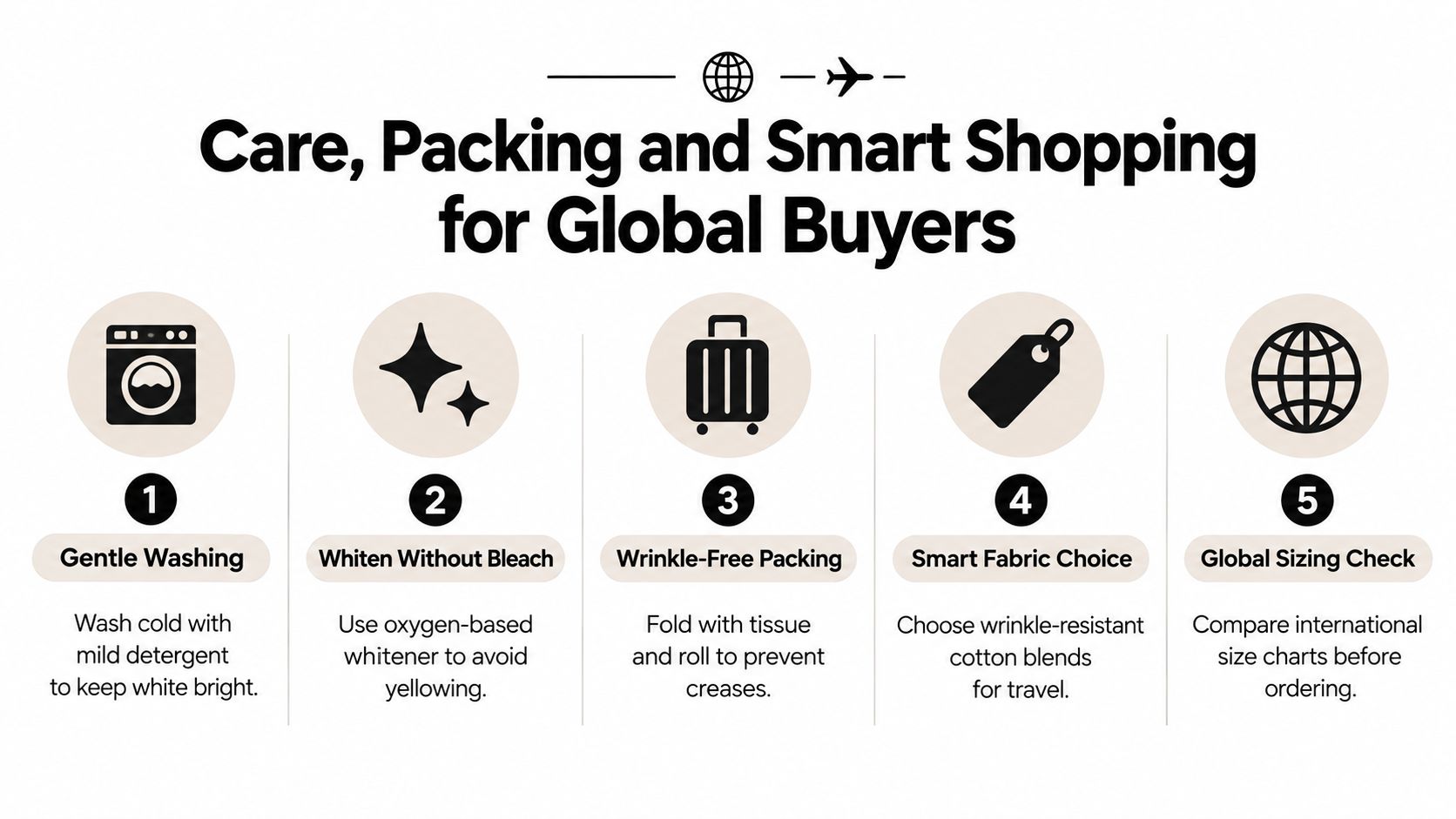
White fabric rewards a disciplined routine. Wash the blouse according to its care label, use a mild detergent, and avoid treating every mark with aggressive bleach. Harsh whitening can weaken fibers or shift the color, especially on delicate finishes and mixed fabrics.
Steam the collar and front placket from the inside when possible. For cotton poplin, press while slightly damp and finish the cuffs and shoulder seams carefully. Satin and crepe need lower heat and a protective cloth because direct heat can damage the surface or create unwanted shine.
Pack for the fabric you actually own
Fold a fitted blouse along its existing seams, place tissue between layers, and keep the collar supported. Rolling can reduce hard fold lines for some lighter fabrics, but structured collars and cuffs usually fare better when folded carefully.
Before a trip, check the blouse in daylight, inspect the underarm area, and pack a small stain-treatment option suited to the fabric. If you're traveling without regular laundry access, a compact portable clothesline for hostels can make hand-washing and air-drying easier.
The wrinkle-free clothes packing guide is useful when you're building a suitcase around delicate or structured pieces.
Shop internationally with evidence
Use the brand's finished garment measurements rather than relying only on XS, S, M, or L. Compare bust, shoulder, waist, and sleeve measurements with your own notes, then read the fabric composition and care instructions.
A proper online checkout should make shipping, duties, returns, and the return window clear. For international purchases, save the size chart and product page before ordering, and confirm whether return postage is covered. If the brand offers free global shipping or returns, check the conditions instead of assuming every item qualifies.
Find Your Perfect Fit With Arrisco and Wear It Confidently
The fitted white blouse works when every element agrees: shoulder line, bust room, waist shaping, sleeve mobility, and fabric behavior. You don't need a dramatic design to make an impact. You need a blouse that stays smooth when you sit, reaches comfortably when you move, and creates a clear silhouette without constant adjustment.
For a contemporary Vietnamese label based in Ho Chi Minh City, Arrisco fits naturally into this conversation because its product range includes blouse and top styles for fashion-conscious shoppers. Its design perspective suits readers who want a sharper, more expressive alternative to anonymous office basics, especially when the blouse is treated as a statement layer rather than a uniform.
I'd use this final checklist before buying:
- Bust first: Button the blouse without strain or visible diagonal pulling.
- Shoulders next: Keep the seam aligned with your shoulder edge.
- Waist with control: Look for shaping that follows your body without compression.
- Sleeves in motion: Raise your arms and rotate your shoulders before deciding.
- Fabric in context: Choose crisp poplin for structure, stretch cotton for movement, or drapier materials for softer occasions.
- Details with purpose: Let the collar, darts, pleats, or buttons provide the visual interest.
Use Arrisco's sizing chart alongside your measurements, not instead of them. If the blouse arrives and the fit feels nearly right, test it indoors with the tags attached, wear the bra or base layer you will use, and check the front, side, and back in natural light.
A fitted white blouse should make getting dressed easier, not turn you into your own quality-control department. Choose the right structure, style it against contrasting proportions, and let the clean white surface support everything from denim to evening tailoring.
Arrisco offers contemporary blouse and top designs with a fit-conscious approach for shoppers who want a fitted white blouse to feel current, wearable, and expressive. Visit Arrisco to explore the collection, compare sizing details, and choose a piece you'll reach for beyond the office.