


When you're on the hunt for the best sustainable fashion brands, it's easy to get lost in a sea of "eco-friendly" tags. The real leaders, brands like Patagonia and PANGAIA, aren't just slapping on green labels. They’re fundamentally changing the game by weaving innovative, planet-first materials with an ironclad commitment to fair labor and total transparency.
These pioneers prove that you don't have to choose between looking good and doing good. High style and high standards can, and should, go hand-in-hand.
What Makes a Fashion Brand Truly Sustainable?
Let’s be honest, the term "sustainable fashion" gets thrown around a lot. But what does it really boil down to? It’s so much more than just using organic cotton or recycled boxes.
I like to think of a truly sustainable brand as a sturdy, three-legged stool. If you kick out any one of those legs, the whole thing comes crashing down. It's a delicate balance, but when it works, it's a thing of new beauty.
The three essential legs are:
- Environmental Impact: This is the big one—everything from the raw materials pulled from the earth to the manufacturing process and what happens to the clothes when you’re done with them.
- Social Responsibility: This is all about people. It's about ensuring fair wages, safe working conditions, and basic human respect for everyone involved in making your clothes.
- Economic Viability: Let's face it, a brand has to be profitable to stick around and keep doing good work. This pillar is about creating a business model that proves sustainability isn't just a charity project—it's the future.
When a brand balances these three pillars, it moves past the buzzwords and starts creating real, lasting change.
The Environmental Pillar: Planet-First Practices
When people hear "sustainability," their minds often jump straight to the environmental side of things. And for good reason! This is about doing less harm and, ideally, actively regenerating the planet. It all starts with the very fibers in our clothes.
Instead of just defaulting to water-guzzling conventional cotton or plastic-based synthetics, the best brands are getting creative with regenerative materials.
Regenerative agriculture, for instance, is a huge step up from simply being organic. It’s a farming method that actively rebuilds soil health, pulls carbon out of the atmosphere, and boosts biodiversity. Think of it as turning a farm into a thriving ecosystem instead of just a factory field. This is the kind of thinking that creates fashion that gives back more than it takes.
Another game-changer is circular design. Picture a t-shirt that's designed from day one to have a future beyond your closet. At the end of its life, it doesn't just become landfill fodder. It's either easily recycled back into brand-new fabric or it biodegrades harmlessly back into the earth. This "closes the loop," turning a massive waste problem into a valuable resource.
“Sustainable fashion is a three-legged stool supported by environmental impact, social responsibility, and economic viability. Without all three, the system is unstable and incomplete.”
The Social Pillar: People-Powered Ethics
A gorgeous piece of clothing quickly loses its shine when you find out it was made in a sweatshop. The social pillar is all about the human cost—the well-being of every single person who had a hand in creating that garment, from the farmer to the seamstress. For the best sustainable fashion brands, this isn't a box to tick; it's a non-negotiable part of their DNA.
This means a rock-solid commitment to fair labor practices, starting with a living wage that allows workers and their families to live with dignity. It also means guaranteeing safe, healthy working conditions, completely free from exploitation.
Transparency is everything here. Truly ethical brands aren't afraid to pull back the curtain and show you their supply chains. They'll openly share info about their factories, invite questions, and hold themselves accountable. Our guide to redefining style with sustainable fashion takes a much deeper look at these crucial ethical standards.
And here's the exciting part: people are demanding this change. The sustainable fashion market was valued at USD 8.04 billion in 2024 and is expected to skyrocket to nearly USD 58.03 trillion by 2035. This isn't just a niche trend; it's a massive shift in what we value. You can dig into the sustainable fashion market's projected growth on rootsanalysis.com to see just how powerful this movement is becoming.
Your Guide to Spotting Genuinely Ethical Brands
Let's be honest, navigating the world of sustainable fashion can feel overwhelming. So many brands throw around words like "eco-friendly" and "conscious," but how do you know who's actually walking the walk? The great news is, you don’t need a degree in environmental science to tell the difference between real commitment and clever marketing.
Think of it like being a style detective. A truly sustainable brand leaves a trail of positive clues everywhere, from the fibers they choose to the certifications proudly displayed on their website. Once you know what to look for, you can confidently support the brands that are truly making a difference.
To get started, it helps to understand that sustainability isn't just about the environment. It's a three-part harmony between people, planet, and profit.
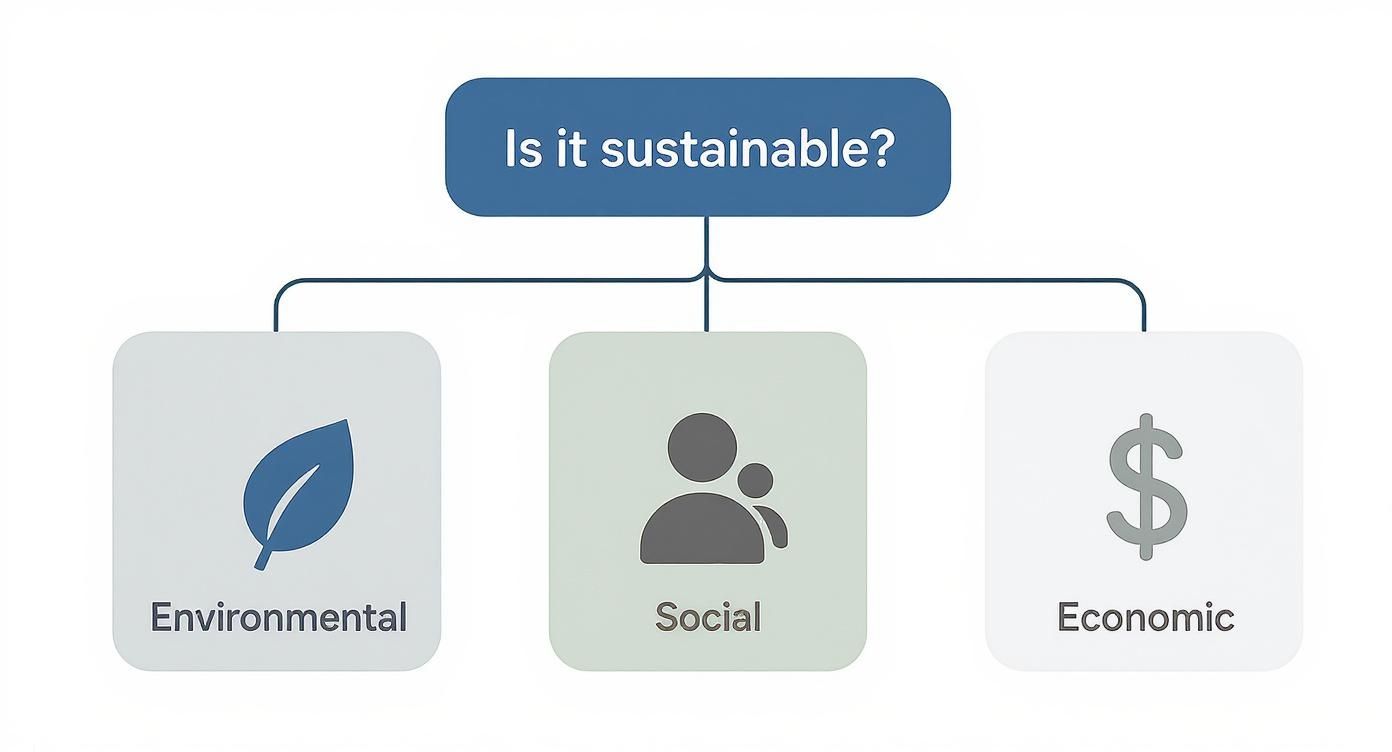
This balance is key. A brand can't be truly sustainable if it uses eco-friendly materials but exploits its workers, or vice versa. It’s about a holistic commitment to doing good across the board.
Decode Materials and Manufacturing
The story of any piece of clothing begins with its raw materials. The best brands are incredibly thoughtful about what they use, choosing fabrics that are kind to the earth.
You'll often see them championing materials like:
- Organic Cotton: Grown without nasty pesticides, it uses way less water than conventional cotton.
- TENCEL™ Lyocell: This superstar fabric comes from sustainable wood pulp and is made in a closed-loop system that recycles over 99% of the water and solvents. Talk about efficient!
- Linen: Made from the hardy flax plant, it's durable, biodegradable, and needs very little water or pesticides to grow.
- Recycled Fabrics: Giving plastic bottles a second life as a great pair of leggings? Yes, please. This keeps waste out of our landfills and oceans.
But the fabric is just the first chapter. How is the garment made? Look for brands that talk openly about their water-saving techniques, non-toxic dyes, and efforts to reduce waste in their factories. They'll be proud to share those details.
Look for Trustworthy Certifications
Think of certifications as a cheat sheet for conscious shopping. These are stamps of approval from respected third-party organizations that have already done the hard work of vetting a brand’s claims. You don't have to take the brand's word for it—an independent expert has already verified it.
Here are a few of the big ones to keep an eye out for:
- B Corporation (B Corp): This is the gold standard for businesses that want to be a force for good. It's a rigorous assessment of a company's entire social and environmental impact.
- Fair Trade Certified™: This label is all about the people. It guarantees that workers received fair wages and have safe working conditions. It’s a powerful way to ensure the humans behind your clothes are treated with respect.
- Global Organic Textile Standard (GOTS): When you see this, you know the organic fibers are legit. GOTS ensures a product is at least 70% organic and that every step of production meets strict environmental and social standards.
Seeing these logos is a huge green flag. They help you cut through the noise and separate the genuine pioneers in the slow fashion vs. fast fashion debate.
Demand Radical Transparency
This might be the most important clue of all: radical transparency. A truly ethical brand has nothing to hide. They aren't just telling you a shirt is "ethically made"—they're showing you.
What does that look like?
- They name their factories. You can see exactly where your clothes were made.
- They share worker stories. They introduce you to the talented artisans behind the products, celebrating their craft.
- They publish impact reports. They're open about their environmental footprint and share their goals for improvement.
This level of honesty is a sign of deep confidence and integrity. It shows they are proud of how they operate. Finding the best sustainable fashion brands isn't about chasing perfection—it's about celebrating progress and supporting the companies brave enough to pull back the curtain.
To make your detective work even easier, here’s a quick guide to what’s hot and what’s not when it comes to sustainability claims.
Key Sustainability Indicators: A Quick-Reference Guide
| Indicator | What to Look For (The Gold Standard) | Red Flags to Watch Out For |
|---|---|---|
| Materials | Specifics like "GOTS-certified organic cotton" or "TENCEL™ Lyocell." | Vague terms like "eco-friendly blend" or "natural fibers" without more detail. |
| Labor Practices | Naming their factories, Fair Trade certifications, and sharing worker stories. | "Made ethically" with no proof. Secrecy about where products are made. |
| Transparency | Publishing annual impact reports and detailed supply chain maps. | A single "sustainability" page with generic statements and stock photos. |
| Certifications | Multiple, well-respected third-party logos like B Corp, GOTS, or Fair Trade. | Self-created "eco" badges or relying on a single, less-known certification. |
| Product Lifecycle | Offering repair programs, recycling initiatives, or designing for durability. | Promoting a "buy more, save more" culture and releasing 52+ micro-seasons a year. |
Keep this table in mind next time you're shopping. It's a simple but powerful tool for making choices you can feel fantastic about.
Navigating the Price and Perils of Greenwashing
Let's get real about two of the biggest elephants in the room when it comes to sustainable fashion: the price tag and the sneaky practice of greenwashing. Why do clothes from truly ethical brands often cost more, and how can you tell the difference between a real commitment and a clever marketing trick? This is a conversation every conscious shopper needs to have.
When you buy something from a genuinely sustainable brand, you’re not just paying for a piece of clothing. You’re investing in a whole system that actually values people and our planet. That cost covers things like paying garment workers a fair, living wage—something fast fashion notoriously avoids—and using high-quality, eco-friendly materials that cost more to grow and process.
Think of it less as an expense and more as an investment in a fashion industry we can all be proud of.
So, Why Do Sustainable Clothes Cost More?
The price difference almost always comes down to a brand's fundamental values. A higher price can be a powerful clue that a company is doing things the right way, not just the cheapest way.
Here’s a quick peek at what that price tag is really covering:
- Living Wages: This is huge. It means ensuring that every single person in the supply chain, from the farmer growing the cotton to the person sewing the seams, earns enough money to live a dignified life.
- High-Quality Materials: Sourcing top-notch fabrics like GOTS-certified organic cotton or innovative materials like TENCEL™ costs more upfront. The payoff? A beautifully made garment that lasts longer and is far kinder to the environment.
- Ethical Production: This means smaller, more careful production runs, investing in modern dyeing processes that save water, and cutting down on factory waste. All of these responsible steps require more resources than the typical mass-production model.
By choosing to support brands that embrace these practices, you're sending a powerful message. Our article exploring the challenges facing fashion industry ethics is a real eye-opener for those wanting to understand what goes on behind the scenes. As shoppers, this is how we vote with our wallets for a better system.
Unmasking the Deception of Greenwashing
Okay, now for the tricky part: greenwashing. This is what happens when a company pours more cash into marketing itself as sustainable than it does into actually being sustainable. It’s a dishonest tactic designed to fool well-meaning shoppers just like you.
The secret to avoiding it? Become a sustainability detective. Genuinely committed brands are an open book—they’re transparent and specific. Greenwashers, on the other hand, hide behind vague buzzwords and pretty pictures.
A 2021 report from the Changing Markets Foundation was a bombshell, revealing that a staggering 60% of sustainability claims by major European fashion brands were totally misleading. H&M was crowned the worst offender, with an unbelievable 96% of its claims falling apart under inspection.
This widespread trickery makes things tough. Market research confirms that while 61% of people want to buy eco-friendly products, price is a major barrier. In the UK, a whopping 96% of consumers say affordability trumps sustainability. This is made even worse by the fact that an estimated 39% of green claims are just plain false.
How to Spot a Greenwasher in the Wild
So, how do you protect yourself from getting duped? It’s all about looking for proof, not just promises. Be wary of any brand that uses feel-good language without anything to back it up.
Keep an eye out for these classic red flags:
- Vague Language: Watch for fuzzy words like "eco-friendly," "conscious," or "green." If a brand can't tell you exactly what makes a product "conscious," that's a bad sign.
- Misleading Imagery: A brand might plaster its website with photos of green leaves and pristine forests to give off a sustainable vibe, even if its actual practices are anything but.
- Hidden Trade-Offs: This one is sneaky. A company might brag about one small "green" initiative, like using recycled hangtags, while completely ignoring massive problems like paying poverty wages in its factories.
Ultimately, navigating this landscape is about arming yourself with knowledge. By asking the right questions and demanding transparency, you can confidently find and support the brands that are truly making a difference. Your choices have the power to reward authenticity and make deception a bad business strategy.
Spotlight on Brands Leading the Sustainable Charge
Alright, let's get to the exciting part! It's time to celebrate the real trailblazers—the brands proving that jaw-dropping style and deep-rooted sustainability aren't just compatible, they're the perfect match. These are the companies that are not just making clothes; they're actively redesigning the future of fashion for the better.
We're not just rattling off a list here. We're diving into the incredible stories and game-changing practices that make these brands stand out. From mastering the art of circular design to uplifting artisan communities, these companies are setting the new gold standard for what it means to be truly sustainable.
Patagonia: The Original Trailblazer
Honestly, you can't even start a conversation about sustainable fashion without tipping your hat to Patagonia. For decades, they've been the undisputed North Star, showing the world how to build a business that puts the planet first. They're more than an outdoor gear company; they're an environmental activism powerhouse, proving that purpose and profit can absolutely go hand-in-hand.
Patagonia has always set the bar. They made the groundbreaking switch to 100% organic cotton ages ago, completely sidestepping the toxic pesticides that plague conventional farming. They didn't stop there, either. The brand is now a huge champion of regenerative agriculture, a practice that actually heals the soil and boosts biodiversity, shrinking their footprint even further.
PANGAIA: The Material Science Innovator
PANGAIA feels less like a fashion label and more like a super-smart materials science collective that just happens to make ridiculously cool and comfy streetwear. Their entire mission is to solve Earth's biggest problems through innovation, and their approach is nothing short of genius.
They're famous for cooking up groundbreaking, bio-based fabrics in their labs. We're talking hoodies dyed with pigments from plants or puffer jackets filled with a patented material made from wildflowers instead of goose down. It’s this fusion of science and style that’s paving the way for a brighter, more sustainable future.
PANGAIA operates on a philosophy of "high-tech naturalism." They believe nature holds the secrets to the most advanced materials on the planet, and they’re on a mission to unlock that potential.
Finisterre: The Ocean Advocate
Born out of the needs of hardy British surfers, Finisterre is a certified B Corp with saltwater running through its veins. Their dedication goes way beyond just making tough gear for coastal adventures; they are fierce protectors of the very marine environments that inspire every single product.
These guys are masters of turning trash into treasure. They famously use materials like ECONYL®, a regenerated nylon fiber made from old fishing nets and other plastic waste pulled from the ocean. This not only helps clean our seas but also creates the high-performance fabrics for their wetsuits and outerwear. Plus, with their "Leave No Trace" packaging and robust repair services, their commitment to a circular economy is crystal clear. Discovering incredible ethical online clothing stores like this one is getting easier every day.
Stella McCartney: The Luxury Pioneer
For the longest time, high fashion and sustainability felt like they were on different planets. Then Stella McCartney came along and proved they could be one and the same. From day one, she's been a relentless champion for animal welfare and environmental responsibility, completely refusing to use leather, fur, or feathers in any of her stunning collections.
She consistently pushes the boundaries of what luxury materials can be, using everything from grape-based leather alternatives to handbag linings made from recycled plastic bottles. Her work proves you never, ever have to sacrifice elegance for ethics. For those interested in high-end conscious choices, this Your Guide to Green Luxury Bags aligns perfectly with this ethos.
To help you see how these leaders stack up, here’s a quick overview of what makes each of them special.
Top Sustainable Fashion Brands at a Glance
| Brand Name | Known For | Key Sustainable Materials | Price Range |
|---|---|---|---|
| Patagonia | Outdoor gear & activism | Recycled polyester, Organic cotton | $$ - $$$ |
| PANGAIA | Innovative material science | Bio-based fibers, Plant-based dyes | $$$ - $$$$ |
| Finisterre | Ocean-friendly apparel | ECONYL® regenerated nylon | $$ - $$$ |
| Stella McCartney | Luxury fashion & animal welfare | Mushroom leather, Recycled materials | $$$$ - $$$$$ |
This table is just a snapshot, but it clearly shows the different paths to sustainability.
These brands are just a few shining examples of the incredible shift happening in the fashion world. They prove that the path to a better future is creative, diverse, and full of exciting possibilities. When you choose to support them, you’re not just buying a piece of clothing—you’re casting a vote for a healthier planet.
How to Build Your Sustainable Wardrobe
Feeling inspired? Awesome. It’s time to take that energy and turn your good intentions into a closet you truly love. Building a sustainable wardrobe isn't about a massive, overnight purge. It’s a much more satisfying journey of making thoughtful, intentional choices that actually feel good.
This is your roadmap to creating a collection of clothes that not only look fantastic on you but also loves our planet back. We're about to dive into the "buy less, buy better" philosophy with real, practical steps that are a joy to put into practice.
Start with a Mindful Closet Audit
Before you even think about buying a single new thing, let's get reacquainted with what you already own. A closet audit isn't about feeling guilty; it's about discovery. Pull everything out and get a real, honest look at what’s been hiding in there.
Sort it all into a few simple piles:
- The "Heck Yes!" Pile: These are your MVPs—the pieces you reach for constantly that make you feel like a rockstar. They’re the foundation of your personal style.
- The "Hmm, Maybe" Pile: This is for anything that doesn't quite fit right, feels a bit dated, or just hasn't seen the light of day in a while. Be brutally honest here!
- The "Needs a Little TLC" Pile: A missing button? A small tear? These items just need a little mending to be brought back to life.
- The "Time to Say Goodbye" Pile: These are the pieces that no longer serve you but could be perfect for someone else. Think donate or sell!
This process gives you a crystal-clear snapshot of what you actually wear and love, instantly highlighting any real gaps you might want to fill. It's the essential first step. Find more tips in our guide on embracing sustainable fashion for women.
Embrace the Power of Secondhand and Vintage
Honestly, one of the most fun and sustainable ways to build your wardrobe is by diving headfirst into the world of secondhand. Thrifting, consignment, and vintage hunting are basically treasure hunts where you can unearth incredible, one-of-a-kind pieces that tell a story.
Every time you buy a secondhand item, you're not just saving it from a potential trip to the landfill; you're also reducing the demand for new production, which saves an incredible amount of water, energy, and raw materials.
This is a true win-win-win situation. It's amazing for the planet, way easier on your wallet, and the absolute best way to cultivate a style that's uniquely you. If you're ready to explore the past, learning how to date vintage clothing can turn a fun hobby into a real skill.
Extend the Life of Your Clothes
It’s true what they say: the most sustainable garment is the one already hanging in your closet. Showing your clothes a little love can dramatically extend their lifespan, keeping them beautiful and in rotation for years to come.
Think of it as a partnership with your wardrobe. A few simple skills can make a massive difference and, frankly, it feels incredibly empowering to be able to care for your own things.
Here are a few easy habits to get into:
- Wash Less, and Wash Gently: Most clothes really don't need a wash after every single wear. When it is time, choose cold water and a gentle cycle to protect the fibers and keep colors from fading.
- Learn Basic Mending: You don't need to be a professional tailor to sew on a button or patch a small hole. A simple sewing kit and a couple of YouTube videos are all you need to be your own repair hero.
- Store Everything Properly: Good hangers are a game-changer for shirts and jackets, helping them keep their shape. And always, always fold your knitwear to prevent it from stretching out.
Making these small shifts is how you honor the resources and craftsmanship that went into your clothes. It’s how you go from having a closet full of stuff to a curated collection of pieces you truly cherish.
Got Questions About Sustainable Fashion? Let's Dive In.
Jumping into the world of sustainable fashion is awesome, but let’s be honest—it can also feel like there's a mountain of new things to learn. That's completely normal! Being curious is the first step toward making better choices, and we're here to help clear up some of the most common questions.
Think of this as your personal, no-fluff FAQ. We'll give you the straight answers you need to feel confident on your sustainable style journey.
Does "Sustainable" Just Mean "Expensive"?
This is probably the number one question we hear, and the answer is a big, refreshing "not at all!" It's true that some of the best sustainable fashion brands come with a higher price tag, but that’s only part of the picture. That price often reflects the real cost of paying workers a fair, living wage and using high-quality, eco-friendly materials—corners that fast fashion is notorious for cutting.
But sustainability is also about a new way of thinking. It's about shifting to a "buy less, choose well, make it last" mindset. Here’s how you can rock a sustainable wardrobe on any budget:
- Hit the Thrift Stores: This is the ultimate sustainability hack. You can unearth incredible, one-of-a-kind pieces for a fraction of their original price, all while saving clothes from the landfill. It’s a total win-win.
- Host a Clothing Swap: Get your friends together and trade those pieces you’re just not reaching for anymore. It’s free, a ton of fun, and an amazing way to refresh your style without spending a dime.
- Find Affordable Ethical Brands: More and more brands are popping up with a mission to make sustainable fashion accessible. A little bit of research can lead you to some incredible, budget-friendly gems!
What Are the Best Sustainable Fabrics to Look For?
Figuring out fabrics can feel like learning a whole new language, but there are a few clear winners that are total superstars for the planet. These materials are known for their low environmental impact and feel amazing to wear.
Keep an eye out for clothes made from:
- Organic Linen: Crafted from the super-resilient flax plant, linen needs very little water or pesticides to grow and is completely biodegradable.
- TENCEL™ Lyocell: This is a seriously cool fabric. It’s made from sustainably sourced wood pulp in a closed-loop system that recycles over 99% of the water and solvents it uses.
- Organic Cotton: Unlike its conventional cousin (which is a notoriously thirsty and pesticide-heavy crop), organic cotton is grown without toxic chemicals. That’s better for the soil, the farmers, and your skin.
- Recycled Materials: Fabrics spun from things like recycled polyester (think plastic bottles) or recycled cotton give existing materials a brand new life and dramatically cut down on waste.
Choosing these fabrics is such a powerful way to vote for a healthier planet every time you get dressed. They're the true foundation of a conscious closet.
How Can I Spot Greenwashing from a Mile Away?
Ah, greenwashing—when a company talks a big game about sustainability but doesn't actually walk the walk. It's incredibly frustrating. A recent report even found that a jaw-dropping 96% of H&M's sustainability claims were misleading. But you can absolutely become a pro at spotting the fakes by looking for proof, not just promises.
A great rule of thumb is to be skeptical of vague buzzwords. If a brand throws around terms like "eco-friendly" or "conscious" without backing it up with exactly what that means, consider it a major red flag.
Genuinely sustainable brands are an open book. They’re proud to share the details about their factories, their material sourcing, and their certifications. They welcome the tough questions because they have nothing to hide. If a brand’s sustainability page feels like a marketing pitch full of pretty nature pictures but is short on actual data, trust your gut and keep digging.
Ready to step into a style that’s as thoughtful as it is beautiful? At Arrisco, we blend timeless design with a deep commitment to responsible practices, bringing you curated collections you can truly feel great about wearing.
Shop the Arrisco collection now and get 10% off your first order!