


"지속 가능한 패션" (Sustainable Fashion) isn't just a buzzword; it’s a powerful movement all about creating clothing that's kinder to our planet and the people on it. The big idea? We’re shifting away from the wasteful make-use-dispose model of fast fashion. Instead, we're embracing a circular approach that’s all about reusing, repairing, and recycling materials to keep them in play for as long as possible.
What Is Sustainable Fashion and Why It Matters
Ever stopped to think about the real story behind your favorite t-shirt? That journey, from a cotton field to your closet, carries a much heavier environmental price tag than most of us imagine. The traditional fashion industry—what we often call "fast fashion"—is built on a high-speed, high-waste model. Think of it as a dead-end street: resources go in, trendy clothes pop out, and way too soon, they end up in a landfill.
Sustainable fashion offers a brilliant way out of this mess. Picture it more like a vibrant roundabout than a dead end. Instead of being designed for disposal, clothes are made to last, to be repaired, to be passed on, and eventually, to be recycled right back into the system. This creates what’s called a closed-loop or circular economy, where waste is designed out from the very beginning.
The Urgent Need for a Fashion Revolution
Let's be real: our current fashion habits are incredibly demanding on the planet. The fast fashion machine pumps out over 100 billion garments every single year, and a staggering number of them are tossed out after just a few wears. This isn't just wasteful—it's causing some serious environmental damage that we simply can't ignore.
Sustainable fashion isn’t about sacrificing style; it’s about making conscious choices that align our values with our wardrobe. It represents a powerful vote for a healthier planet and a more ethical industry with every piece we choose to buy and wear.
One of the most impactful changes we can make is simply choosing better materials. This little infographic is a real eye-opener. It shows just how much water it takes to make a single t-shirt from three different materials. It perfectly illustrates why material choice is a cornerstone of 지속 가능한 패션.
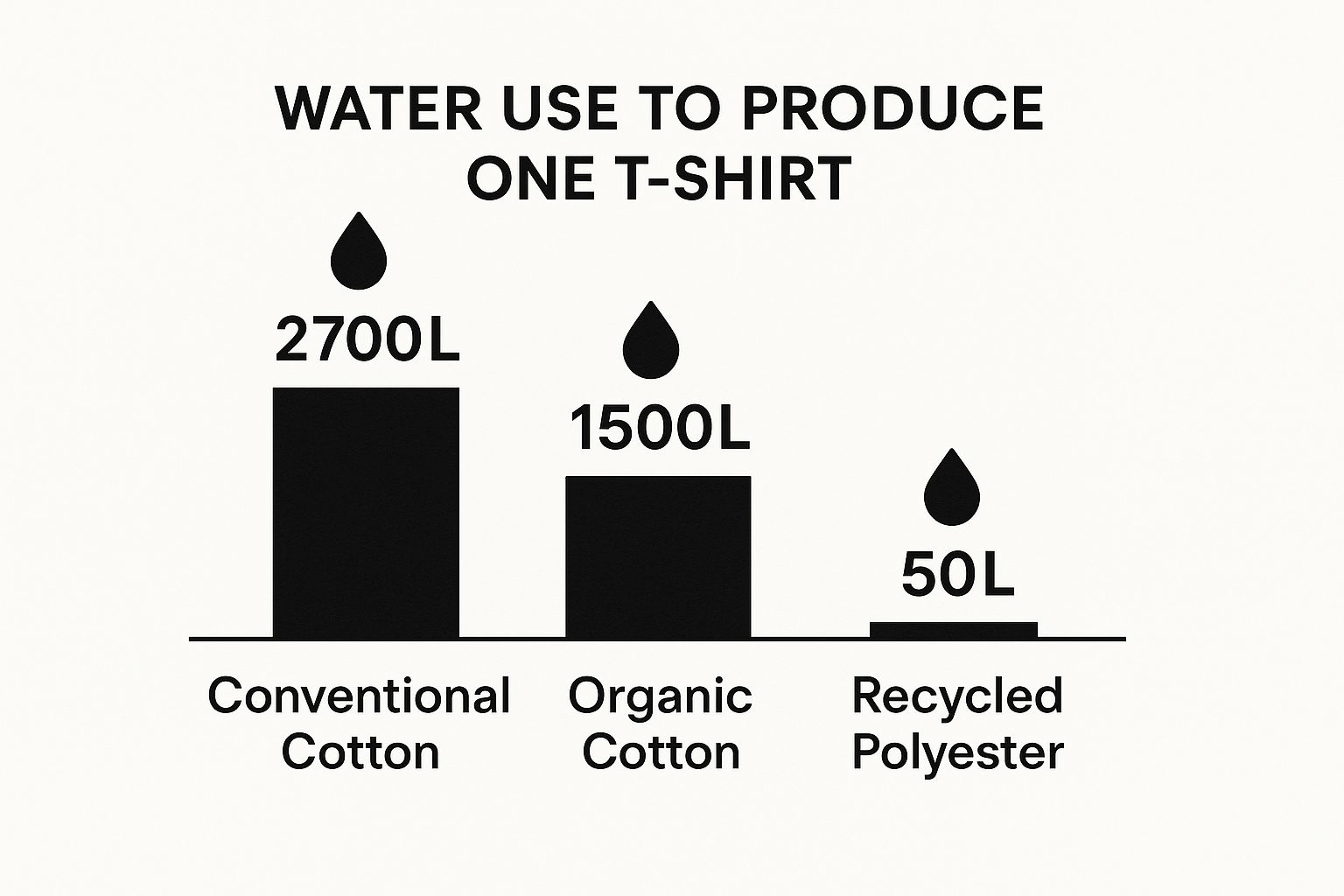
The numbers don't lie. Just by switching from conventional cotton to recycled materials, we can slash water use by over 98%. That’s a massive opportunity for conservation right there. If you're ready to go deeper, our comprehensive guide to sustainable fashion redefines style breaks these concepts down even further.
Fast Fashion vs Sustainable Fashion At a Glance
To really see the difference, it helps to put these two approaches side-by-side. This table cuts through the noise and lays out the core contrasts between the old, wasteful model and the future of fashion.
| Aspect | Fast Fashion | Sustainable Fashion |
|---|---|---|
| Production Speed | Rapid, trend-driven cycles (weekly) | Slower, seasonless collections |
| Material Sourcing | Synthetic, cheap, resource-heavy | Organic, recycled, low-impact |
| Labor Practices | Often poor wages, unsafe conditions | Fair wages, ethical treatment |
| Product Lifespan | Designed for short-term use, disposable | Made to last, repairable, timeless |
| Environmental Impact | High pollution, waste, and carbon footprint | Minimized waste, reduced emissions |
| Economic Model | Linear (take-make-dispose) | Circular (reduce-reuse-recycle) |
The contrast is stark, isn't it? One path leads to overflowing landfills and depleted resources, while the other paves the way for a healthier industry and planet.
The Growing Momentum of Conscious Fashion
The good news is, the tide is definitely turning. People are waking up and demanding better, and that's fueling an incredible surge in the sustainable fashion market. In fact, what was a USD 9.19 billion market in 2025 is projected to nearly double to around USD 17.77 billion by 2032, growing at a compound annual growth rate (CAGR) of 9.9%.
This isn't just a fleeting trend. It’s a fundamental shift in how we think about, create, and wear our clothes, driven by conscious consumers and exciting new technologies that help us do more with less. This is the future, and it's happening right now.
Uncovering the True Cost of Your Wardrobe
That cheap t-shirt or trendy pair of jeans you snagged on sale has a secret. And it’s not a pretty one. While fast fashion delivers that instant rush of a new outfit, the real price is paid by our planet through drained resources, rampant pollution, and mountains of waste. It's time to pull back the curtain and really look at what our clothes cost.
Think about your favorite pair of jeans for a second. They feel like a simple, everyday essential, right? But the journey to get them into your closet is anything but simple. In fact, producing just one pair of denim jeans can gulp down an unbelievable 7,000 liters of water. To really grasp that, imagine it’s the same amount of water one person drinks over seven years.
And that’s just one pair of jeans. When you zoom out and look at the whole industry, the numbers get truly mind-boggling.
The Planetary Price of a Passing Trend
The fast fashion machine is built for speed. It pumps out new styles almost weekly, all to keep up with trends that are gone in a flash. This relentless cycle burns through a massive amount of energy and raw materials, leaving a serious scar on everything from our oceans to our air.
The scale of this is global. Fast fashion is a colossal market, valued at USD 150.82 billion in 2025 and on track to nearly double by 2032. Its environmental bill is just as huge. The industry is responsible for about 10% of the world's annual carbon footprint—that's more than all international flights and maritime shipping combined. It also drinks up around 141 billion cubic meters of water each year and is the source of 35% of all microplastic pollution in our oceans.
The real challenge of our time is not just creating new clothes, but fundamentally rethinking our relationship with them. We must shift from a mindset of consumption to one of conscious curation, where every item is valued for its longevity and its story.
This is exactly why sustainable fashion isn't just a buzzword; it's a vital answer to a global crisis. It’s about finally connecting the dots between our closets and the planet. To see how deep this goes, check out our detailed comparison of slow fashion vs. fast fashion.
It’s More Than Just Water and Emissions
Beyond the jaw-dropping stats on water and carbon, fast fashion’s impact creeps into other critical areas. The industry loves cheap, synthetic fibers like polyester, which is made from fossil fuels. Every time we wash these clothes, they shed tiny plastic fibers that flow into our waterways and oceans, harming marine life and even ending up in our food.
Let's break down some of the other hidden costs:
- Chemical Pollution: The dyes and finishes used to make our clothes so vibrant often involve toxic chemicals. These can pollute local water supplies in manufacturing hubs, creating huge risks for ecosystems and people.
- Landfill Overload: A staggering 85% of all textiles are thrown away each year. That's the equivalent of a garbage truck full of clothing being dumped or burned every single second.
- Resource Depletion: The constant hunger for new materials, especially cotton and oil-based synthetics, puts an incredible strain on the Earth's finite resources.
Seeing these numbers can feel like a gut punch, but they also reveal the incredible power we have. Every time we choose to support brands committed to sustainable fashion, we're casting a vote for a better industry—one that respects both people and the planet. It’s a powerful way to start rewriting fashion's story into one we can all be proud of.
The Three Pillars of Sustainable Fashion
So, we know fast fashion has a massive footprint. But what’s the alternative? This is where it gets exciting. We're not just talking about avoiding bad habits; we're talking about actively building a better, smarter, and more beautiful fashion industry.
The whole idea of sustainable fashion really stands on three core principles. Think of them as the legs of a stool—if one is missing, the whole thing topples over. Each one is essential for creating a system that’s truly balanced. When you're looking at a brand, keeping an eye out for these three pillars is your roadmap to making choices you can feel genuinely good about.
1. Eco-Friendly Materials
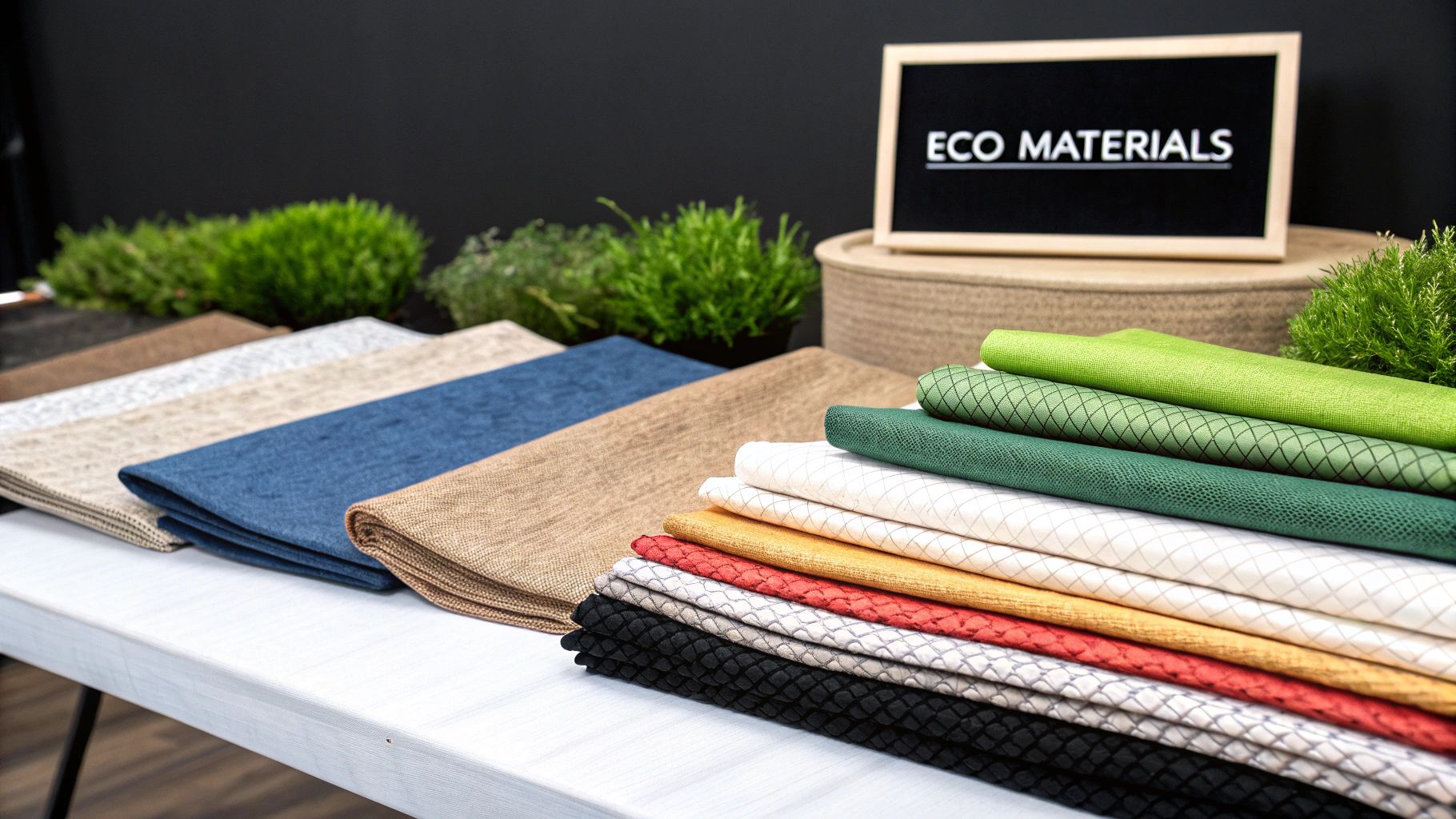
It all starts with the raw ingredients. The very first pillar is all about the fabrics our clothes are made from. For decades, fashion has leaned on super thirsty crops like conventional cotton or fossil-fuel-based synthetics like polyester. Sustainable fashion flips that script entirely, championing materials that are gentle on our planet.
And this is where some incredible innovation is happening! We’re seeing a boom in brilliant, Earth-friendly textiles.
- Organic & Regenerative Fabrics: Think organic cotton or hemp, grown without nasty pesticides and using way less water. Regenerative agriculture is even cooler—it actually rebuilds soil health and pulls carbon out of the air.
- Recycled Materials: Why make something from scratch when we can use what’s already here? Recycled polyester (often called rPET) made from old plastic bottles and recycled cotton give existing materials a second chance, saving a ton of waste, water, and energy.
- Innovative Plant-Based Fibers: Brands are getting seriously creative, crafting amazing vegan leather alternatives from things like pineapple leaves (Piñatex), mushrooms, and even cacti.
Choosing clothes made from these materials cuts down our environmental impact right from the get-go. If you want to go deeper on this, our guide to unraveling the world of fashion fabrics is a fantastic starting point.
2. Ethical Production
The second pillar of sustainable fashion is all about people. A truly sustainable piece of clothing isn't just good for the planet; it’s made by people who are treated with dignity and paid fairly. For far too long, the fast fashion machine has run on the exploitation of garment workers, who often face shockingly low wages and dangerous conditions.
Ethical production is the human-centric soul of sustainability. It’s a non-negotiable.
A beautiful garment loses all its charm if it was created in an ugly way. Ethical production ensures that the entire journey of a piece of clothing—from the farm to the factory—is one that we can be proud to support.
This means brands have to step up and be transparent about their entire supply chain. Here’s what that looks like in practice:
- Fair Wages: Paying workers a real living wage that allows them to support themselves and their families.
- Safe Working Conditions: Making sure factories are clean, safe, and free from hazards. It’s about protecting the well-being of every single employee.
- No Forced or Child Labor: Having a zero-tolerance policy for any form of modern slavery.
- Empowering Communities: Investing in the local communities where clothes are made, often through health or education programs.
When you spot a certification like Fair Trade, that’s a powerful signal that a brand is taking this stuff seriously. It’s a promise that your purchase supports respect, not exploitation.
3. The Circular Economy
The final pillar completely rethinks the "end" of a garment's life. In fact, it gets rid of the idea of an "end" altogether. The old, linear model was simple: take, make, waste. The circular economy is a brilliant alternative designed to keep clothes and materials in use for as long as humanly possible.
It's all about closing the loop. Instead of a one-way street to the landfill, garments are designed from day one with their entire lifecycle in mind. This includes a few key strategies:
- Designing for Longevity: This is about creating high-quality, timeless clothes that are built to last for years, not just a few wears.
- Repair and Reuse: Brands are starting to encourage customers to repair their clothes, and the boom in thrifting and secondhand shopping is a huge part of this.
- Upcycling and Recycling: This is where creativity shines! Old clothes or leftover "deadstock" fabric can be transformed into totally new items. And when a garment truly can't be worn anymore, its fibers are recycled to create new textiles. The cycle begins again.
This approach is a total game-changer. It turns "waste" into a resource, creating a self-renewing system where nothing gets thrown away. By embracing all three pillars—materials, people, and circularity—the sustainable fashion movement offers a powerful and inspiring vision for the future of our closets.
How Your Choices Drive Real Industry Change
Ever feel like your individual choices are just a tiny drop in a massive ocean? It's a common feeling, but when it comes to fashion, those drops create ripples that build into powerful waves of change. Every single time you ask, "Who made my clothes?" or consciously pick a brand doing things the right way, you’re sending a clear, loud message to the entire industry.
You, the shopper, hold the real power here. The fashion world, especially the fast fashion machine, is engineered to chase demand. So, what happens when that demand pivots from cheap and disposable to durable and ethical? Brands have no choice but to listen and adapt. This isn't just wishful thinking—it's a market reality happening right now.
Think of your purchases as votes. Each dollar you spend is a vote for fair wages, a vote for cleaner water, and a vote for a system that puts people and the planet above profit alone. This collective power is forcing a massive industry-wide rethink, from the materials being sourced all the way to how companies structure their business models.
The Tidal Wave of Conscious Consumerism
This shift is so much more than a niche trend; it’s a global awakening. The demand for sustainable fashion is absolutely surging, and the data paints an undeniable picture of this new reality. Any brand that chooses to ignore this movement risks being left behind as a relic of a wasteful past.
The numbers don't lie. Stunning research shows that around 80% of consumers globally are now willing to open their wallets a little wider for products made with sustainable practices. This isn't just about feeling good; it's a fundamental shift in values that’s hitting the bottom line and pushing brands to genuinely change their ways.
This pressure from shoppers creates an incredible incentive for brands to do better. As more people demand transparency and eco-friendly options, companies are pushed to innovate everywhere—not just in their fabrics, but across their entire operation. This even extends to the nitty-gritty of logistics, where implementing sustainable shipping practices and eco-friendly delivery are becoming a critical piece of the puzzle.
Your Actions, Magnified
So, what does all this look like in the real world? It's simple: every thoughtful choice you make adds up to a much larger, positive impact. Your actions become part of a bigger story that’s actively reshaping the industry for good.
Here’s how a few small shifts multiply their effect:
- Choosing Quality Over Quantity: When you invest in one beautifully made, timeless piece instead of five cheap, trendy ones, you're helping to reduce the demand for resource-guzzling mass production. It tells brands that we value longevity and craftsmanship.
- Supporting Transparent Brands: Actively seeking out companies that are open about their supply chains and factories is a powerful way to reward honesty. It puts immense pressure on other brands to stop hiding behind vague claims and show us the proof.
- Embracing Secondhand: By thrifting, swapping, or reselling clothes, you become a direct participant in the circular economy. This is one of the best ways to keep garments out of landfills and lessen the need to create new things from scratch.
Every sustainable choice, no matter how small it feels, is a building block for a better fashion future. You are not just a customer; you are a catalyst for change.
Ultimately, the journey to a more sustainable fashion industry doesn’t just rest on the shoulders of designers and CEOs. It starts and ends with you. Your curiosity, your standards, and your wallet are the most powerful tools we have for building an industry we can all be proud of.
How AI Is Weaving a Greener Future for Fashion
When we talk about sustainable fashion, it’s easy to picture a return to simpler, old-fashioned methods. But the truth is far more exciting. The real revolution in sustainable style isn't about going backward; it’s about taking a massive leap forward, powered by some of the most brilliant technology available today.
This is where Artificial Intelligence (AI) steps onto the runway, and it’s completely changing the game. AI is helping brands get smarter, faster, and incredibly more efficient, tackling the fashion industry’s waste problem right at its source. It's the ultimate fusion of high-tech and high-consciousness.
Slaying Overproduction with Smart Predictions
One of fashion's biggest environmental sins is overproduction. For years, brands have relied on guesswork to decide what and how much to make, often resulting in mountains of unsold clothing that ends up in landfills. This is where AI’s predictive power becomes a sustainability superhero.
Imagine an algorithm that can sift through colossal amounts of data—past sales figures, trending social media posts, and even weather forecasts—to predict what people will want to buy with uncanny accuracy. That's exactly what AI is doing. It helps brands make just enough of the right things. No more, no less.
By shifting from reactive guesswork to proactive, data-driven decisions, AI allows the fashion industry to stop waste before it's even created. It's the definition of working smarter, not harder.
This single shift dramatically cuts down on wasted materials, water, and energy. It's a huge win for the planet and a savvy business move, proving that sustainable fashion is also smart fashion.
The Magic of 3D Digital Sampling
The traditional design process is surprisingly wasteful. Before a garment ever hits the shelves, designers typically create multiple physical prototypes. These samples get shipped back and forth across the globe for tweaks and approvals—a process that burns through materials, money, and a massive amount of carbon.
Enter 3D digital sampling, another game-changing breakthrough. Designers can now use sophisticated software to create incredibly realistic virtual versions of their clothes. They can see exactly how a fabric will drape, how a color will look, and how a design will fit on a digital avatar, all without touching a single piece of fabric.
This completely transforms the design phase:
- Material Waste Is Eliminated: No fabric is cut and no resources are used until the final design is locked in.
- Carbon Footprint Shrinks: The need to ship physical samples internationally vanishes, slashing transport emissions.
- Creativity Is Unleashed: Designers can play with countless ideas in a fraction of the time, leading to better, more thoughtful designs.
This virtual-first approach is a cornerstone of modern sustainable fashion, making the whole creation process cleaner and leaner. This tech is also a close cousin to other exciting tools helping shoppers find their perfect fit. To see it from the consumer side, you can learn more about virtual try-on technology and discover how it's also helping reduce returns and waste.
Optimizing the Entire Fashion Lifecycle
AI's role doesn't stop once a design is finalized. Its intelligence is being woven into every single step of the fashion lifecycle, creating a more sustainable system from start to finish. This technology is helping brands make better choices at every turn, ensuring that efficiency and ethics go hand-in-hand.
For instance, AI algorithms can optimize supply chains to find the most direct and fuel-efficient shipping routes, shaving off more carbon emissions. Inside factories, AI-powered systems can map out pattern pieces on fabric with surgical precision, minimizing the leftover textile waste—often called "deadstock"—that's a major byproduct of manufacturing.
This is the future in action. By embracing these powerful tools, the fashion industry isn't just cleaning up its act. It’s building a more resilient, intelligent, and ultimately more sustainable foundation. Technology isn't just an add-on; it’s an essential thread in the fabric of a truly sustainable fashion movement.
Your Guide to Building a Sustainable Wardrobe
Ready to make a real change but not sure where to begin? You're in the right place! Building a sustainable wardrobe isn't about throwing everything out and starting over. It’s a rewarding journey of progress, not perfection, where simple, thoughtful habits add up to a huge positive impact.
The best part? This shift completely changes how you see your clothes. You’ll go from being just a consumer to a curator of a collection you absolutely love. This guide is here to make the idea of sustainable fashion feel not just doable, but genuinely exciting.
The 30 Wears Test: A Simple Rule for Conscious Buying
Before a new piece even gets close to your shopping cart, ask yourself one simple question: "Will I wear this at least 30 times?" This is the brilliant 30 Wears Test, a small habit that forces a powerful pause to consider an item’s real value and longevity.
Fast fashion is built on impulse buys—those trendy pieces that see the light of day once or twice before vanishing into the closet abyss. The 30 Wears Test is your secret weapon against that cycle. It pushes you to invest in quality, timeless styles that become cherished friends for years, not fleeting trends destined for a landfill.
Embracing the 30 Wears Test isn't about restriction; it's about intentionality. It's the difference between just buying clothes and actually building a wardrobe that tells your story and reflects your values.
This quick mental check helps you dodge buyer's remorse and guarantees every item you own is something you genuinely adore. It’s the first and most powerful step toward a more mindful, clutter-free closet.
Master the Art of Thrifting and Secondhand Shopping
One of the most fun ways to practice sustainable fashion is to dive headfirst into the world of secondhand shopping. Thrifting is more than just scoring incredible deals; it's about giving gorgeous, pre-loved clothes a second chapter and keeping them out of the trash. Every time you buy secondhand, you're taking a direct part in the circular economy.
The universe of pre-owned fashion is massive and thrilling, with everything from true vintage gems to barely-worn designer pieces just waiting to be discovered. This approach, often called "recommerce," is a cornerstone of a sustainable lifestyle. Digging into the role of recommerce as the future of sustainable consumption is a fantastic way to see just how impactful it can be.
Ready to start the treasure hunt? Here are a few tips to make your thrifting adventures a success:
- Go with a Plan: Have a specific item or a color palette in mind to stay focused and avoid feeling overwhelmed.
- Check for Quality: Give seams, zippers, and fabric a good once-over for any serious signs of wear before you commit.
- Try Everything On: Sizing in older clothes can be all over the place, so never trust the tag alone!
- Be Patient: The magic of thrifting is in the hunt itself. Enjoy the process and don’t get discouraged if you leave empty-handed the first time.
Love What You Own: Extend the Life of Your Clothes
The most sustainable piece of clothing on the planet is the one you already have in your closet. Learning to properly care for and repair your clothes is a truly radical act of sustainability. It saves you money, cuts down on waste, and deepens your appreciation for the things you own.
Great care can keep your favorite items looking fantastic for years. It all starts with decoding those mysterious symbols on the care tag. Taking a moment to read them can save a garment from shrinking, fading, or other laundry tragedies that cut its life short. Washing in cold water and line-drying when you can not only saves a ton of energy but is also much gentler on the fabric.
Learning a few simple repair skills is also a total game-changer. You don't need to be a professional tailor to sew on a button, patch a tiny hole, or fix a fallen hem. These basic skills are incredibly empowering and let you rescue beloved pieces that you might have otherwise tossed.
Ultimately, building a sustainable wardrobe is just a series of small, thoughtful choices that add up to big change. By weaving these habits into your life, you’re not just creating a more mindful closet—you’re doing your part for a healthier planet. And if you're looking to build a versatile foundation, our guide on how to build a capsule wardrobe is the perfect next step on your journey.
Your Sustainable Fashion Questions, Answered
Diving into the world of sustainable fashion is exciting, but it definitely brings up some questions. That’s a great sign—it means you’re ready to think differently about what you wear! Let’s tackle some of the most common ones so you can feel totally confident on your journey.
Is Sustainable Fashion Always More Expensive?
It’s true that the upfront cost can sometimes be higher, but let’s reframe this. Think about "cost-per-wear" instead of just the price tag. A well-made, ethically produced piece you'll love for years is a far better investment than a trendy, cheap item that falls apart after a few washes.
Besides, sustainable fashion isn't just about buying new things. Thrifting, swapping clothes with friends, and taking good care of what you already own are amazing habits that will actually save you a ton of money. It’s all about choosing lasting value over sheer volume.
How Can I Tell If a Brand Is Genuinely Sustainable?
This is a big one. You need to look for real proof, not just pretty marketing words. Vague claims like "eco-friendly" or "green" with nothing to back them up are often classic signs of greenwashing.
A truly sustainable brand has nothing to hide. They'll be open and proud about where their materials come from, who makes their clothes, and the conditions of their factories.
Third-party certifications are your best friend here. They've done the hard work for you! Keep an eye out for labels like:
- GOTS (Global Organic Textile Standard): This is the gold standard for organic fibers, ensuring the entire production process meets strict environmental and social rules.
- Fair Trade: This certification guarantees that the people making the clothes are paid fair wages and have safe working conditions.
Should I Just Throw Out All My Fast Fashion Clothes?
Definitely not! The most sustainable thing you can do is to wear and love the clothes you already own. The whole point of sustainable fashion is to cut down on waste and consumption.
So, wearing, mending, and caring for everything in your closet—no matter the brand—is the best first step you can take. You're honoring the resources that went into making each piece and keeping them out of the landfill for as long as possible.
At Arrisco, we weave these principles right into our collections, using smart technology to minimize waste and champion ethical production. Ready to discover fashion that feels as good as it looks? Explore our new arrivals at Arrisco today!